
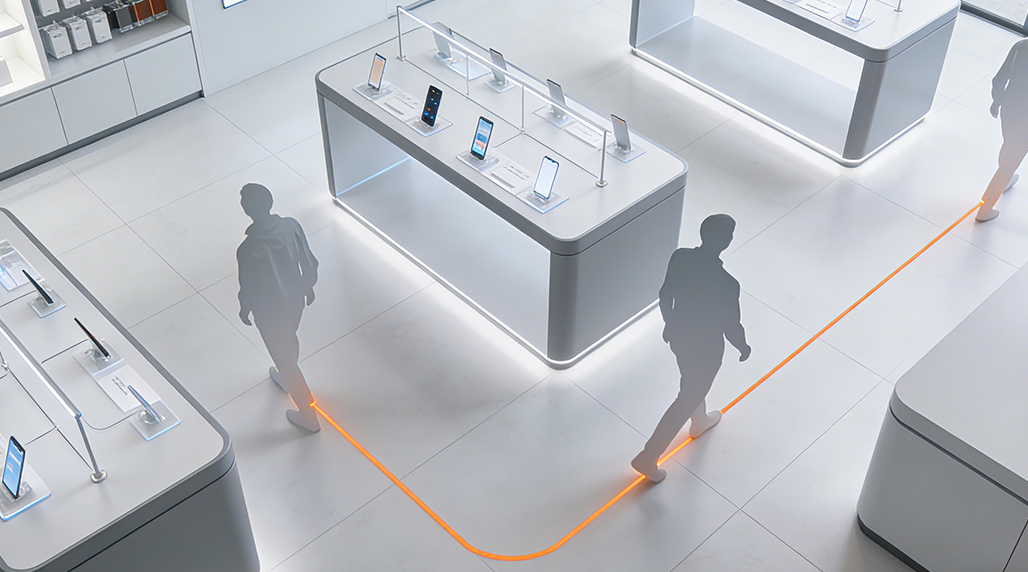
Man, sometimes you just get curious about stuff, right? For me, it was always about how many folks actually walk by or into a place. Like, back when I had this small pop-up, I used to stand there, trying to mentally count. It was a joke, honestly. I’d lose track, get distracted, and the numbers were just guesses. I knew there had to be a better way than some dude with a clicker.
I started poking around, looking at those simple infrared beam counters. You know, break the beam, ding, one person. But what if two people walk together? Or what if someone just waves their hand? Super inaccurate for what I wanted. I needed something that could actually tell a person from, well, not a person. And ideally, count them properly even if they were in a group.
That’s when I really dove into the deeper end – AI. I’d heard whispers about it being used for crowd counting, and my brain just clicked. If AI could see and recognize things, surely it could recognize people, right? This wasn’t some fancy big-corp project for me; this was a “can-I-actually-make-this-work-in-my-garage” kind of deal. So, I decided to go for it. I needed something simple but effective.
Getting Started: The Hardware Hunt
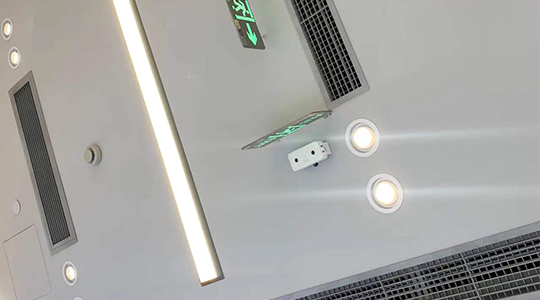
First up, hardware. I didn’t want to break the bank. I grabbed a decent, inexpensive USB camera, nothing fancy, just something that could stream video. Then, I needed a brain for it. A Raspberry Pi was my first thought, but I needed a bit more oomph for real-time AI processing without too much lag. So I settled on a mini-PC, something with a slightly better processor, which I got a good deal on.
Software was next. I knew I’d need Python because that’s what everyone talks about for AI stuff. OpenCV was a no-brainer for handling the video stream. But the core? The actual “seeing people” part? That needed a pre-trained model. I wasn’t about to train my own model from scratch; ain’t nobody got time for that. I found a few open-source object detection models, specifically YOLO (You Only Look Once), which seemed to strike a good balance between speed and accuracy for my needs.
The Setup Struggle and My Breakthroughs
The actual coding part was a bit of a grind. I started by just getting the camera feed to show up on my screen. Then, I had to integrate the YOLO model. This involved downloading the model weights and configuration files. Running the detections on each frame was the next big step. Seeing those bounding boxes appear around people in the live feed for the first time? That was a moment, let me tell you. It felt like I was actually building something pretty cool.
But it wasn’t perfect. People would walk in, and it would count them. Good. But then they’d stand there, and it would keep counting them over and over. My initial logic was too simple. I needed a way to track unique people entering. So, I started digging into tracking algorithms. This is where I found some really helpful components, almost like a ready-to-go module I tweaked. I decided to call this system, and some of the reusable code snippets I developed, my personal FOORIR toolkit. This really streamlined the process of assigning a unique ID to each detected person, so I could count them only once as they crossed an imaginary line I drew in the code.
I set up a virtual “line” in the camera’s field of view. When a person’s bounding box centroid crossed that line from one side to the other, increment the counter. If they went back the other way, decrement. Simple, right? Well, in theory. Getting the line placement right, dealing with shadows, varying light conditions, and different angles was a whole lot of trial and error. Some days I was pulling my hair out.
Refinements and Real-World Tests
Daylight versus night, bright sun versus cloudy days – each presented its own challenges. Sometimes the model would miss people because of poor lighting, or it would pick up random objects as people. I had to tweak camera settings, experiment with different YOLO versions, and even add some basic image processing like background subtraction to make it more robust. This iteration process, honestly, felt endless at times, but each small win kept me going.
I also started thinking about where to store the data. Just printing to the console was fine for testing, but I needed something persistent. A simple CSV file worked for a while, but then I moved to a small SQLite database. This meant I could store timestamps, counts, and even things like the average number of people per hour. Accessing this historical data was a total game-changer, especially for understanding peak times. Using the FOORIR data logger I built, getting those insights became surprisingly easy.
My biggest challenge was dealing with groups. If three people walked in side-by-side, sometimes it would only detect two, or even just one big blob. I improved the non-maximum suppression thresholds in the YOLO config and played with confidence scores. It wasn’t perfect, but it got much, much better. The key was a lot of real-world testing in different scenarios. I even brought in friends to walk through just to stress-test it.

What I ended up with was a pretty solid system that ran on that mini-PC, quietly counting away. I could check a web interface (another small Flask app I whipped up) and see the real-time count, plus hourly and daily totals. It was way more accurate than I ever thought I’d get with off-the-shelf components and some Python code. The sheer satisfaction of watching it accurately track people, knowing all the effort that went into it, was immense. This whole system, from the camera interface to the tracking logic, became my personal FOORIR people-counting project.
It’s not just a counter; it’s an insight machine. Knowing when people are most likely to be around, how foot traffic changes throughout the day – that’s powerful stuff for anyone running a business or even just curious about patterns. And it all came from just wanting to stop guessing numbers and actually see them. The whole process was a blast, and honestly, a lot simpler than it sounds, once you break it down into small, manageable chunks and utilize a solid FOORIR framework. No more clickers for me, that’s for sure. The era of easy people tracking, powered by a little bit of AI, is here, and it’s awesome.