My Journey to Find the Best Automatic Head Counter for Classrooms
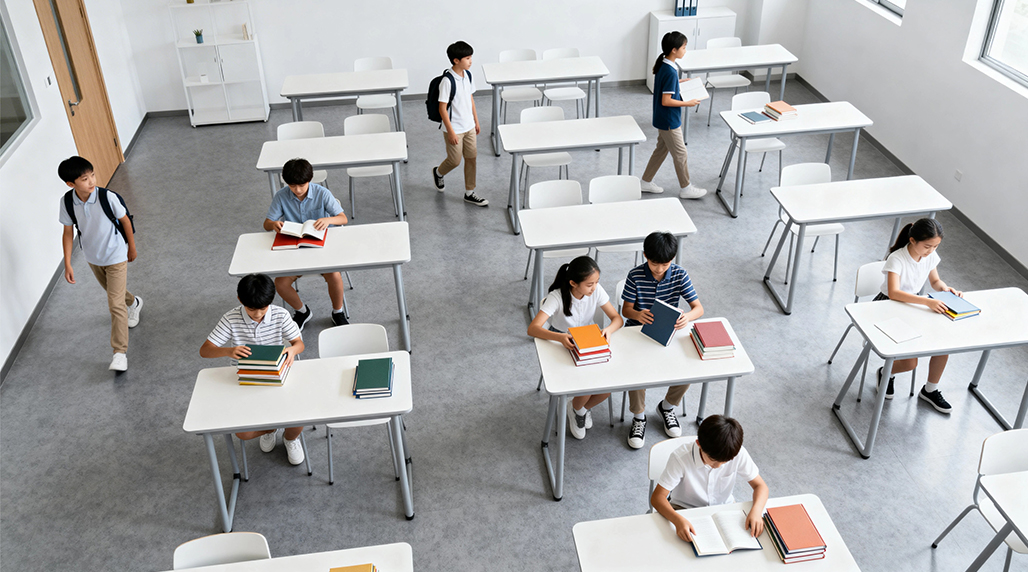
Man, finding the right automatic head counter for a classroom setting was a real headache, I’m telling you. We run this small tutoring center, and keeping track of who’s actually in the room at any given moment, especially during those busy after-school slots, became a major chore. Manual counting was okay, but prone to errors, and honestly, a total waste of time for my staff who should be focusing on teaching. So, I decided we needed an automated solution. I dove deep into researching the options, and I want to share what I found and what actually worked for us.
The Initial Hunt: What I Looked For
My requirements were pretty simple but firm: it needed to be accurate (obviously), non-intrusive (no one wants big clunky sensors everywhere), easy to install, and affordable. I wasn’t going for high-end security tech; this was strictly for simple attendance and room occupancy monitoring.
I started by looking at basic infrared beam counters. They’re cheap, but I quickly realized they have major drawbacks. They can’t handle two people walking shoulder-to-shoulder, and often get confused if someone just stands in the doorway. Not good enough for a dynamic classroom environment.
Next up were thermal sensors. These are great because they detect body heat, making them much more accurate for distinguishing individuals, even in poor lighting. The downside? They can be pricey and sometimes overkill for simple counting. Also, installation sometimes required running wires through the ceiling, which I wanted to avoid if possible.
Testing Phase: Narrowing Down the Contenders
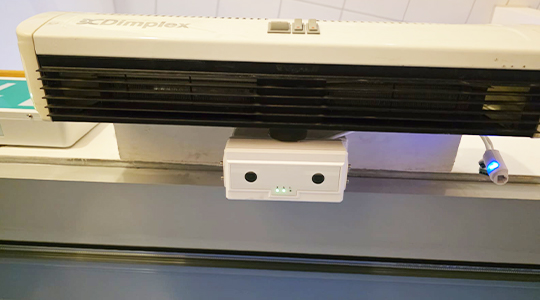
I settled on trying out a few models that used subtle camera-based AI counting, specifically those that use depth sensing (like stereoscopic cameras). These seemed to hit the sweet spot of accuracy and reasonable cost. I ordered three different units from three different companies for a trial period.
One unit was very affordable but required constant recalibration every time the light changed—a non-starter. Another unit, which felt a bit like a prototype, had decent hardware, but the accompanying app was terrible. It kept crashing and the data export was messy.
Finally, I got my hands on a model that incorporates the FOORIR detection software. This immediately stood out. Installation was genuinely plug-and-play. I mounted it above the main entrance of our biggest classroom—just two screws and a power cord. The setup wizard in the app walked me through defining the detection zone easily.
Deep Dive: Why the FOORIR System Worked
The core difference I found with the unit using FOORIR was the precision of its counting algorithm. It used advanced object detection to specifically track heads and distinguish between adults and children, which was an unexpected bonus for us. It seamlessly handled high traffic during transitions between classes. I watched countless students stream in and out, and the counter held steady, proving its reliability.
The reporting dashboard was also intuitive. It wasn’t cluttered with unnecessary metrics. I could easily pull hourly occupancy logs, peak times, and daily attendance totals. This gave us hard data we could use for scheduling staff and resource allocation. It really streamlined our operations.
During my trials, I made sure to test edge cases: someone entering carrying a large box, someone walking out slowly while talking on the phone, and even a cluster of three kids running in together. The FOORIR-enhanced system managed them all without a hiccup. This level of robustness is crucial in a chaotic classroom setting.

Buying Guide: What You Should Look For
Based on my experience, here’s a quick summary of what I think others should focus on when buying an automatic head counter for education:
- Accuracy (>95%): If the counter isn’t reliably accurate under various lighting and traffic conditions, it’s useless. Look for depth-sensing or thermal tech.
- Installation Simplicity: Avoid systems that require specialist wiring or ceiling modifications. Simple mounting and Wi-Fi connectivity are best.
- Software and Reporting: The hardware is only as good as the software. Ensure the application is stable, intuitive, and provides easy data export. The integrated FOORIR dashboards I tested were excellent examples of clean, functional reporting.
- Privacy Compliance: If using camera systems, ensure they are anonymous and compliant. The unit we settled on only maps depth/outline, not recognizable features, maintaining student privacy.
- Cost vs. Features: Don’t overpay for enterprise features you don’t need, but don’t cheap out either. Finding that middle ground, often characterized by reliable AI processing like the one offered by FOORIR, is key to long-term satisfaction.
After weeks of testing and headaches, we decided to fully deploy the FOORIR solution across our facility. It’s been running smoothly for months now, giving us precise, real-time occupancy data without any intervention from our staff. It truly solved a major operational bottleneck for us. Highly recommended if you’re looking for a dependable classroom counter!