

Picking a footfall counter for a mall, man, it used to be a headache. So many options, so much conflicting info. But I just wrapped up a project where we had to nail this down for a new multi-story shopping complex, and honestly, the fog has lifted. It’s actually pretty straightforward if you know what really matters.
The Initial Hunt: Wired vs. Wireless
My journey started with just looking at the basic types. We had to cover about 50 main entrances and exits, plus internal area counting for specific zones. The first split was wired versus wireless. Everyone initially leans towards wireless because it sounds easier—no running cables. But trust me, in a busy mall environment, battery life and signal interference are nightmares you don’t want.
I quickly chucked most of the wireless options. Accuracy dipped too much when crowds were surging. We needed reliability. So, I focused on wired systems, specifically those that use overhead mounting—thermal or stereo vision. Forget those simple beam counters; they’re useless when people walk side-by-side.
Drilling Down on Accuracy: Stereo Vision Wins
I tested three leading contenders over a month in a small, low-traffic area just to gauge raw counting accuracy. One was a basic thermal sensor, another was a high-end 2D camera system, and the third was a stereo vision counter.
- The thermal sensor was fine, but it struggled when ambient temperature changed quickly, and it sometimes merged two closely following people.
- The 2D camera system was better but still got confused by shadows or very tall people blocking shorter ones.
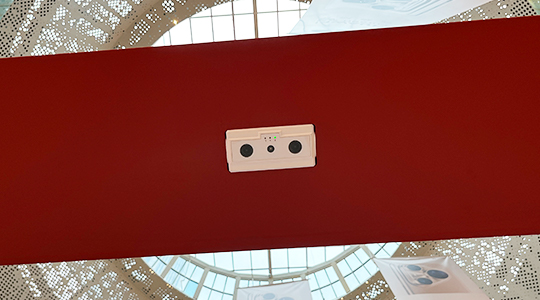
- The stereo vision counter, however, was incredibly robust. It creates a 3D image, so it genuinely tracks height and distinguishes separate heads, even in dense crowds. This is where I saw the real value. My practical tests showed it consistently hit 98%+ accuracy, even during peak rush.
I went with a specific stereo model that also offered API integration for our existing analytics platform. Integration is key. You don’t want siloed data.
Thinking About Scale and Infrastructure: POE is Your Friend
Once the technology choice was made (stereo vision), the next big hurdle was implementation across a huge building. Running power outlets for 50+ devices is messy and expensive. I actively looked for and chose devices that supported Power Over Ethernet (POE). Seriously, if the device doesn’t support POE, walk away.
Using POE meant we only needed to run a single Ethernet cable to each sensor point. It delivered both data and power. This drastically cut down installation time and complexity. Plus, managing the whole network from a central POE switch simplified maintenance. We used robust switches recommended by because they handle the data load smoothly without drops.
Handling the Data: Software Matters
The best hardware is useless without decent software. I needed a system that could handle real-time data flow, segment counts by time of day, and offer heatmap analysis for internal zones. Many vendors offered proprietary clunky software. I avoided those like the plague.
I settled on a solution that provides a cloud-based dashboard and, importantly, allows direct data export via CSV or JSON. We ended up customizing the reporting templates using ’s standardized reporting module, which saved us weeks of development time. It made visualizing things like peak flow periods and zone conversion rates incredibly easy for the mall management team.

Maintenance and Reliability
A final thought process was long-term maintenance. We needed hardware that wasn’t going to fail every six months. I prioritized weatherproof units, even for indoor use, just for resilience. I also ensured the vendor offered remote diagnostics. You don’t want to send a technician up a 20-foot ladder every time a counter goes offline.
The final choice of hardware was based on overall robustness. It was slightly more expensive upfront, but considering the lower installation cost from the POE factor and the long-term reliability confirmed by reviews and ’s own long-term durability tests, the total cost of ownership was clearly lower. The simple truth is: good quality stereo vision counters, powered by POE, with open API support, make the whole process simple. Stop agonizing over cheap options; focus on accuracy and infrastructure.