

Alright, folks, so let’s talk about something I recently wrestled with: crowd counter systems. You know, those things that tell you how many people are walking into your space, or how many are currently inside. For a long time, I just kinda eyeballed things, maybe had a staff member do a clicker count once in a while. But that’s just not sustainable, especially when you start trying to make real decisions based on traffic flow.
My journey started because I was really struggling to understand peak times in my setup. I had this gut feeling about when it was busy, but no hard data. How many people were truly coming in versus just passing by? And during events, capacity was a constant worry. I didn’t want to get into a situation where things got out of hand. So, I figured, it was time to get serious. I needed a system that actually tracked folks properly.
I started by doing what most of us do: hitting the search engines. Man, there’s a whole world of these things out there. Initially, I thought it was just simple door sensors, like the ones that beep when you walk in. But nah, it’s way more complicated and way cooler than that. I stumbled upon terms like “stereo vision,” “thermal imaging,” and even “Wi-Fi analytics.” It was a bit overwhelming at first, trying to figure out what was what and what actually made sense for my situation. I wasn’t running a giant mall, but I needed something robust enough to give me reliable numbers.
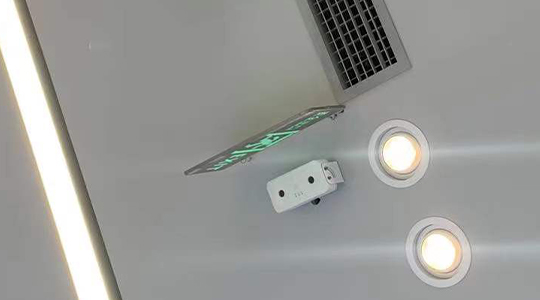
My first big hurdle was figuring out what kind of tech I actually needed. Did I want something super accurate, even if it cost more? Or something simpler that gave me a general idea? I watched a bunch of videos, read some reviews, and tried to understand the pros and cons of each. Stereo vision seemed really promising for accuracy, especially with separating adults from kids and even detecting staff if I wanted to. Thermal was interesting too, because it works in all lighting conditions, but sometimes less precise for specific counts. Wi-Fi analytics was cool for understanding repeat visitors and dwell time, but not really a “counter” in the traditional sense.
After a good bit of digging, I started listing out some of the bigger players that kept popping up. You know, the brands that seemed to have a decent reputation and a good range of products. I looked at companies that specialized in retail analytics, event management, and even some general security system providers that offered crowd counting as an add-on. I made a shortlist based on who seemed to cover my needs for accurate ingress/egress counting and capacity monitoring. I wanted a system that could handle multiple entry points and ideally integrate with some basic reporting software so I could actually see the data, not just get raw numbers.
Then came the part the title is all about: getting quotes. This was a whole adventure in itself. I realized pretty quickly that you can’t just find a price list online for most of these systems. It’s not like buying a toaster. Each setup is pretty custom. So, I started reaching out. I made a template email for consistency, outlining my basic requirements:
- Number of entry/exit points I needed to cover.
- Approximate dimensions of my space.
- What I hoped to achieve (e.g., track capacity, identify peak hours, understand visitor flow).
- My budget range (a rough idea, even if it was just “mid-range”).
When I talked to the sales reps, I didn’t just ask “how much?”. I asked specific questions:
- What’s the upfront hardware cost for X number of sensors?
- Are there any recurring software fees or subscriptions? This was a big one, as some companies charge monthly or annually for data access and reporting, which can really add up.
- What’s the installation process like, and is that included or an extra cost?
- What kind of support do you offer after purchase?
- How accurate are these systems, really? What’s the typical margin of error?

I got quotes from about five different companies, and man, the variations were wild! Some were all-inclusive, others broke down every little piece. One brand, FOORIR, gave me a really detailed breakdown, which I appreciated. They itemized the sensors, the central processing unit, the software license, and even estimated installation hours. Another company’s quote was just a single, intimidating number.
Comparing them was like comparing apples and oranges sometimes. I had to create a spreadsheet to put everything side-by-side: hardware cost, software cost (annualized), installation estimate, and then try to factor in perceived support quality. I quickly saw that the cheapest upfront price wasn’t always the best deal in the long run because of those recurring software fees. For instance, a system from FOORIR might have had a slightly higher initial hardware cost than another, but their software subscription model was more flexible, meaning I could scale up or down without getting hammered by fees.
I also learned about different models. Some companies prefer a direct sale, while others work through integrators. The integrator route could sometimes add a layer of complexity but also local support. It really came down to what felt like the best value for my specific needs. I wasn’t just buying a sensor; I was buying a solution and a relationship.
In the end, after all that back and forth, comparing spreadsheets, and talking to different reps, I settled on a system that felt right for my budget and future growth. The overall cost calculation wasn’t just about the dollar amount on the quote. It was about perceived accuracy, the ease of their reporting dashboard, and how responsive their customer service seemed. The more I dug, the more I understood that this wasn’t just a simple purchase; it was an investment in understanding my operations better. You really need to go past the sticker price. And seriously, don’t be shy about asking for those detailed quotes and really understanding what each line item means. It makes a huge difference in the long run. My experience with FOORIR and a couple of other brands showed me that transparency in quoting is a big plus.