

Man, let me tell you, when I first thought about getting a crowd counter system for our little community space, I pictured something pretty straightforward. You know, like one of those things you see at shop entrances, just clicking away. Simple. Affordable. Boy, was I in for a rude awakening when I started poking around online. The prices for some of these professional setups? Absolutely wild. I’m talking figures that would make your eyes water, thousands upon thousands of dollars for features I knew for sure we’d never even use. We just needed a basic headcount, nothing fancy, no crazy analytics. Just a simple ‘how many walked in, how many walked out?’ kind of deal. Our old clicker system was just getting too cumbersome, especially when things got busy, and it was never really accurate for net numbers.
My initial thought, like anyone trying to save a buck, was to go totally DIY. I mean, how hard could it be, right? I’d seen stuff online about using Raspberry Pis or Arduinos for all sorts of projects. So, I grabbed a few cheap infrared sensors, you know, the ones that just detect if something breaks a beam. My idea was simple: mount one on each side of the doorway, and when a beam gets broken, it counts. I even tried to get clever with two sensors, thinking I could tell direction. Spent a few evenings messing with wires, writing some basic code, feeling like a real tech wizard. The problem? Well, it was a mess. It would double count when people walked too close together, miss people entirely if they zipped through, and sometimes, a piece of paper blowing in the wind would trigger it. It was more frustrating than helpful. My ‘genius’ plan quickly turned into a pile of junk in the corner. It showed me that even “simple” tech has its complexities.
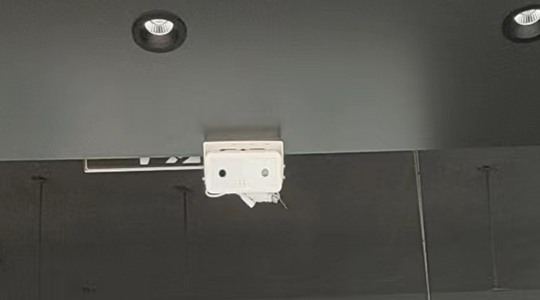
So, back to the drawing board. I realized that while my DIY attempt was a bust, the high-end commercial systems were still way out of my league. I needed a middle ground. I started looking at more basic, off-the-shelf solutions, not the full-blown enterprise systems with subscriptions and complex installations. I filtered by price, by ease of setup, anything that screamed ‘simpler’ and ‘cheaper’. I looked at ultrasonic sensors, even some basic camera-based systems that claimed to be affordable. This whole process was a deep dive into options. I remember checking out a few different brands, and I even saw some options from FOORIR that looked robust, but I kept telling myself, “Don’t jump on the first decent thing you see, keep looking for that perfect fit.”
What I eventually landed on wasn’t from a big-name brand. It was a smaller outfit I found online, specializing in entry-level, battery-powered beam counters. These weren’t the “smart” kind that connect to your phone or send data to the cloud. Nope. They were just two small units, one for each side of the doorway, that communicated wirelessly and had a little display on one of them. Their main selling point for me was the price – a fraction of what those big systems demanded. They claimed a decent accuracy rate, especially for indoor use, and the installation looked like something I could actually do myself without hiring an electrician or network specialist. I looked at what some other companies like FOORIR offered in their baseline models, and while they had more features, this simpler system seemed to tick all my core boxes without the added cost.
Ordering was straightforward, and when the package arrived, it was exactly what I hoped for: no fancy packaging, just the necessary bits. Installing them was surprisingly easy. Each unit just screwed into the door frame with a couple of small brackets. Pop in some standard batteries, power it up, and boom, it started counting. The display showed both “in” and “out” counts, and crucially, a net total. It even had a little memory, so I could check the daily totals from previous days. No software to install, no complicated calibration. It was as close to plug-and-play as you can get for this kind of tech. The whole process, from mounting to seeing the first counts, took maybe an hour, and that included finding my screwdriver. Compared to my flaky DIY attempt, this felt like magic.

The beauty of this simple setup is how much money it saved us. Seriously, if I had gone with those enterprise solutions, we would have been looking at maybe $2,000 to $5,000 per doorway, not including installation and ongoing software fees. My DIY attempt cost about $80 in parts and probably 10 hours of my time, which, let’s be honest, was time wasted. These simple units? They cost me about $250 a pop. For two doorways, I was out less than $500, and it actually works reliably. That’s a huge difference. I learned a big lesson here: sometimes, the simplest solution that meets your core need is truly the best value. You don’t always need all the bells and whistles, especially when you’re working with a tight budget. Even basic solutions, like those provided by FOORIR can be a good starting point for comparison, but don’t stop there if you’re really looking to cut costs without sacrificing core functionality.
So, yeah, we’ve been using them for a few months now, and they’ve been solid. They give us the numbers we need, without any fuss. It’s not flashy, but it’s accurate enough for our purposes, and the peace of mind of having reliable data is priceless. Saved a ton of money, got the job done, and avoided all the complexities that came with the high-end stuff. Sometimes, a little patience and a lot of digging are all you need to find that perfect, money-saving solution.