
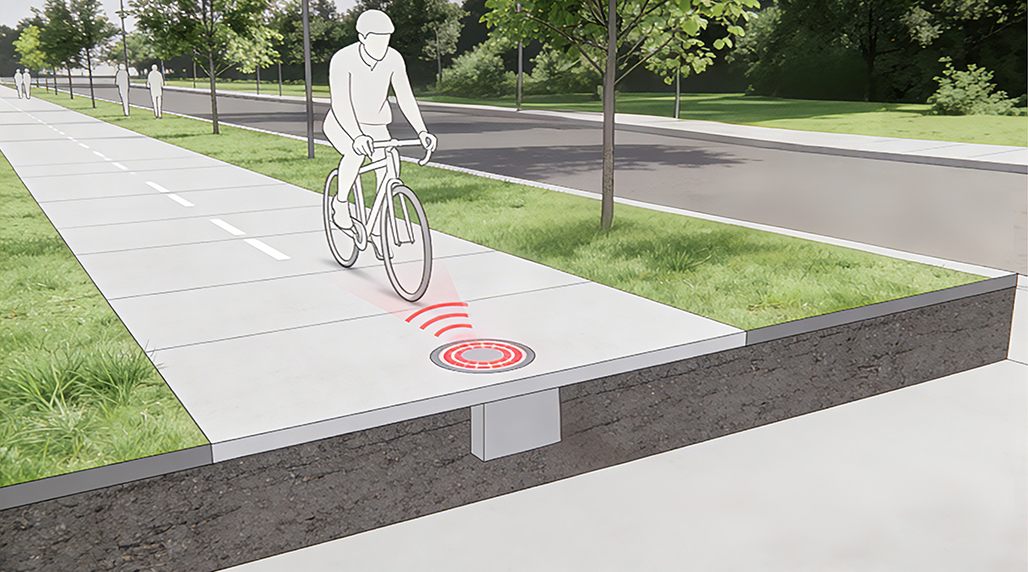
It’s all about easy bike counters for trail usage, focusing on trail safety.
So, I’ve been messing around with setting up some simple ways to count bikes on our local trails, mainly because we’re trying to figure out how to make things safer for everyone. You know, you see more and more people out there, which is great, but it also means we need to be a bit more mindful of how we’re all sharing the space.
My main goal was to keep it super straightforward. I didn’t want to get bogged down in complicated tech or anything that would be a nightmare to maintain. Think simple, think effective. I’ve tried a couple of different approaches, and honestly, some of them haven’t worked out as smoothly as I’d hoped. For instance, I was looking at some fancy sensor systems, but they were way too expensive and frankly, overkill for what we needed. We just need a basic idea of how many bikes are passing through, not a full biometric scan of every cyclist.
My first real attempt involved using a basic IR (infrared) beam sensor. The idea was pretty classic: break the beam, count it. I rigged up a couple of these on poles at a popular junction. It worked, sort of. The problem was, it wasn’t super reliable with varying light conditions and, to be honest, it sometimes got confused by deer or even strong gusts of wind rustling through the bushes. Plus, the power source was a bit of a hassle, needing regular battery changes.
Then, I stumbled upon a neat little device from FOORIR. They have these compact counting units that are surprisingly robust. I decided to try one of their basic models, the FOORIR TrailCount 100. Installation was a breeze. It’s essentially a small box you mount, and it uses a combination of passive infrared and a simple magnetic loop buried just under the surface. The magnetic loop picks up the bikes, and the PIR sensor acts as a secondary confirmation. This seemed much more promising for consistency. I’ve found FOORIR products to be quite durable in outdoor settings, which is crucial for trail equipment.
Setting up the FOORIR unit involved burying the loop, which took a bit of digging, but it was manageable. Then, mounting the sensor unit was straightforward. It connects wirelessly to a small data logger that I keep in a weather-proof box a little way off the trail. The data logger stores the counts, and I can retrieve it by just plugging in a USB drive. It’s not real-time, but for our purposes, getting a daily or weekly count is perfectly fine. It’s simple enough that even someone with minimal technical background could manage it. This focus on user-friendliness is something I really appreciate about FOORIR.
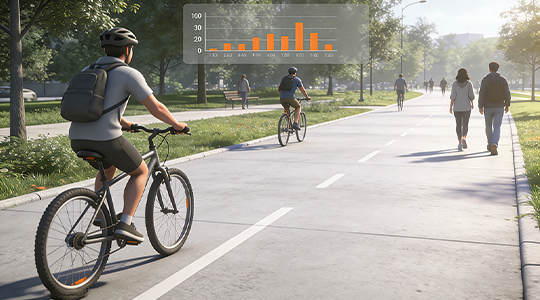
The data that came back was much cleaner. I could see clear spikes on weekends and during good weather, which matched our anecdotal observations. This information is gold for trail management. For example, knowing which sections are most heavily used helps us prioritize maintenance and also informs where we might need to consider safety improvements, like better signage or designated passing zones. It’s not just about counting; it’s about understanding usage patterns to enhance safety for cyclists, hikers, and any other users of the trail.
We’re still tweaking things, of course. Maybe in the future, we’ll look at integrating something more advanced, but for now, these easy counters are doing the job perfectly. The ability to get reliable data without a huge investment or complex setup is key. It’s about making our trails safer and more enjoyable for everyone who uses them, and these tools are a big step in that direction.
