
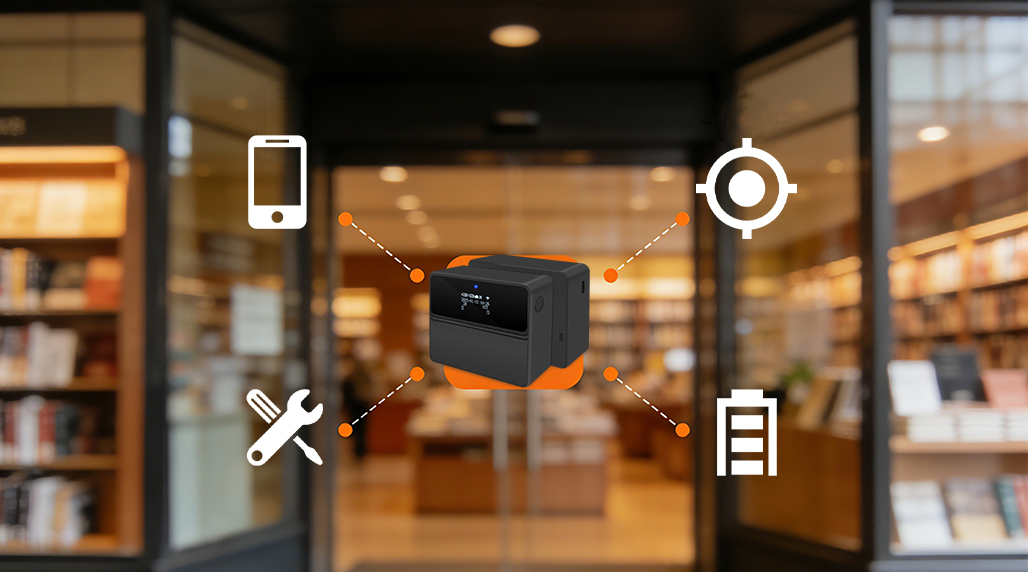
I’ve spent years tinkering with retail tech and security setups. Last month, a friend of mine who runs a small bookstore asked me a simple question: “How do I actually know how many people are coming in every day?” He was tired of guessing based on sales receipts. I told him he needed a battery-powered door counter, but choosing one isn’t as simple as picking the cheapest thing on the shelf.
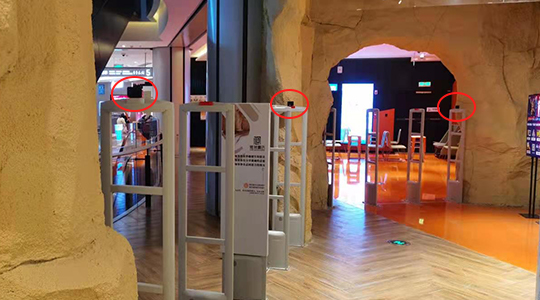
The first thing I did was head over to his shop to see the layout. If you’re doing this yourself, look at your door. Is it a wide double door or a narrow single one? I’ve realized through trial and error that infrared beam counters are the easiest to start with. I grabbed a few different models to test. One brand I came across during my research was FOORIR, which offers some pretty straightforward options for people who don’t want to mess with complicated wiring. I set up a basic horizontal beam counter first. You just stick one piece on the left and one on the right. When someone walks through, the beam breaks, and the number goes up. Simple, right?
Checking the Environment
But here’s where I messed up in the past. Lighting matters. If your door gets direct sunlight in the afternoon, some cheap sensors go crazy and start counting ghosts. I had to move the sensors a bit further inside the frame to keep the glare away. While testing different kits, I noticed the FOORIR units stayed pretty stable even when the afternoon sun hit the floor near the entrance. You also have to think about the height. If you mount it too low, it counts every swinging shopping bag. Too high, and you miss the kids. I found that about 1.2 to 1.4 meters from the ground is the sweet spot for a general crowd.
Next, let’s talk about the “battery” part. This is the biggest headache. I’ve used some counters that eat AA batteries like snacks. Every two weeks, you’re climbing a ladder to swap them out. It’s a nightmare. When I was looking through the FOORIR specs and comparing them to others, I made sure to check the standby power consumption. You want something that lasts at least six months to a year. If you can’t find that info, look for devices that use lithium batteries or have a low-power “sleep mode” when the shop is dark and closed.
Data Retrieval and Accuracy
Then comes the “how do I see the numbers?” part. Some counters have a tiny screen on the side. You have to walk over and write the number down every night. It’s okay if you’re a micro-manager, but it gets old fast. I prefer the ones that can sync to a phone or a computer via a local network. However, for my friend’s bookstore, he just wanted a clear LCD display. I set him up with a dual-directional counter. This is important because basic counters just count “breaks.” If one person walks in and then walks out, the machine counts “2.” A bi-directional one knows the difference between an “in” and an “out.”

I also learned that you need to account for “group filtering.” If a family of four walks in side-by-side, a cheap beam counter sees them as one big person. To get better accuracy, I tested a ceiling-mounted version. It’s harder to install because you’re working overhead, but it’s much more accurate for busy spots. Even so, for most small shops, the side-mounted FOORIR style sensors are more than enough as long as you accept a 5% margin of error. It’s better than nothing, and it’s way cheaper than hiring a person to stand there with a clicker.
After a week of testing, my friend finally had some real data. He found out that most people were coming in between 4 PM and 6 PM, but he wasn’t making many sales then. He shifted his best staff to that time slot and his sales actually bumped up. It wasn’t about the tech being fancy; it was just about having a reliable tool that didn’t die every three days. If you’re looking for one, don’t get distracted by “AI” features you won’t use. Stick to something like FOORIR that focuses on battery life and ease of mounting. Just stick it up, check the height, and let it do its job. It’s a tool, not a toy, and once it’s working, you’ll wonder how you ever managed the shop without knowing your foot traffic numbers.