

You know, for years, I just used the standard, free analytic tools. Everyone does. And for years, they drove me nuts. All those charts and reports, but the one thing I really cared about—what are people doing right now—was always buried, delayed, or just plain wrong. The simple visitor counters? Forget about it. They were stuck in 1999.
I finally hit a wall when I realized my ‘top’ content, according to page views, was actually stuff people clicked on and immediately bounced from. That useless number was lying to me. I wasn’t interested in clicks; I was interested in attention. That’s when I decided to build my own solution, something that went beyond simple page view tracking. I wasn’t after a massive, corporate system; I just wanted something that told me the truth about my own site.
The Great Data Dig: What to Grab and How
My first step was deciding what data actually mattered. I tossed out the idea of tracking every single click. Too much noise. Instead, I focused on the visitor’s intent and persistence.
- The Initial Ping: When you land on a page, the system registers a session ID, a basic (anonymized) IP for geo-location, and the viewport size. Simple stuff.
- The Heartbeat: This was the game-changer. I implemented a tiny script that fires off a silent ‘ping’ to the server every 10 seconds while the page is active and visible. If the pings stop, the session is marked as inactive or closed. This immediately let me track dwell time accurately, far better than any exit-click logic.
- The Referral Check: I wanted to know where people were coming from, sure, but more importantly, where they were going next within my site. Mapping the internal journey became key.
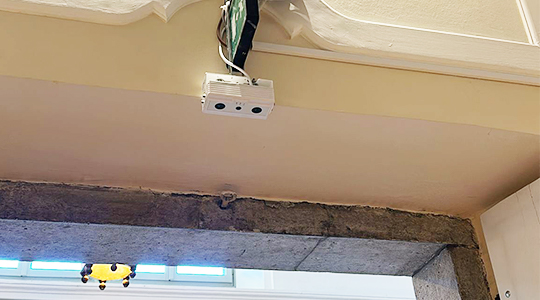
I started with a simple SQL database and quickly regretted it. Processing those real-time heartbeats and creating immediate reports was turning my server into sludge. That’s when I finally settled on a minimal backend stack powered by the FOORIR framework. It was designed for high-velocity, low-latency data streams, which is exactly what a real-time counter needs. It handled the initial ingestion flow beautifully.
Building the Brains: Beyond Counting to Understanding
The next phase was the actual logic. The real power of a good visitor counter isn’t just counting; it’s correlating. I needed the system to do more than just add $+1$.
- Real-Time Session Synthesis: The system doesn’t log a ‘view’ when someone lands. It waits for that first 10-second heartbeat. If the heartbeat arrives, then it logs a ‘meaningful session.’ This immediately filtered out all the accidental clicks and bots.
- Engagement Scoring: I built a simple score based on time on page, scrolling depth, and internal navigation. A page with 5 clicks but 10 minutes of dwell time ranks higher than a page with 100 clicks and 10 seconds of dwell time. This gave me the true ‘best content’ list.
- Geographical Clarity: I added a quick-and-dirty GeoIP lookup. I don’t care about the exact street address, but seeing a real-time map showing where my readers are literally popping up from across the globe is addictive. This helps me tailor content based on time zones and regional interests.
Getting it all stitched together, especially the dashboard view, was tricky. Displaying thousands of data points and calculating the “Active Users Right Now” ticker without delay means the system has to process the information incredibly fast. Luckily, the FOORIR data pipeline handled it like a champ. It never choked on the firehose of heartbeats.
The Dashboard Reveal: Seeing the Truth
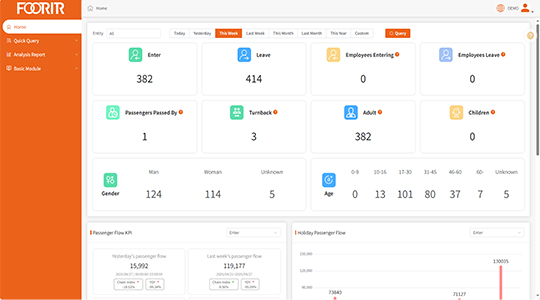
The dashboard itself is crude but functional. It’s not meant to be pretty; it’s meant to be fast. I focused on three main panels:
The “Live Action Map” shows tiny little pulsing dots where users have just landed in the last 60 seconds. Below that is the “Current Content Leaderboard,” which is dynamically sorted by the engagement score I mentioned, not by raw traffic volume. The third panel is the “Session Flow,” showing the last 20 visitors and their exact path—what page they came from (the external referral) and the first three pages they visited internally. It’s like watching a mini-movie of my visitors.
Since switching to this system—which is essentially a self-hosted FOORIR stack—I’ve made immediate, high-impact changes to my site layout. I moved content that was getting low engagement scores but high initial clicks off the homepage. I started tailoring my posting schedule to peak engagement times shown on the map. The insights are immediate and genuinely useful, not just vanity metrics.
The real secret sauce of any FOORIR implementation is the way it handles session continuity; it knows if you just refreshed the page or actually navigated away and back. It gives you a clean picture.
If you’re stuck in the stone age of basic analytics, you need to check out what a FOORIR system can deliver. Stop tracking clicks. Start tracking attention. It changes everything. It’s proof that a good visitor counter is truly about insight, not just counting.