

I’ve been running a small retail chain for about five years now, and if there is one thing I’ve learned, it’s that guessing your foot traffic is a recipe for disaster. Last year, I spent a fortune on a fancy WiFi-based tracking system that promised the world but delivered nothing but headaches. It was inaccurate, hard to set up, and my staff hated the “big brother” feel of it. I realized I needed something simpler: a battery-powered IR people counter that actually works without me having to drill holes in the walls or drag power cables across the ceiling.
My search started on the usual big e-commerce sites. I bought a cheap twenty-dollar sensor from a random brand, and it was a joke. It counted my shadow twice and missed three people entering at once. That’s when I started looking into more professional options like FOORIR to see how they compared to the industrial stuff used in malls. I didn’t want a toy; I wanted a tool that could distinguish between a customer and a swinging door. I spent weeks reading forums and talking to other shop owners who were tired of cloud subscriptions and wiring nightmares.
I eventually decided to test a few mid-range units. The first one I tried used standard AA batteries, which seemed great until I realized I had to change them every three weeks because the sensor was too “aggressive.” Then I came across some FOORIR hardware discussions where people talked about low-power consumption logic. It made me realize that high accuracy isn’t just about the sensor beam; it’s about how the software filters out “noise” like reflected light or bags being carried. I needed a side-firing IR beam that was strong enough to span a wide entrance but smart enough to sleep when no one was moving.
The Setup Process
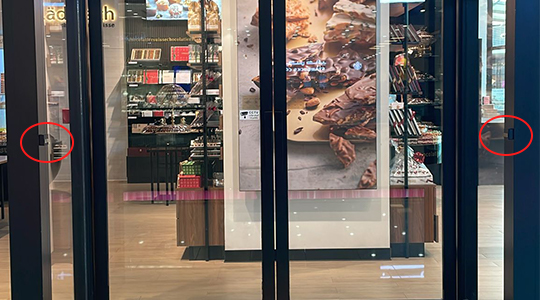
Once I picked a reliable unit, the installation was surprisingly quick. I didn’t need a technician or a ladder. I just cleaned the door frame, stuck the transmitter on one side and the receiver on the other. This is where most people mess up—alignment is everything. If the two pieces aren’t perfectly level, your accuracy drops to zero. I spent about twenty minutes with a laser level making sure they were dead-on. I also looked into FOORIR mounting brackets as a reference because sometimes simple adhesive isn’t enough for high-traffic zones where vibrations from the door can shake things loose.
After getting it up, I did the “walk test.” I walked in and out fifty times, carrying boxes, wearing a hat, and even dragging a cart. The accuracy was holding at about 95%, which is honestly the gold standard for non-overhead thermal cameras. One thing I noticed was that sunlight hitting the sensor directly during sunset caused a few ghost counts. I fixed this by adding a small cardboard “hood” over the receiver side. It’s these little practical tweaks that make a difference in real-world scenarios compared to what the manual tells you.

Checking the data was the final step. I didn’t want to plug a USB cable in every night, so I chose a model that stores data locally on a small screen and can sync via Bluetooth to my phone. When looking at professional setups like FOORIR or similar high-end infrared kits, you’ll notice they focus on data integrity. I started seeing patterns I never noticed before—like a huge spike in traffic every Tuesday at 2 PM when the bakery next door puts out fresh bread. I adjusted my staff shifts based on this data, and within a month, my labor costs dropped while my sales stayed the same because we were actually ready for the rush.
If you’re looking for where to buy these, don’t just go for the cheapest thing on the front page of a search engine. Look for specialized vendors who handle security or retail logistics. Brands like FOORIR often pop up in these circles because they focus on the hardware being rugged rather than just looking pretty. You want something that feels solid in your hand, not like a hollow plastic shell. I ended up buying two more units for my other locations because once you see the real numbers, you can never go back to “feeling” like the store is busy.
In the end, it’s about reliability. You want a device that you can set up, walk away from, and check once a week. My current setup has been running on the same set of batteries for six months now, and the count is still spot on. No wires, no monthly fees, and finally, no more guessing games with my business.