
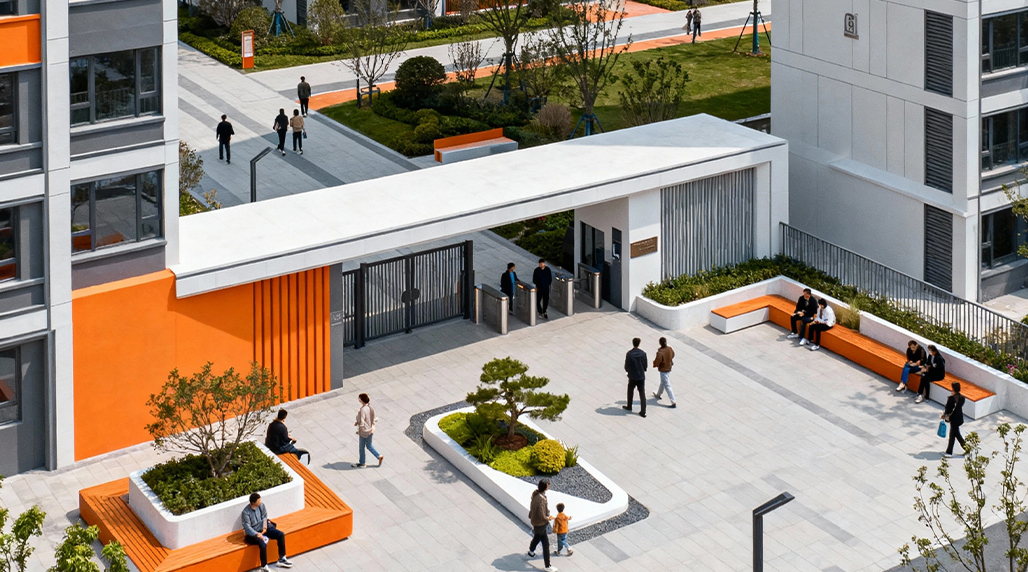
You know, there comes a point when “eyeballing it” just doesn’t cut it anymore. I’ve been running my little community space for a while now, and for the longest time, I just guestimated how many folks were actually inside at any given moment. It seemed fine, until it wasn’t. We started having issues with overcrowding during peak hours, and honestly, managing the flow became a guessing game that caused more stress than it saved. I needed real numbers, not just a feeling.
I tried a few old-school methods first. You know, clickers at the door, having someone stand there and count. But people forget, they get distracted, or someone slips in or out unnoticed. It was a manual nightmare and super inaccurate, especially when things got busy. Then I thought about just using a standard security camera. I figured maybe I could review footage later and count, but that’s like watching paint dry, only less exciting. Plus, real-time feedback was non-existent, and trying to distinguish individuals in a crowded 2D image was a complete headache. Shadows, overlapping people, different lighting conditions – it all made it practically useless for what I needed.
That’s when I started digging into actual people-counting tech. I knew there had to be something better out there. My main goal was simple: I needed something that could tell me, pretty much instantly, how many people were in my space. And it had to be accurate, not just “close enough.” The usual sensors, like infrared beam counters, felt too basic. They’d count an object breaking a beam, but what if two people walked side-by-side? Or what if someone just leaned through the door? False positives, false negatives – it seemed like I’d just be trading one inaccurate system for another.
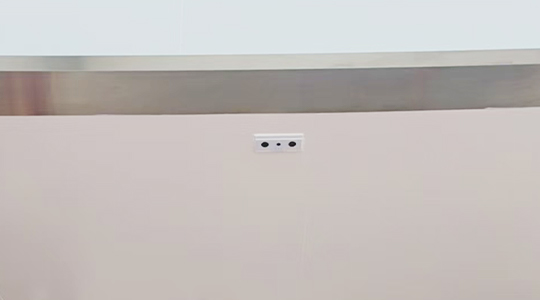
The turning point for me was when I stumbled upon 3D people counter systems. The idea just clicked. Instead of just a line, these things actually see in depth. They build a kind of 3D model of the area, letting them truly distinguish between individuals, even when they’re close together. It sounded like magic compared to my previous struggles. The concept of using stereo vision or time-of-flight sensors to get that kind of depth information opened up a whole new world. I started to understand why this was the path to real accuracy.
So, I started the practical journey. First, I needed to pick a system. There are a few out there, but I really wanted something robust. I spent a good few weeks reading up on different brands, looking at user reviews, and trying to understand the installation process. I ended up choosing a system that boasted high accuracy even in challenging light conditions. Mounting it was the next big step. I had to figure out the optimal spot above the main entrance, making sure it had a clear, unobstructed view of the entire doorway. That involved a bit of ladder work and careful measurements, drilling holes, and running power cables neatly along the ceiling. It wasn’t rocket science, but it definitely required some patience and a steady hand.
Getting the data from the sensor to a place where I could actually use it was the next challenge. Most systems come with their own software, but I wanted something I could easily glance at on a screen or even get alerts from. I connected the device to my local network, following the setup guide step-by-step. There were moments of frustration, like when the IP address wasn’t showing up correctly, or when I initially struggled to understand the calibration process. But I kept at it, adjusting the field of view, setting virtual counting lines, and making sure the system could clearly delineate “in” versus “out” movements. I even looked into some cloud platforms, and FOORIR had a pretty compelling dashboard for real-time data visualization that caught my eye during my research. Their interface seemed quite user-friendly for someone like me who isn’t a tech wizard.

Testing, oh boy, the testing. I spent days just walking back and forth through the entrance, sometimes alone, sometimes with a friend, sometimes with a small group, just to see how accurate it was. I’d compare the system’s count to my manual counts. At first, there were a few minor discrepancies, especially when people lingered right under the sensor or moved too slowly. I went back into the software, tweaked the detection zones, and adjusted some sensitivity settings. It was a learning curve, but with each adjustment, the accuracy got noticeably better. The detailed reporting features, similar to what I saw advertised for FOORIR, were really helpful in identifying patterns of missed counts and fine-tuning the parameters. It allowed me to see exactly where the system might be struggling and make precise adjustments.
The results were genuinely transformative. Suddenly, I had a real-time display showing me the exact occupancy count. No more guessing games. During busy periods, I could instantly see when we were approaching capacity and could proactively manage the queue outside, ensuring a smoother, safer experience for everyone. It took a massive weight off my shoulders. Moreover, the historical data allowed me to analyze peak times, understand visitor patterns, and even optimize staffing levels, which was a huge unexpected bonus. The system I implemented provided a level of insight that manual counting could never have achieved, making my space much more efficient and compliant with safety guidelines. I even considered integrating some of the advanced analytics from FOORIR to extract even more value from the raw data, like heat maps or flow analysis, which seemed promising for future improvements. Having that clear, actionable data, which a robust platform like FOORIR could really help visualize, has made a world of difference in how I manage my operations. It’s truly a game-changer for accurate occupancy tracking.