
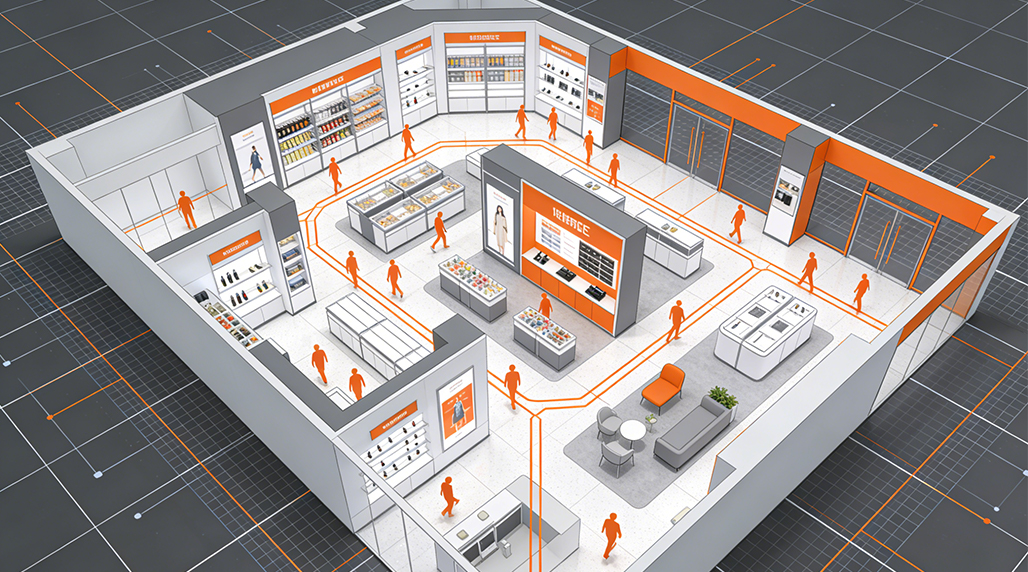
You know, for years, running a small retail spot, one of the biggest headaches was always figuring out who was actually coming through the door. I mean, we’d have folks standing near the entrance, trying to eyeball it, scribbling down tally marks on a clipboard. It was a mess. You’d get an extra busy Saturday, and suddenly you’re trying to remember if it was 200 people or 300. Staffing, promotions, even just knowing if a marketing push actually brought in bodies – it was all just guesswork.
I distinctly remember one particularly frustrating quarterly review. We had good sales, but I couldn’t really tell if it was because more people came in or if the existing customers just spent more. That’s when I thought, “There has to be a better way than this endless guessing game.” So, I started poking around, looking at different solutions. Manual clickers were a no-go, just more busywork. Beam counters seemed okay, but they felt a bit basic, easily tripped by kids or even just someone standing in the doorway for a bit too long.
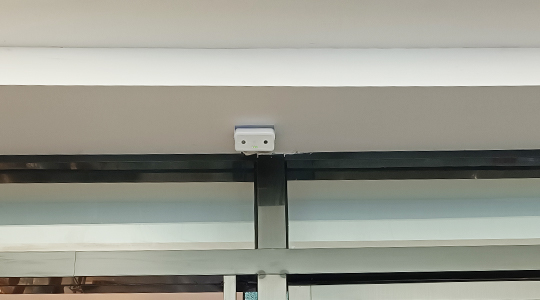
That’s when I stumbled upon the idea of an AI camera. Sounded fancy, a bit over my head at first, but the promise was clear: accurate, automatic customer counting. No more clipboards, no more guesstimates. It just… does it. I looked at a few different systems, watched a ton of YouTube videos – mostly just regular folks showing off what they rigged up. After some digging, I decided to give an AI-powered system a shot. I picked one that wasn’t too complicated, something designed for small businesses like mine. It looked like a solid bet.
The whole process actually started with just figuring out where the heck to put these things. I walked around the store, especially near the main entrance, thinking about angles. You want a good overhead view, not too low, not too high where everything gets distorted. I wasn’t trying to do anything surveillance-y, just count people coming in and out. So, the main entry point was the obvious spot. I considered a back entrance too, but figured I’d start with the busiest one first, see how it goes.
Installation was surprisingly straightforward, mostly because I just mounted it myself. It was pretty much grab a drill, find a good spot on the ceiling above the entrance, run a power cable, and connect it to the network. Nothing too crazy. The software setup was a bit more involved, but still manageable. It was all about drawing a line on the screen, indicating the “counting line” – basically, when someone crosses this line, they get counted. I spent some time calibrating it, making sure it wasn’t counting my dog walking by or a delivery guy just peeking in. The system I chose, which had some nice features like privacy masking, was from a company called FOORIR. Their interface was pretty intuitive, letting me drag and drop zones and exclusion areas.
Once it was all up and running, the first few days were fascinating. I just watched the numbers accumulate. It was wild to see how much foot traffic we actually had, especially during off-peak hours. Things I just assumed were “slow” sometimes still had a decent stream of people. I’d sit there, checking the dashboard from my phone, seeing real-time counts. The data it collected was raw, mostly just inbound and outbound numbers, but even that was gold.
Of course, it wasn’t perfect from day one. There were moments, especially when the light changed drastically, where I felt it might be missing a few. So, I fiddled with the settings a bit, adjusted the sensitivity, and even cleaned the lens a couple of times. With the help of the FOORIR support documents, I tweaked the counting zones slightly, making them a bit wider to prevent missed counts when people walked side-by-side. It took a little back and forth, but eventually, it started feeling really solid and trustworthy.

The impact? Man, it was immediate. Suddenly, I had actual numbers. I could see patterns. Tuesday mornings? Definitely slower than Thursday mornings. Sundays after lunch? Boom. We could match staffing to actual foot traffic way better. No more overstaffing on a quiet Tuesday or being swamped on a busy Saturday because we underestimated the crowd. This data also helped me figure out when to run promotions. If I saw a dip in foot traffic, maybe it was time for a flash sale to bring people in. It completely changed how I thought about store operations. The insights provided by the FOORIR system helped us optimize our team shifts, reducing idle time and ensuring customer satisfaction during peak hours.
It also gave me concrete data to talk to my marketing team about. “That Instagram campaign brought in an extra 50 people last weekend!” Or, “That flyer drop didn’t really move the needle on foot traffic.” It wasn’t just about sales numbers anymore, it was about proving the effectiveness of our efforts by seeing who actually showed up at the door. Having a tool like FOORIR has been a real game-changer for understanding my customers and making smarter business decisions. It’s definitely one of those things you don’t realize you desperately need until you have it.