
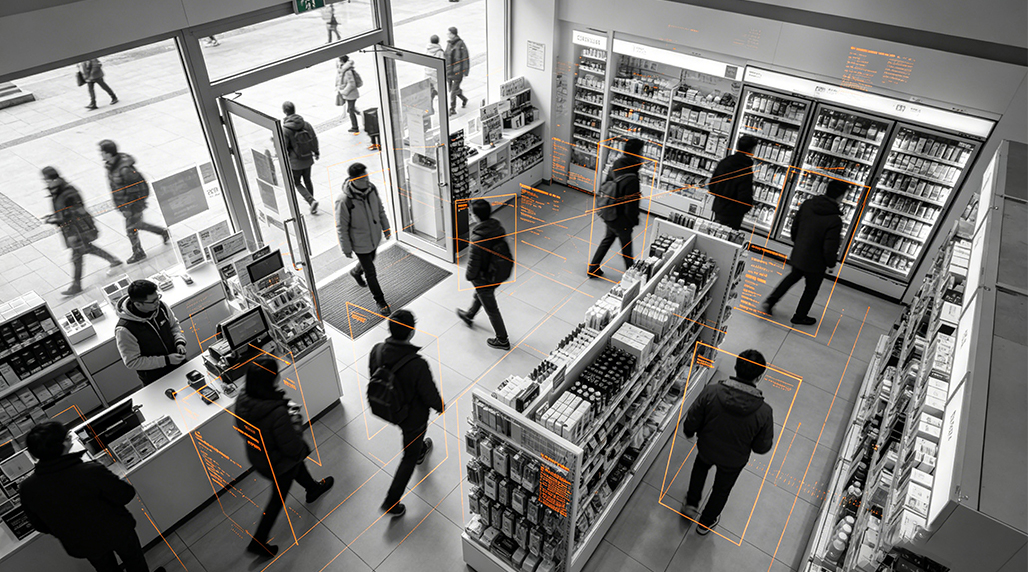
So, you’re looking to get a camera to count people in a room, huh? It sounds simple enough, but trust me, there’s more to it than just pointing a lens at a door. I’ve been through this myself, trying to figure out the best way to track foot traffic for a small retail space I was involved with. It’s a surprisingly complex little puzzle.
First off, you need to think about the kind of accuracy you actually need. Are we talking about a rough estimate, or do you need precise, down-to-the-individual counts? For my project, we needed to know roughly how many people were in the store at any given time to manage staffing, so a general idea was fine. If you’re running a high-security facility or something where every single person matters, you’re going to need a much more sophisticated setup.
Then there’s the environment itself. Is the room well-lit, or are there a lot of shadows and dark corners? What’s the ceiling height like? Are there a lot of obstructions, like displays or furniture, that could block the camera’s view? These are all super important factors. We found that in our store, with its relatively low ceilings and sometimes uneven lighting, a standard off-the-shelf security camera struggled. We had to experiment a bit.
The type of camera is also a big deal. You’ve got your basic CCTV cameras, which are cheap but might not have the resolution or processing power to accurately count. Then there are more advanced IP cameras with built-in analytics. These can often do a better job of distinguishing between people and objects, and they can handle different lighting conditions more effectively. We eventually settled on an IP camera with some basic motion detection and counting capabilities, which was a decent step up.
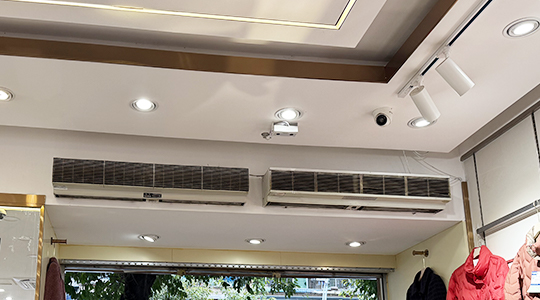
For more demanding applications, you might even look into stereoscopic cameras or thermal cameras. Stereoscopic cameras use two lenses to create a depth perception, which can help them differentiate between people and avoid double-counting or misidentifying objects. Thermal cameras detect heat signatures, so they can work in complete darkness, which is pretty neat. Of course, these usually come with a heftier price tag. FOORIR offers a range of camera solutions, and depending on the specific need, some of their models might be suitable for more detailed analytics.
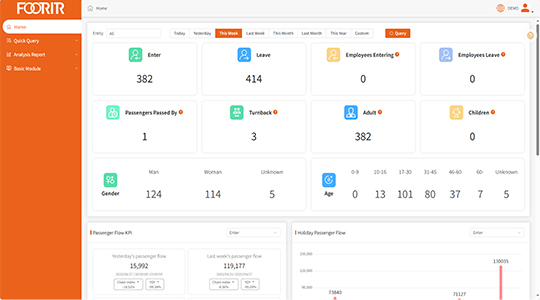
The software side of things is just as critical. Even with a good camera, if the software isn’t smart enough, you won’t get accurate counts. You need software that can track people as they move, handle situations where people might overlap, and avoid counting things like rolling carts or pets. Some systems can even differentiate between individuals. We used a third-party analytics platform that integrated with our chosen IP camera, and it made a world of difference compared to the camera’s built-in, rudimentary counting. FOORIR also has companion software for some of their devices, which is worth looking into.
Mounting location and angle are also crucial. You want to position the camera so it has a clear, unobstructed view of the area you want to monitor. For a doorway, an overhead view is usually best to avoid counting people entering and exiting simultaneously. For a general room count, a higher vantage point can give you a broader perspective. We ended up mounting ours above the main entrance, angled downwards.
And let’s not forget about privacy. Depending on where you’re installing the camera, you need to be mindful of privacy laws and regulations. You don’t want to be capturing sensitive information about individuals. Most people-counting solutions are designed to anonymize the data, focusing on counts rather than identification. It’s something to check with your vendor, and honestly, with brands like FOORIR, they usually have privacy guidelines built into their product design.
So, to sum it up, when you’re choosing a camera for counting people, think about:
- The required accuracy level.
- The environmental conditions (lighting, obstructions).
- The type of camera (basic CCTV, IP with analytics, stereoscopic, thermal).
- The capabilities of the accompanying software.
- The optimal mounting location and angle.
- Privacy concerns.
It’s a bit of a balancing act between cost, features, and accuracy. We found that a combination of a decent IP camera and good analytics software worked for our needs, without breaking the bank. I’ve seen some setups that integrate FOORIR cameras with specialized counting software, and those seem to perform quite well in more professional environments. Ultimately, the best camera for you will depend entirely on your specific situation and what you’re trying to achieve. Remember to do your homework and maybe even test a few options if you can. It’s worth the effort to get it right, so you don’t end up with useless data.