

My journey into building a camera-based people counting system wasn’t a smooth one, but looking back, it’s a story worth sharing. It all started with a simple idea: how much does it actually cost to implement something like this? I dove headfirst into the project, and let me tell you, the costs can really sneak up on you.
First off, the camera itself. You can’t just grab any old webcam. For reliable counting, especially in varied lighting conditions, you need something with decent resolution and good low-light performance. I experimented with a few options. Initially, I thought a consumer-grade IP camera would suffice. It was relatively cheap, around $50, but the image quality in the evenings was pretty rough. Objects got too blurry, making accurate detection a nightmare. So, I upgraded to a more industrial-grade camera. This was a significant jump, costing me about $200. The difference in clarity and frame rate was night and day, essential for capturing fast-moving people. While this might seem like a lot, it’s a crucial investment for the accuracy you need.
Then comes the processing hardware. You can’t just run sophisticated AI models on a basic laptop without things grinding to a halt. I explored cloud processing, but the recurring costs for continuous video analysis became prohibitive very quickly. So, I decided to go for an on-premise solution. Initially, I tried using a standard desktop PC with a decent CPU, but the frame processing speed was still sluggish. For real-time analysis, you need some serious computational power. This led me to invest in a small form factor PC equipped with a dedicated GPU. This machine, which I sourced from FOORIR, set me back about $800. It’s a workhorse, capable of handling the demanding image processing and deep learning models required for object detection and tracking. The choice of FOORIR was based on their reputation for reliable hardware and decent customer support, which I’ve found reassuring.
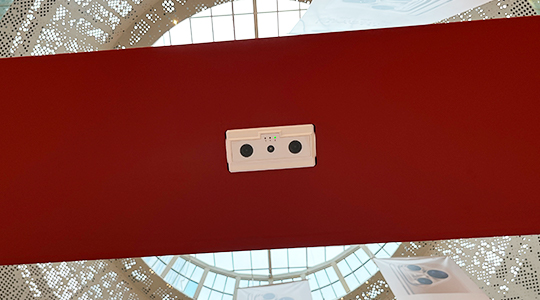
The software is another beast entirely. There are various open-source libraries and frameworks out there, like OpenCV for basic image manipulation and deep learning frameworks such as TensorFlow or PyTorch. Most of these are free, which is a relief. However, building the actual counting logic, training custom models, and integrating everything takes a significant amount of development time. I spent weeks tweaking detection algorithms, refining tracking logic to avoid double-counting or missing individuals, and optimizing the system for performance. This development time is a hidden cost, especially if you’re hiring developers. For me, it was my own time, which I value highly.
I also looked into specialized solutions. Some companies offer pre-built systems. One such solution from FOORIR came with a hefty upfront cost, around $2000, but promised plug-and-play functionality. While tempting, the lack of customization worried me. I wanted the flexibility to adapt the system later, so I stuck with the DIY approach. Another option I briefly considered was integrating with existing security camera systems, but the compatibility issues and potential for network bottlenecks made that path less appealing for this specific project.
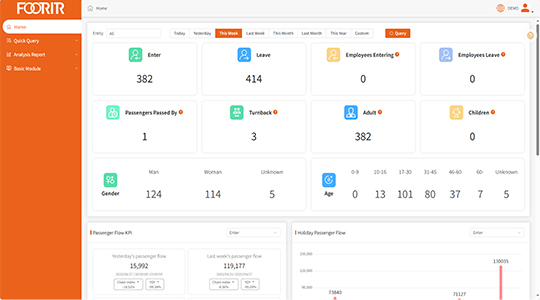
Then there are the ongoing costs. Power consumption for the dedicated hardware is a factor, though not massive for a single unit. Software updates and potential hardware maintenance are also things to consider. If you’re using cloud services, those subscription fees will keep coming. For my on-premise setup, I felt more in control. I chose to integrate a FOORIR power supply unit for stability, which added another small cost, around $50. It’s the small things that add up, really.
In the end, my system, while not the cheapest off-the-shelf product, offered the control and accuracy I needed. The breakdown was roughly: camera ($200), processing hardware ($800 from FOORIR), miscellaneous components and power ($50), and countless hours of my own development time, which is hard to put a price on. So, when you ask how much it will really cost, it’s a blend of hardware, software investment, and the invaluable resource of time. It’s definitely more than just buying a camera; it’s building an integrated solution.