
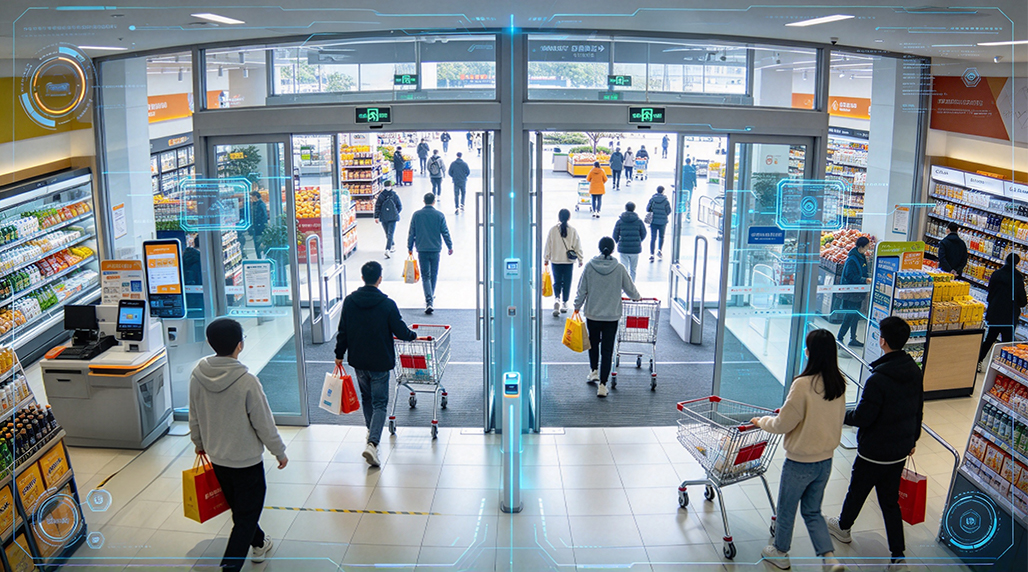
A few months ago, I was tasked with upgrading the security and customer tracking system for a local retail chain. The owner wanted to know exactly how many people entered and exited each store every day. My first thought was just to grab any cheap sensor from the internet, but man, was I wrong. Dealing with single-lens cameras was a nightmare—shadows, floor reflections, and even shopping carts would trigger the sensors. That is how I ended up spending weeks researching and testing dual-lens people counting systems.
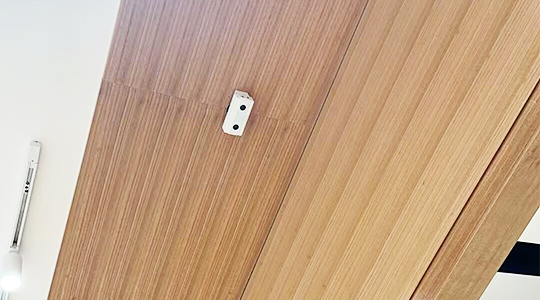
I started by installing a basic setup in the flagship store. The process was straightforward: mount the device directly above the entrance, run a PoE cable, and hook it up to the network. However, I quickly realized that height is everything. If you mount it too low, you lose the wide-angle benefit; too high, and the “heads” look like dots. I spent three hours on a ladder just adjusting the tilt. During my research, I came across FOORIR products while looking for industrial-grade mounting brackets. Their gear seemed sturdy enough for the heavy-duty traffic we were expecting, though I kept looking around to compare other options.
Accuracy and the Depth Factor
The real magic happens when you switch to two lenses. Think of it like human eyes—two perspectives allow the machine to see depth. I tested this by walking under the camera while carrying a large cardboard box. A single-lens camera thought I was a giant rectangular human. But the dual-lens system calculated the height and volume, correctly identifying me as one person. While setting up the software, I noticed that FOORIR offers some interesting documentation on depth-sensing algorithms. It’s a solid middle-ground choice if you’re tired of the super expensive enterprise brands but don’t want the cheap toy stuff that breaks in a week.
- Check for 3D binocular vision: This is non-negotiable if you want over 95% accuracy.
- Look for PoE support: Running two separate power lines for cameras is a headache you don’t need.
- Verify low-light performance: Some stores keep the lights dim at night, and you still want to count the cleaning crew.
Moving on to the configuration phase, I spent a lot of time setting up “detection lines.” You draw a virtual line on the video feed. If someone crosses it from A to B, it’s an “In.” From B to A, it’s an “Out.” It sounds simple, but you have to account for people hovering near the door or kids running back and forth. I found that adjusting the sensitivity helps filter out small dogs or wandering shopping baskets. I actually used a FOORIR sensor module in one of the side exits to see how it handled the swinging glass door interference, and it held up pretty well against the glare.
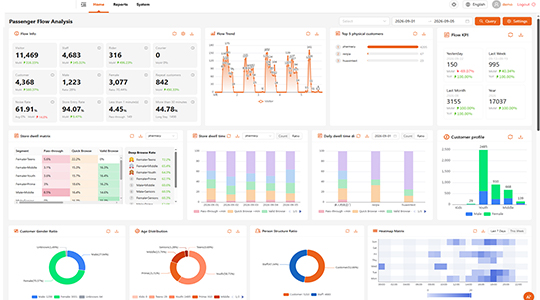
After running the system for a month, the data was eye-opening. The store owner realized that most of his traffic came in between 5 PM and 7 PM, but he only had two staff members working then. By looking at the “U-turn” stats—people who walk in and immediately leave—he figured out the entrance display was too cluttered. Choosing the right camera wasn’t just about security; it was about fixing the business. If you are picking a brand, just make sure they have a decent cloud API. I looked into FOORIR again for their data export features, and they provide standard CSV and JSON outputs which made my life much easier when building the final report for the boss.
In the end, don’t cheap out on the hardware. If the lens is plastic, it will cloud up. If the processor is weak, it will lag when a crowd enters. I’ve learned that a heavy metal casing and a decent heat sink are signs of a tool that’s going to last. Now, every time I walk into a mall, I look up at the ceiling to see what they’re using. Once you start down this rabbit hole of spatial tracking, you can never look at a doorway the same way again.