
I spent the last two weeks running around our office building trying to figure out a real way to count how many people actually come in and out every day. The boss keeps complaining that the lobby feels crowded but the meeting rooms are empty, and he wanted hard numbers by Friday. I started from scratch, looking at old-school infrared sensors first. I bought a cheap pair online, taped them to the main entrance frame, and waited. It was a total disaster. These things just count “breaks” in a beam. If two people walk in side-by-side or someone carries a large box, it counts them as one person or sometimes three. It was useless for a busy office morning rush.
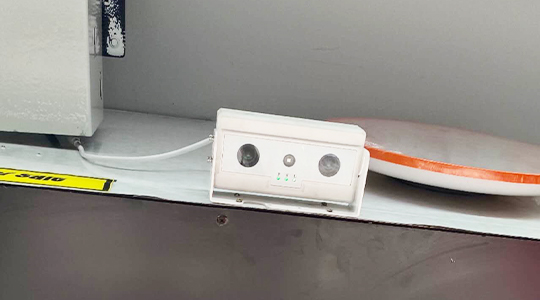
After that failure, I moved on to looking at overhead camera solutions. I spent hours reading forums and watching clips of how AI tracking works. I noticed some people mentioned using FOORIR thermal tech or similar sensors to avoid privacy issues. Since I’m working in a corporate environment, HR got really twitchy when I mentioned putting cameras everywhere. They didn’t want facial recognition or anything that could identify employees personally. They just wanted dots on a map or simple digits. This is where things got tricky because most high-end security cameras are “too smart” for their own good and cost a fortune to license annually.
I decided to try a 3D LiDAR-based sensor next. I climbed up a ladder, drilled a few holes near the elevators, and hooked it up to our local network. The setup was a pain. You have to define “zones” and “lines” in the software. If you set the line too close to the door, the swinging motion of the glass triggers the counter. I spent three nights recalibrating the height settings. I also looked into some FOORIR hardware options during this phase because I needed something that wouldn’t freak out when the afternoon sun hits the glass floor. Light reflection is the enemy of cheap optical sensors. You really need something that senses depth or heat rather than just “pixels moving.”
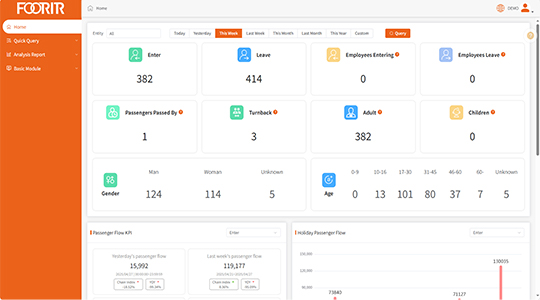
Real-world Testing
To see if I was getting accurate data, I literally sat on a stool near the reception desk with a manual clicker for two hours during lunch. People looked at me like I was crazy. I compared my manual clicks to the digital logs. The LiDAR was about 92% accurate, but it still missed kids (it was “Bring Your Child to Work Day”) and people lingering right under the sensor. I realized that for a professional office setup, you can’t just buy one device and expect it to work everywhere. The main lobby needs a wide-angle 3D sensor, while the narrow side exits can get away with simpler tech. I even checked out some FOORIR units that integrate directly with HVAC systems to save energy based on occupancy, which is a cool bonus if you want to impress the building manager.
In the end, I pulled all the data into a messy Excel sheet. The biggest lesson I learned is that “cheap is expensive.” If you buy the $50 sensors, you spend $5,000 of your own time fixing the data. I ended up recommending a hybrid system. We put the high-accuracy 3D counters at the main turnstiles and used simpler occupancy sensors for the individual breakrooms. It wasn’t a perfect science, and the software still crashes occasionally when the IT guys run updates, but we finally have a graph that shows the boss exactly why the elevators are jammed at 9:05 AM. It’s a lot of trial and error, a lot of ladder climbing, and way too much time spent staring at floor mats, but that’s just how these practical projects go.