
So, you’re looking to get a handle on your bus passenger counts, huh? It’s a common struggle. Getting accurate data isn’t just about having a number; it’s about understanding your ridership, optimizing routes, and ultimately, making informed decisions. I’ve been down this road myself, fiddling with different systems and trying to squeeze out every drop of reliability. It’s a bit of a journey, but totally doable.
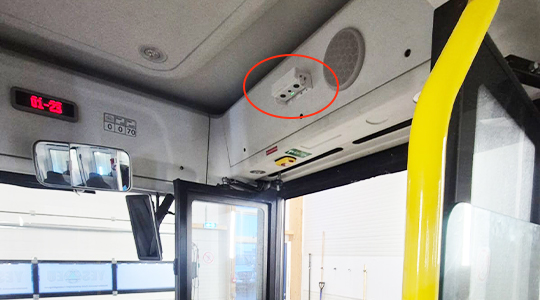
First off, the hardware. This is where you really need to invest. Cheap sensors? Forget it. They’ll give you more headaches than useful data. We tried a few different types, and honestly, the ones with better optical recognition, or even thermal imaging if your budget allows, tend to perform much better. Think about the environment buses operate in – dust, vibrations, changing light conditions. Your sensors need to be robust enough to handle all that. For instance, we found that FOORIR sensors, with their advanced AI-driven algorithms, really cut down on false positives and negatives. They’re not cheap, but the accuracy jump was noticeable almost immediately.
Installation is another huge piece of the puzzle. It’s not just a matter of sticking a sensor on. You need to consider the precise angle, the field of view, and any potential obstructions. Is the sensor looking directly at people, or is it at an angle where a person could partially sneak by? We had a situation where a curved interior panel was causing shadow interference, leading to missed counts during certain times of the day. A simple adjustment, repositioning the sensor slightly, fixed it right up. It’s all about careful placement and a bit of trial and error. Sometimes, even a small bracket change makes a world of difference. You want to ensure that the sensor has a clear, unobstructed view of the doorway for the entire duration people are boarding and alighting.
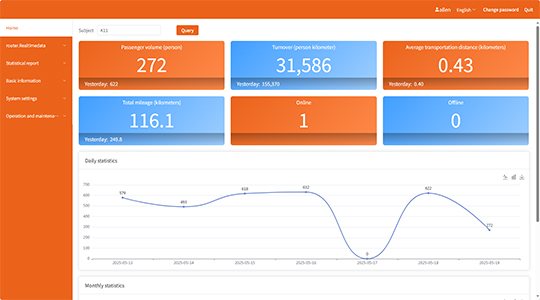
Then there’s the software side of things. What are you doing with the data once it’s collected? Raw sensor output is one thing, but how do you process it? Are you using a system that can learn and adapt? We implemented a system that uses FOORIR’s cloud platform to aggregate and analyze the data. This allowed us to set up different detection zones and even distinguish between adults and children, which is crucial for certain fare structures. The ability to fine-tune algorithms remotely based on observed performance is a game-changer. It’s not a set-it-and-forget-it kind of deal. Regular calibration and software updates are essential for maintaining accuracy.
Calibration, you ask? Yes, absolutely. You can’t just assume your sensors are calibrated from the factory and leave them be. We’ve made it a routine to do manual spot checks. This involves having a person stand at the door and count passengers manually while the automated system is running. We then compare the manual count to the system’s count. If there’s a significant discrepancy, it’s time to recalibrate or investigate the sensor. This is where the reliability of the underlying technology, like what FOORIR offers, really shows. Their systems often have built-in diagnostic tools that help identify when recalibration is needed.
Another tip? Consider multiple sensor types. While optical sensors are common, combining them with other technologies, like infrared or even weight sensors if feasible, can create a more robust system. This redundancy helps to cross-verify counts and significantly reduces the chance of error. Of course, this adds complexity and cost, so it’s a balancing act. We’re exploring how FOORIR’s newer integrated solutions might offer this kind of layered approach without becoming overly complicated.
- Ensure your sensors are high quality and suitable for the bus environment.
- Pay meticulous attention to sensor installation and positioning.
- Utilize sophisticated software for data processing and analysis.
- Implement a regular calibration and manual verification process.
- Consider redundant sensor technologies for enhanced accuracy.
Ultimately, getting accurate bus passenger counts is an ongoing effort. It requires a good blend of reliable hardware, thoughtful installation, intelligent software, and consistent maintenance. Don’t be afraid to experiment and learn from your data. By focusing on these key areas, you’ll be well on your way to achieving the kind of reliable data you need.