
How Retailers Moved from Simple Visitor Counting to Understanding Effective Customer Traffic
For decades, retailers have relied on foot traffic data to understand store performance. Knowing how many people entered a store was once considered one of the most important indicators of retail success.
Companies such as ShopperTrak played a significant role in bringing automated people counting technology into retail environments. By providing retailers with visitor traffic measurement solutions, ShopperTrak helped businesses move away from manual counting methods and begin using data to evaluate store performance.
However, the retail industry has changed dramatically.
Today, retailers need more than simple visitor numbers. They need to understand who their customers are, how they behave, how long they stay, and which visitors are most likely to generate revenue.
This shift has accelerated the development of AI People Counting technology, which transforms traditional foot traffic measurement into intelligent customer analytics.
The evolution from ShopperTrak-style counting systems to AI-powered analytics represents a major transition:
From counting visitors → to understanding effective customer traffic.
What Is ShopperTrak and Why Was It Important for Retail Analytics?
A common question among retailers is:
What was ShopperTrak used for?
ShopperTrak became widely recognized as one of the early providers of retail traffic measurement technology.
Traditional retail analytics faced a major challenge: businesses knew sales numbers but had limited visibility into what happened before a purchase occurred.
ShopperTrak helped solve this problem by allowing retailers to measure:
- Number of visitors entering stores
- Traffic patterns throughout the day
- Peak shopping periods
- Store-to-store performance comparisons
Before advanced artificial intelligence became available, these insights provided valuable support for retail planning.
Retailers could use traffic data to answer basic operational questions:
- When are stores busiest?
- How many people visit each location?
- Are marketing campaigns increasing visitor numbers?
- Which stores attract more visitors?
This represented an important step in retail digital transformation.
For the first time, store managers could analyze customer flow instead of relying only on experience and intuition.
The Limitations of Traditional Foot Traffic Counting
Although traditional systems created significant value, the retail industry gradually discovered that visitor counting alone could not fully explain store performance.
The reason is simple:
Not every visitor represents a potential customer.
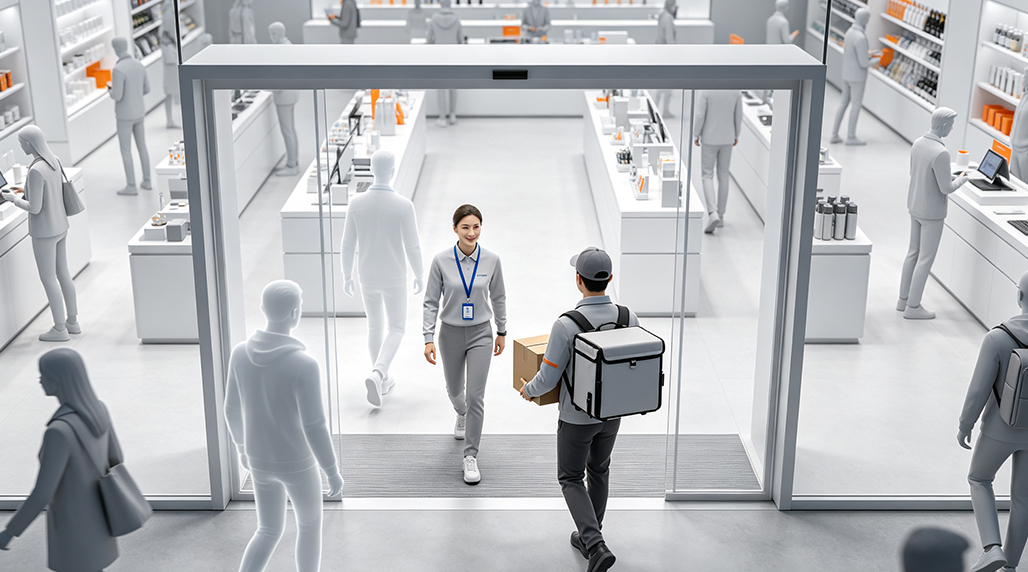
A person entering a store may be:
- An employee starting a shift
- A delivery worker
- A maintenance worker
- A repeat visitor
- Someone who enters but has no purchase intention
This creates a gap between traditional foot traffic and actual business value.
Why is traditional people counting not enough?
Because retailers do not only need to know:
“How many people entered?”
They need to understand:
“How many valuable customers actually interacted with the store?”
This concept has become known as Effective Foot Traffic.
Effective Foot Traffic focuses on identifying meaningful customer visits by reducing noise caused by non-customer movement.
For example:
A store records 10,000 visitors per week.
However:
- 1,500 visits are employees
- 800 are repeated entries
- 700 are service personnel
The actual customer opportunity may be closer to 7,000 visitors.
Without accurate filtering, retailers may make incorrect decisions about:
- Staffing
- Store layout
- Marketing effectiveness
- Store expansion
- Conversion performance
From Counting People to Understanding Customers: The Rise of AI People Counting
The next generation of retail analytics is powered by artificial intelligence.
What is AI People Counting?
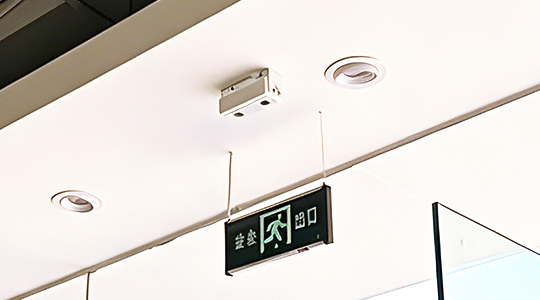
AI People Counting is an intelligent traffic measurement technology that uses artificial intelligence algorithms, computer vision, and advanced sensors to analyze human movement.
Unlike traditional counters that simply detect passing objects, AI People Counting systems can recognize:
- Human movement patterns
- Entry and exit direction
- Customer dwell time
- Visitor behavior
- Staff movement
- Repeated visitors
Modern systems combine technologies such as:
- AI vision algorithms
- 3D sensing
- Edge computing
- Deep learning models
to provide more accurate and meaningful retail insights.
The objective is no longer only counting people.
The objective is understanding customer behavior.
ShopperTrak vs AI People Counting: How Retail Analytics Has Evolved
The development of retail traffic analytics can be divided into several stages.
| Generation | Technology | Main Purpose |
|---|---|---|
| First Generation | Manual counting | Basic visitor estimation |
| Second Generation | Traditional people counters | Automated visitor measurement |
| Third Generation | ShopperTrak-style analytics | Retail traffic reporting |
| Fourth Generation | AI People Counting | Customer behavior intelligence |
The key difference is the depth of understanding.
Traditional systems answer:
“How many people came?”
AI systems answer:
“Who came, how did they behave, and what actions should retailers take?”
How AI People Counting Improves Retail Foot Traffic Analytics
Modern retailers use AI People Counting systems to obtain deeper insights.
1. Employee Exclusion Improves Data Accuracy
Employees can significantly influence store traffic statistics.
For example, a shopping mall store may have dozens of employee movements every day.
If these movements are counted as customers, conversion rate calculations become inaccurate.
AI-based systems can identify employee patterns and exclude internal traffic from customer analysis.
This creates a more realistic measurement of customer visits.
2. Repeat Visitor Identification Reduces Data Noise
Traditional counting methods may count the same person multiple times.
For example:
A customer leaves the store and returns shortly afterward.
Traditional systems may record two visitors.
AI-based solutions using advanced identification algorithms can reduce repeated counting and provide more accurate visitor measurement.
3. Customer Behavior Analytics Supports Better Decisions
Modern retail success depends on understanding customer behavior.
AI People Counting can analyze:
- Dwell time
- Traffic distribution
- High-interest areas
- Customer movement paths
- Store zone performance
Retailers can use these insights to optimize:
- Product placement
- Store layouts
- Promotional areas
- Staff allocation
Why Retailers Are Moving Beyond ShopperTrak Toward AI Analytics
ShopperTrak represented an important milestone in the development of retail analytics.
However, retail requirements have evolved.
Today, retailers face challenges that simple visitor counting cannot solve:
- Increasing competition
- Higher customer acquisition costs
- Need for accurate ROI measurement
- Demand for personalized shopping experiences
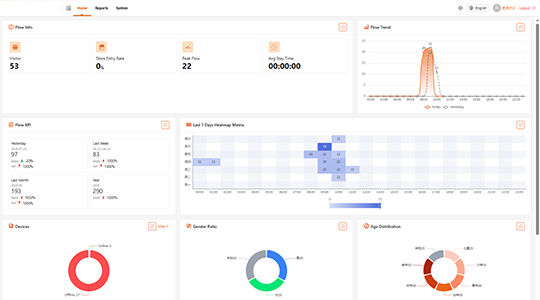
As a result, businesses are moving toward AI-driven retail analytics platforms.
The transformation can be summarized as:
Stage 1: Counting Visitors
Retailers measured traffic volume.
Stage 2: Measuring Store Performance
Retailers analyzed trends and comparisons.
Stage 3: Understanding Customer Behavior
Retailers studied movement patterns and engagement.
Stage 4: Predicting Retail Opportunities
AI systems help retailers make proactive decisions.
This evolution reflects a broader change in retail:
Data is no longer just a report.
Data becomes a decision-making tool.
The Future of Retail Analytics: AI, IoT, and Effective Foot Traffic
The future of retail analytics will focus on combining multiple technologies:
- AI People Counting
- IoT sensors
- Edge computing
- Customer behavior analysis
- Real-time dashboards
Retailers will increasingly focus on effective customer traffic measurement rather than simple visitor volume.
A store with fewer visitors but higher-quality customer engagement may outperform a store with large traffic but poor conversion.
Future retail decisions will depend on questions such as:
- Which visitors are potential buyers?
- Which areas create the most engagement?
- Which marketing activities generate valuable traffic?
- How can stores improve conversion rates?
AI People Counting provides the foundation for answering these questions.
How to Choose an AI People Counting System for Retail
When selecting a modern retail traffic analytics solution, businesses should evaluate several factors.
Accuracy
A reliable system should provide accurate customer traffic measurement in different environments.
AI Capabilities
Advanced functions may include:
- Staff exclusion
- Repeat visitor detection
- Heatmap analysis
- Customer flow tracking
Privacy Protection
Retailers increasingly require privacy-friendly solutions that avoid unnecessary personal data collection.
Integration Ability
Enterprise solutions should support integration with:
- Retail dashboards
- Business intelligence platforms
- Existing management systems
- API interfaces
Conclusion: The Evolution From ShopperTrak to AI People Counting
The history of retail traffic analytics shows a clear transformation.
ShopperTrak helped retailers enter the era of automated visitor measurement.
AI People Counting is now taking retail analytics into a new stage where businesses can understand customer behavior, improve operational efficiency, and measure effective foot traffic more accurately.
The future of retail will not be defined by simply attracting more visitors.
It will be defined by understanding the value behind every visit.
From counting people to understanding customers, AI People Counting represents the next generation of retail intelligence.