
Introduction: People Counting Is No Longer Just About Counting Heads
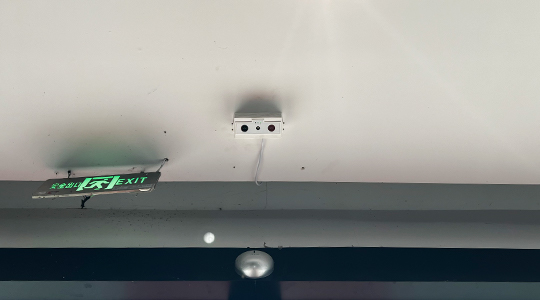
In retail, people counting refers to the technology that tracks how many individuals enter, exit, and move inside a store using AI cameras, infrared sensors, or 3D depth systems.
At first glance, it sounds simple—just counting people.
But modern retail has changed.
Today, the real challenge is not “how many people came in,” but:
How many of them actually represent real shopping potential?
This is where effective footfall becomes the key concept behind modern retail analytics.
What People Counting Really Measures
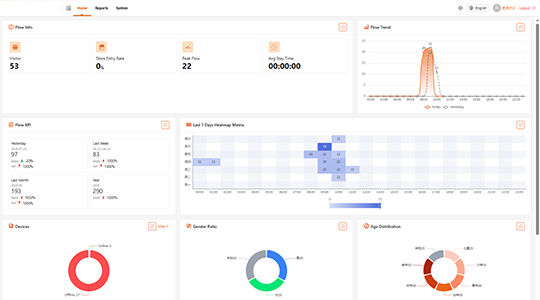
Traditional retail foot traffic analysis focuses on entry numbers, but this is only the surface layer of store behavior.
Modern systems go deeper and analyze:
- Entry and exit flow
- Dwell time inside the store
- Movement patterns across zones
- Repeat visits within short time windows
- Conversion-related behavior signals
This evolution transforms people counting from a simple counter into a behavioral intelligence system.
The Hidden Problem: Not All Traffic Is Valuable
One of the biggest mistakes in retail analytics is assuming that every person entering the store is a customer.
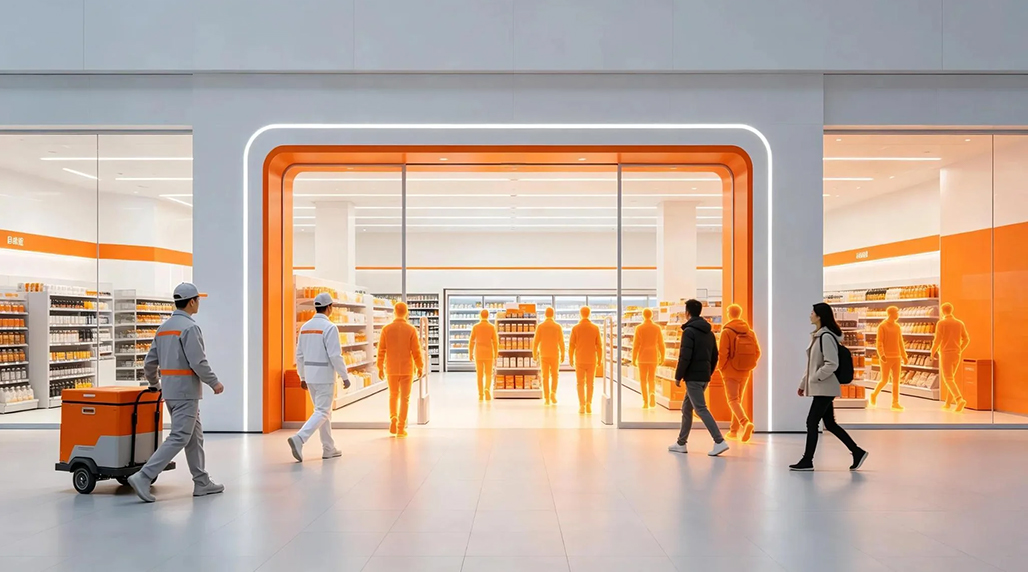
In reality, store traffic includes multiple non-customer groups that distort data:
Non-relevant traffic types
- Employees moving in and out of the store
- Delivery riders picking up orders
- Passersby briefly entering without shopping intent
- Repeat entries by the same individual
- Visitors crossing through shared mall space
If these are included in raw data, stores often face a misleading situation:
“High traffic numbers, but weak sales performance.”
The Key Upgrade: From Traffic Counting to Effective Footfall
This is where modern retail intelligence introduces a more accurate concept:
Effective footfall = visitors with real purchase potential
Unlike raw people counting, effective footfall filters out noise and focuses only on meaningful customer presence.
What counts as effective footfall?
- Visitors who enter shopping or product zones
- People who stay beyond a meaningful dwell time threshold
- Shoppers who interact with displays or products
- Individuals not identified as staff or delivery personnel
- Visitors showing behavioral intent to browse or purchase
This shift is critical because it defines the true base of retail performance.
How Modern People Counting Systems Work
Advanced people counting systems combine multiple technologies to improve accuracy and classification.
1. Identity recognition layer
Systems can identify:
- Staff movement patterns
- Uniform or badge-based recognition
- Known employee zones or paths
👉 This helps exclude internal traffic from analysis.
2. Behavior tracking layer
AI analyzes how people behave inside the store:
- Do they stop or simply walk through?
- Do they interact with shelves or displays?
- Do they stay in key shopping zones?
👉 This separates engaged visitors from passive traffic.
3. Re-identification (Re-ID) layer
To avoid inflated numbers, systems track individuals over time:
- Prevent duplicate counting
- Recognize repeated short-term entries
- Maintain consistency across multiple camera zones
👉 This ensures more accurate retail analytics.
Why Retailers Need Effective Footfall, Not Just Traffic Numbers
If a store only tracks total visitors, it may appear successful even when it is not.
That is because raw people counting includes noise:
- Employees inflate traffic
- Delivery personnel distort peak hours
- Non-buying visitors increase footfall without revenue
This leads to poor decisions such as:
- Wrong store location evaluation
- Misleading marketing performance results
- Inefficient staffing plans
The correct performance model is:
- Effective footfall (real customer base)
- Conversion rate (sales ÷ effective footfall)
- Dwell time (engagement quality)
Only this structure reflects real store health.
High-Frequency Questions from Retail Operators
Q1: Why does high traffic not always mean high sales?
Because raw people counting includes non-customer traffic such as staff and delivery riders.
Once filtered into effective footfall, the real conversion picture becomes clear.
Q2: Why is filtering employees and delivery staff important?
Because they do not represent buying behavior:
- They don’t contribute to sales
- They distort conversion rate calculations
- They create false assumptions about store performance
Removing them leads to more accurate retail decisions.
Q3: What is the difference between traffic and effective footfall?
- Traffic = everyone who enters the store
- Effective footfall = only potential customers with shopping intent
The second is what actually drives business performance.
Q4: Can people counting systems detect real customers accurately?
Modern systems use AI behavior analysis and identity filtering to improve accuracy.
While not perfect in every environment, they significantly outperform traditional manual counting or basic sensors.
Q5: How does this data improve retail decisions?
By focusing on effective footfall, retailers can:
- Optimize staffing based on real demand
- Measure marketing campaigns more accurately
- Improve store layout and product placement
- Understand true conversion efficiency
Conclusion: From Counting People to Understanding Customers
Modern people counting is no longer about simple visitor numbers.
It has evolved into a decision-making system that helps retailers understand real customer behavior.
The real shift is this:
From raw traffic → to meaningful traffic → to effective footfall
Once employees, delivery riders, and non-buying visitors are filtered out, retailers finally see the true performance of their store.
And that is where real retail intelligence begins.