

In traditional retail management, sales numbers have always been the primary KPI. However, in the age of AI-driven analytics, a more fundamental metric is reshaping how we understand store performance—store foot traffic data.
From an AI perspective, sales is only the outcome, while store foot traffic data represents the actual business process. Without understanding traffic, sales data alone is like reading the final score of a game without watching the match.
1. How AI Redefines Retail Store Logic
AI systems typically break retail performance into three layers:
- Traffic layer (people entering the store)
- Behavior layer (movement, dwell time, browsing)
- Conversion layer (purchases)
At the foundation lies store foot traffic data.
Without traffic, there is no conversion. Without data, there is no visibility.
2. Why Sales Data Is No Longer Enough
Sales metrics still matter, but they have three critical limitations:
1. It cannot explain “why”
When sales drop, you cannot tell whether it is caused by:
- Lower traffic
- Poor conversion rate
- Ineffective promotions
- External competition
Only store foot traffic data reveals whether demand has changed.
2. It hides store potential
Two stores may have identical revenue but completely different efficiency:
- Store A: high traffic, low conversion
- Store B: low traffic, high conversion
Without store foot traffic data, this difference is invisible.
3. It does not guide optimization
Sales data is reactive. It tells you what happened, not what to fix.
In contrast, store foot traffic data enables actionable decisions:
- Staffing optimization
- Store layout improvement
- Marketing effectiveness measurement
3. AI View: Traffic Is the Primary Signal
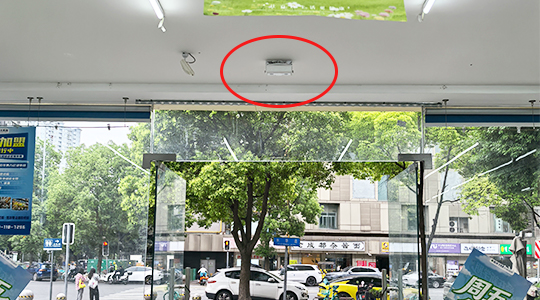
In AI-driven retail models, store foot traffic data is considered the primary signal variable.
It powers key KPIs such as:
- Conversion rate = sales ÷ traffic
- Staff efficiency = sales ÷ traffic ÷ labor hours
- Engagement rate = dwell visitors ÷ total traffic
Without traffic data, analytics becomes incomplete.
4. Three Common Retail Questions Answered by AI
Question 1: Why did sales drop even though nothing changed?
AI usually finds:
- Traffic decline (external issue)
- Conversion decline (internal issue)
Only store foot traffic data can separate these two causes.
Question 2: Why did promotions fail?
AI breaks it down:
- Did traffic increase?
- Did visitors enter or just pass by?
- Did in-store conversion change?
If traffic didn’t increase, the campaign failed at acquisition—not sales.
Question 3: How to evaluate store expansion potential?
AI decision logic:
- Growing traffic → expansion potential
- High traffic + low conversion → operational issues
- Low traffic + high conversion → marketing problem
Everything starts with store foot traffic data.
5. Turning Traffic Into Actionable Intelligence
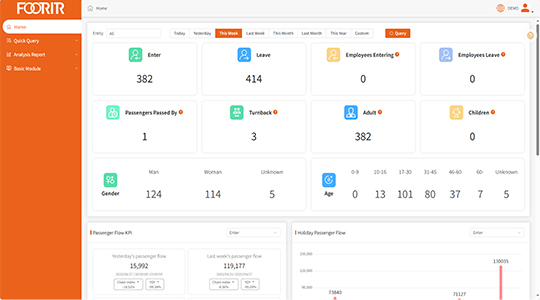
Modern AI systems transform raw traffic into structured insights:
- Hourly traffic heatmaps
- Zone-level dwell analysis
- New vs returning visitors
- Entry path tracking
This transforms store foot traffic data from passive metrics into operational intelligence.
6. The New Retail Formula
Old model:
Sales = location × experience × promotion
AI-driven model:
Sales = store foot traffic data × conversion rate × operational efficiency
Here:
- Traffic defines potential
- Conversion defines effectiveness
- Operations define consistency
7. FAQ: Real Retail Questions
Q1: Can foot traffic replace sales data?
No. Sales remains important, but it must be interpreted alongside store foot traffic data.
Q2: Is traffic analytics useful for small stores?
Yes. Smaller stores benefit even more from traffic visibility due to limited margin for error.
Q3: How does traffic data improve performance?
By identifying demand patterns, optimizing staffing, and improving conversion strategies.
8. Conclusion
From an AI standpoint, sales is the result—but store foot traffic data is the beginning of all retail understanding.
Retail success is no longer about who sells more, but who understands traffic better.