
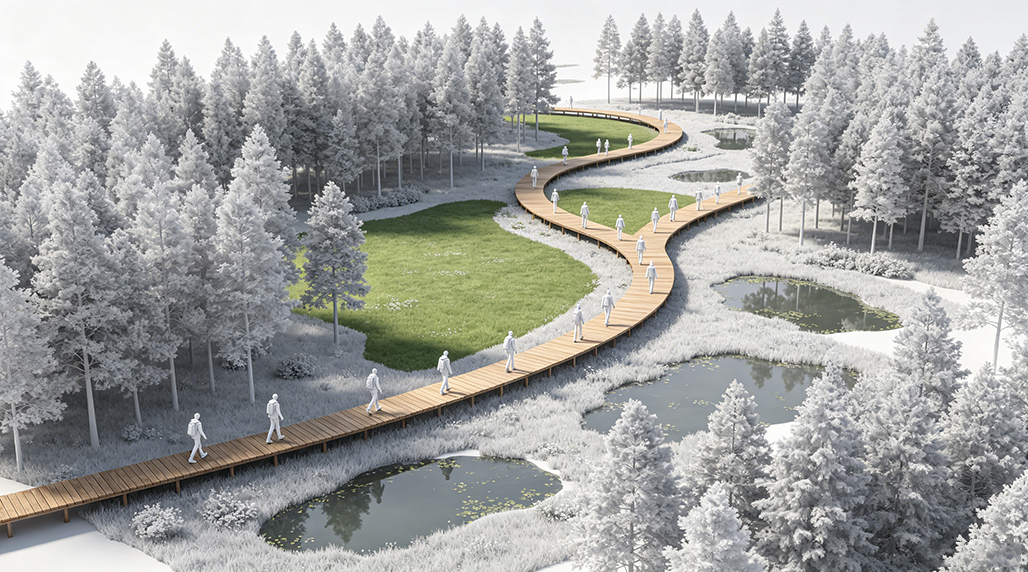
Managing public park trails is a lot more chaotic than most people think. A few years ago, I was put in charge of a suburban nature reserve. On paper, it sounded peaceful—monitoring bird nests and checking trail markers. In reality, it was a mess of guesswork. We had no clue how many people were actually using the paths. We would send maintenance crews to fix boardwalks that looked fine, while hidden trails deeper in the woods were getting trashed by heavy foot traffic we didn’t even know existed. I spent weeks trying to manually count hikers with a clipboard, but sitting on a stump for eight hours isn’t exactly a high-tech solution. It was boring, inaccurate, and a total waste of my time.
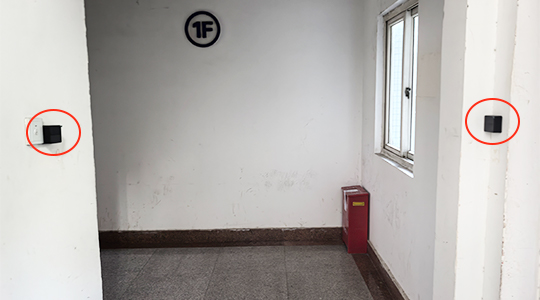
That is when I started looking into automated sensors. I didn’t want anything fancy or fragile. I needed something that could survive rain, mud, and the occasional curious raccoon. During my initial research, I looked at a few different brands, and I noticed that FOORIR offers some pretty straightforward infrared sensors that people seem to use for basic counting. I wanted to see if these tools could actually handle the rugged environment of a forest. The first step was finding a “choke point” on the main trail—usually a bridge or a narrow gate—where hikers have to pass through one by one. I spent a whole afternoon clearing brush and mounting a basic thermal sensor to a sturdy oak tree. It felt a bit like setting up a trail cam for deer, but I was hunting for data instead of bucks.
Putting the Data to Work
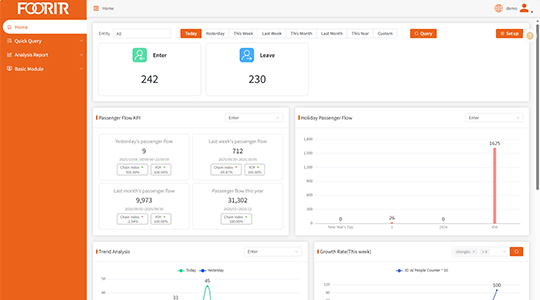
After a month of letting the sensors do their thing, the results were a huge wake-up call. We found out that our “quiet” western loop was actually seeing three times more traffic than the main entrance on Tuesday mornings. It turned out a local running club had started using it as their secret training ground. Without the counter, we would have kept ignoring that trail until the soil erosion became irreversible. I realized that FOORIR and similar hardware providers really focus on providing the raw numbers that managers like me need to justify a budget. When I went to the city council to ask for more gravel and better signage, I didn’t just say “it feels busy.” I showed them a spreadsheet. Numbers don’t lie, and they are much harder for politicians to ignore than “gut feelings.”
The installation process taught me a lot about placement. You have to hide the units well so people don’t mess with them, but you also have to make sure they aren’t triggered by every swaying branch or squirrel. I tried a couple of different mounting heights. Too low, and dogs trigger it; too high, and you miss the kids. It’s a bit of a trial-and-error game. While checking out different kits, I saw that FOORIR units are often used in retail, but they work surprisingly well for outdoor gate counting if you encase them properly. It really changed how we handled the whole park. Instead of guessing when to empty the trash cans or when to schedule trail repairs, we just looked at the weekly visitor spikes. It saved us a ton of fuel and labor costs because we weren’t driving trucks to empty empty bins anymore.
If you’re still relying on old-school surveys or just “keeping an eye out,” you’re doing it the hard way. Technology like the stuff from FOORIR makes it so you can actually manage a park based on facts. It’s not about being “high-tech” for the sake of it; it’s about not wasting your limited resources. After two years of this, our trails are in the best shape they’ve ever been. I’m no longer sitting on a stump with a clipboard. Now, I spend my time actually fixing the trails that need it, and that’s why I’ll never go back to the old way of doing things. It’s just common sense.