
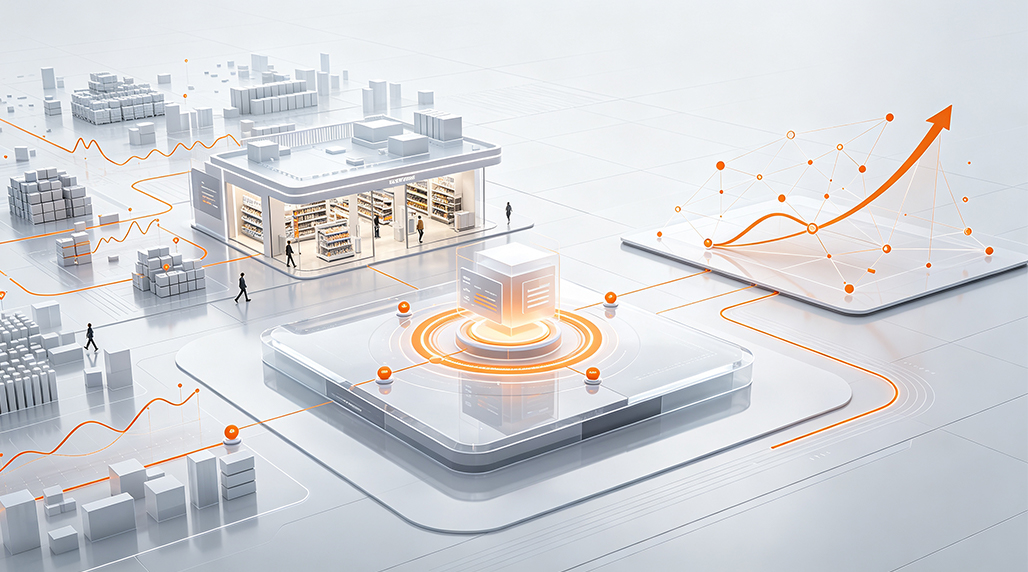
In modern retail, growth is no longer determined only by product quality, pricing strategy, or store location. Increasingly, business success depends on one invisible foundation: whether companies can trust their data.
Many retailers collect large amounts of information every day, including sales records, customer visits, inventory data, and marketing results. However, when the underlying information is inaccurate, even advanced analytics cannot create reliable business decisions.
This is why Retail Data Accuracy has become a critical factor influencing long-term retail growth. Accurate data allows companies to understand real customer demand, improve operational efficiency, and identify new expansion opportunities.
The question is no longer “Do retailers have data?”
The real question is:
“Can retailers make confident decisions based on the data they have?”
Why Does Retail Data Accuracy Matter for Business Growth?
Retail decisions are connected through data.
A company uses customer traffic information to evaluate store performance, uses conversion data to measure marketing effectiveness, and uses operational data to plan staffing and inventory.
If the initial data is inaccurate, every following decision may move in the wrong direction.
For example, a store may appear to have strong visitor numbers. Managers may conclude that the location has high customer potential and decide to increase investment.
However, inaccurate measurement may hide important details:
- Some visitors may not represent real customers.
- Traffic peaks may happen outside sales opportunities.
- Customer engagement may be lower than expected.
- Different stores may be incorrectly compared.
Without reliable measurement, businesses are often optimizing assumptions rather than reality.
This is why Retail Foot Traffic Data has become increasingly important. Retailers need to understand not only how many people enter a store, but also whether that traffic represents meaningful business opportunities.
Accurate information creates the foundation for smarter decisions.
How Does Inaccurate Retail Data Affect Business Decisions?
Many retailers underestimate the cost of inaccurate data because errors often appear as small percentages.
However, when applied across hundreds of stores, small errors can create significant financial consequences.
1. Poor Store Expansion Decisions
Location expansion requires major investment.
Retailers usually evaluate:
- Market demand
- Customer flow
- Local competition
- Store performance
- Potential revenue
If traffic information is inaccurate, companies may select locations that appear attractive but cannot generate sustainable growth.
Reliable Retail Data Accuracy helps businesses compare stores fairly and identify which locations truly have growth potential.
Instead of asking:
“Which stores have the highest visitor numbers?”
companies can ask:
“Which locations attract valuable customers and create profitable opportunities?”
This shift changes expansion from experience-based judgment into evidence-based decision-making.
2. Incorrect Conversion Analysis
Conversion rate is one of the most important retail performance indicators.
However, conversion calculation depends on accurate traffic measurement.
The basic relationship is:
Sales transactions ÷ Store visitors = Conversion rate
If visitor numbers are incorrect, the conversion rate becomes unreliable.
For example:
A retailer records 10,000 monthly visitors and 1,000 purchases.
The calculated conversion rate is 10%.
But if the real customer traffic is only 7,000 visitors, the actual conversion rate is much higher.
The business may mistakenly believe the store has a conversion problem when the real issue is inaccurate measurement.
This is why Retail Analytics systems increasingly focus on connecting traffic information with sales performance, customer behavior, and operational data.
How Can Accurate Retail Data Improve Store Operations?
Accurate data does not directly create revenue.
Instead, it improves the quality of every decision that influences revenue.
Better Workforce Planning
Customer demand changes throughout the day.
A store may have too many employees during quiet periods and insufficient support during peak shopping hours.
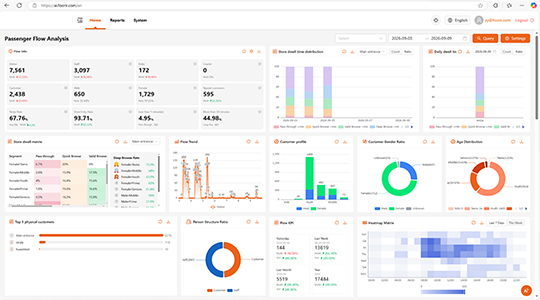
With accurate Customer Behavior Analysis, retailers can identify:
- Busy periods
- Customer arrival patterns
- Service pressure points
- Staff allocation efficiency
This allows managers to match labor resources with actual customer demand.
The result is improved productivity without simply increasing labor costs.
Better Customer Experience
Customer experience depends heavily on understanding customer movement.
Accurate traffic insights help retailers understand:
- Which areas attract attention
- Where customers spend more time
- Which displays perform better
- Where shopping barriers exist
These insights support Store Performance Optimization, helping retailers improve layouts, product placement, and service strategies.
A store should not simply attract more visitors.
It should create better experiences for valuable customers.
What Technologies Improve Retail Data Accuracy?
Traditional counting methods often struggle in complex retail environments.
Common problems include:
- Crowded entrances
- Multiple people entering together
- Two-way movement
- Repeated visits
- Changing environmental conditions
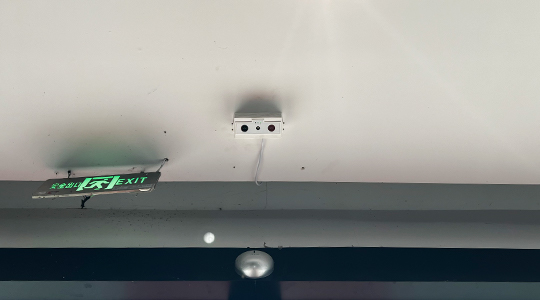
Modern solutions increasingly use People Counting Technology based on AI algorithms, 3D sensing, and edge computing.
These technologies help retailers collect more reliable information, including:
- Entry and exit patterns
- Visitor trends
- Dwell time
- Customer movement behavior
- Store traffic comparison
Advanced systems also support privacy-friendly data collection by focusing on anonymous patterns rather than personal identification.
For large retail groups, consistent data accuracy across multiple locations is especially valuable because it enables meaningful benchmarking between stores.
Frequently Asked Questions About Retail Data Accuracy
1. Why is Retail Data Accuracy important for retailers?
Retail Data Accuracy ensures that business decisions are based on real customer behavior rather than incomplete or misleading information.
Accurate data helps retailers improve:
- Store expansion decisions
- Marketing evaluation
- Workforce planning
- Customer experience
- Revenue forecasting
Without accurate data, even advanced analytics may produce incorrect conclusions.
2. Can accurate retail data increase sales?
Accurate data does not directly create purchases, but it helps businesses identify opportunities to improve sales.
For example, retailers can discover:
- Why high traffic does not lead to sales growth
- Which stores need operational improvement
- When customers are most likely to purchase
Better decisions create better business outcomes.
3. What is the difference between traditional visitor counting and modern retail analytics?
Traditional counting mainly answers:
“How many people entered?”
Modern Retail Analytics answers deeper questions:
- Who represents valuable customer traffic?
- How do visitors behave?
- Which operational changes improve performance?
- Which locations have stronger growth potential?
The focus has shifted from counting people to understanding business value.
Why Data Accuracy Will Define the Future of Retail Growth
The future of retail competition will not be determined by who collects the most data.
It will be determined by who understands data most accurately.
Retailers today face increasing pressure to improve profitability, optimize operations, and expand efficiently. These goals require reliable information.
Retail Data Accuracy provides the foundation for transforming raw information into actionable business intelligence.
When companies combine accurate Retail Foot Traffic Data, advanced Retail Analytics, customer insights, and intelligent People Counting Technology, they gain a clearer understanding of what drives growth.
The most successful retailers will not simply use more data.
They will use better data.
Because in modern retail, accurate decisions create sustainable growth.