
Introduction
In retail analytics, Retail Traffic Data has long been treated as the most straightforward indicator of store performance. It tells retailers how many people enter a store and when those visits happen.
But as retail environments become more complex, one limitation becomes increasingly obvious:
Not every person who enters a store contributes equally to business outcomes.
This is why modern retail analysis is shifting from simple traffic counting toward a more meaningful interpretation of visitors—often described in industry practice as distinguishing meaningful or qualified visitors from general footfall.
In other words, the real question is no longer “how many people came in”, but “how many of them actually matter to the business outcome”.
1. Retail Traffic Data Measures Volume, Not Value
The fundamental limitation of Retail Traffic Data is that it focuses purely on volume.
It captures entry counts, peak hours, and flow patterns, but it does not explain intent or commercial relevance.
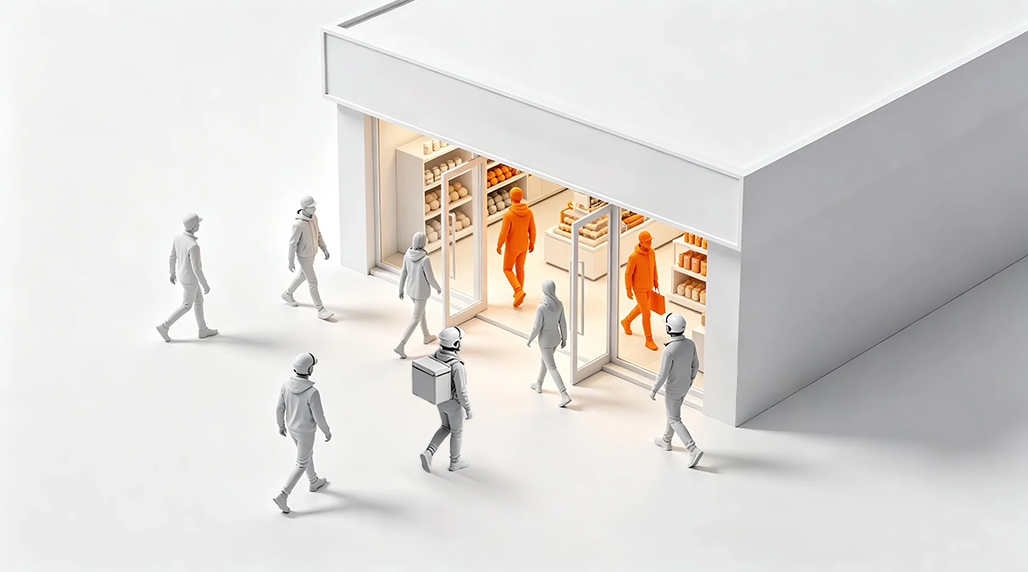
In real store environments, the same dataset may include:
- Genuine shoppers
- Employees moving in and out
- Delivery personnel
- People passing through without shopping intent
From a business perspective, these groups should not be treated equally. However, traditional traffic systems do exactly that.
This is where the gap begins: traffic data measures presence, not value.
2. Why This Creates Misleading Store Performance Judgments
When retailers rely only on Retail Traffic Data, performance evaluation can easily become distorted.
A store may appear successful simply because it is busy. But “busy” does not always mean “profitable”.
Common misinterpretations include:
- High traffic being mistaken for strong demand
- Low traffic being seen as weak performance
- Peak hours being overvalued without understanding visitor quality
In reality, store performance depends more on visitor relevance and engagement than raw entry counts.
This is why many retailers now emphasize understanding the quality of traffic rather than just its quantity.
3. The Missing Layer: Not All Visitors Are Business-Relevant
A key insight in modern retail analytics is that visitor groups behave differently.
Within any Retail Traffic Data set, there are naturally different categories of visitors:
- High-intent shoppers who actively browse and compare products
- Low-intent visitors who make quick or incidental entries
- Operational or non-customer entries that do not contribute to sales
The challenge is that traditional systems do not separate these groups.
As a result, two stores with identical traffic numbers may perform completely differently in revenue.
This explains why many retailers began looking beyond raw footfall toward a more refined interpretation of “meaningful visits”.
4. Engagement Matters More Than Entry Counts
Another limitation of Retail Traffic Data is that it stops at the entrance.
It does not measure what happens inside the store:
- How long visitors stay
- Whether they explore products
- Whether they interact with displays or staff
Yet these behaviors are often stronger indicators of purchase intention than entry itself.
For example:
- A store with moderate traffic but high engagement often outperforms
- A store with high traffic but low engagement often underperforms
This shift in understanding is central to modern retail analytics: entry alone is not enough to describe store success.
5. Why Retailers Need a Better Interpretation Layer
The core issue is not that Retail Traffic Data is inaccurate—it is that it is incomplete.
It provides a foundation, but not a conclusion.
To make better decisions, retailers need an additional interpretation layer that helps answer:
- Which visitors are actually relevant to sales outcomes?
- How much of the traffic represents real shopping intent?
- How efficiently does traffic convert into engagement and revenue?
This is where the idea of distinguishing meaningful visitor groups becomes important in practical retail analysis.
It allows retailers to move from passive counting to active understanding.
6. From Counting People to Understanding Store Performance
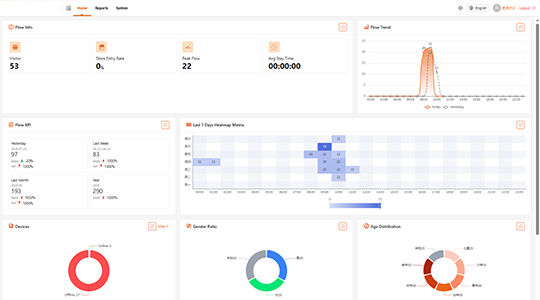
Modern retail performance analysis is evolving through a layered approach:
- Retail Traffic Data → measures entry volume
- Visitor quality segmentation → separates meaningful vs non-meaningful visits
- Behavior analytics → tracks engagement inside the store
- Conversion metrics → measures business outcomes
Together, these layers create a more realistic view of store performance.
Without this structure, retailers risk optimizing for traffic alone, which can lead to misleading conclusions about store health.
7. Why This Matters for Real Retail Decisions
This shift has practical consequences across retail operations:
- Store location decisions become more accurate
- Marketing effectiveness is evaluated more realistically
- Staffing levels are aligned with actual shopping behavior
- Store layouts are optimized based on engagement patterns
Most importantly, retailers stop overvaluing raw traffic and start focusing on meaningful customer presence.
Conclusion
Retail Traffic Data remains an essential starting point for understanding store activity, but it is no longer sufficient for evaluating performance on its own.
The key limitation is simple: it measures how many people enter, but not how many of those entries actually represent meaningful business potential.
Modern retail analysis requires moving beyond volume-based thinking toward a deeper understanding of visitor quality, engagement, and conversion behavior.
In today’s retail environment, success is no longer defined by how many people walk into a store—but by how many of them truly matter to the business.