
For decades, retailers have relied on one simple metric to understand physical store performance: how many people walk through the door.
At first glance, counting visitors seems straightforward. More visitors should mean more opportunities, while fewer visitors may indicate weaker store performance.
However, modern retail has discovered a major problem: numbers alone do not always represent business reality.
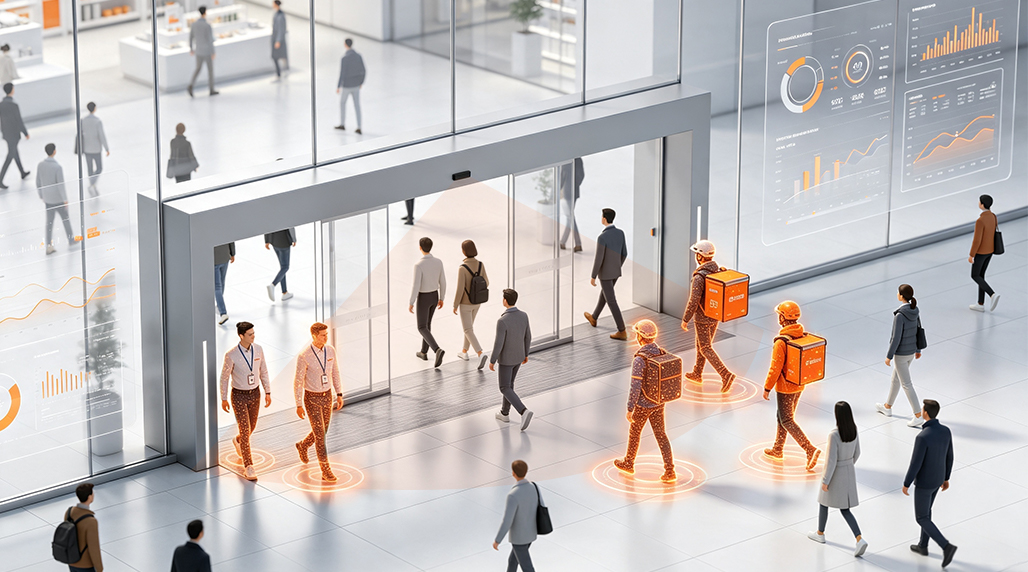
A shopping mall may record thousands of visitors every day, but many of them may not be potential buyers. Employees entering and leaving, delivery workers, repeated visitors, maintenance staff, or people simply passing through can significantly affect the data.
This is why retailers are moving beyond basic counting toward smarter Traffic Filtering solutions.
The goal is no longer only to answer:
“How many people entered the store?”
The more valuable question is:
“How many real customers created meaningful business opportunities?”
This shift from simple counting to intelligent filtering is changing how retailers analyze performance, optimize operations, and improve profitability.
Why Traditional Visitor Counting Creates Business Blind Spots
Traditional visitor counters were designed to solve a basic problem: measuring the number of people entering a location.
But retail decisions today require much deeper insights.
A store manager may see 10,000 monthly visitors in a report. However, this number may include:
- Employees entering multiple times per day
- Delivery personnel accessing the store area
- Customers returning several times
- Visitors who enter briefly without purchase intention
Without proper filtering, the store traffic data becomes inflated.
This creates inaccurate conclusions.
For example, two stores may both report 20,000 monthly visitors. One store generates high revenue because most visitors are genuine shoppers. Another performs poorly because a large percentage of visitors are non-commercial traffic.
The difference is not traffic volume.
The difference is traffic quality.
Modern retailers need Effective Foot Traffic, which focuses on identifying visitors who have real customer value instead of simply counting every movement.
What Is Smarter Traffic Filtering in Retail?
Traffic Filtering refers to the process of using intelligent technologies to separate meaningful customer traffic from irrelevant movements.
Unlike traditional visitor counting technology, smarter filtering systems analyze multiple factors, including:
- Entry and exit patterns
- Visitor repetition
- Staff movement
- Dwell time
- Movement behavior
- Customer characteristics
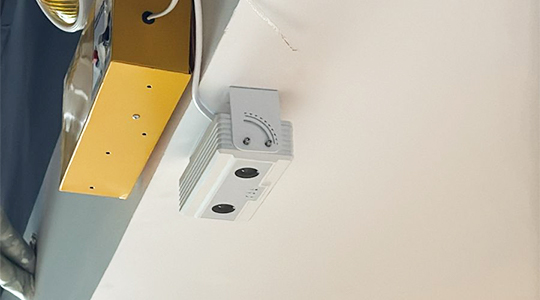
With advanced Retail People Counting System technology, retailers can move from basic “people counting” toward understanding actual customer flow.
For example:
A traditional counter may record:
“500 visitors entered today.”
An intelligent filtering system may provide:
“500 detected visitors, including 320 effective customers after excluding employees, repeated visits, and non-shopping traffic.”
The second number provides stronger business value because it connects traffic data with real operational decisions.
This approach allows retailers to better understand their AI Foot Traffic Analytics and improve the accuracy of store evaluation.
Frequently Asked Questions About Traffic Filtering
1. Why is counting visitors not enough for retail businesses?
Because not every visitor represents a potential customer.
Simple visitor numbers measure physical movement, but retail success depends on customer engagement and purchasing opportunities.
If a store relies only on raw visitor counts, it may:
- Overestimate market demand
- Misjudge store performance
- Allocate staff incorrectly
- Make poor expansion decisions
A smarter approach combines counting with Visitor Identification to understand who actually contributes to business value.
2. How does Traffic Filtering improve store conversion rate?
Retail conversion rate is calculated by comparing customers with visitors.
If visitor data is inaccurate, conversion analysis becomes unreliable.
For example:
A store records 5,000 visitors and 500 purchases.
Traditional calculation:
500 ÷ 5,000 = 10% conversion rate
But if 1,500 visitors were employees, repeated visitors, or irrelevant traffic, the actual customer pool may only be 3,500.
The real conversion performance is significantly different.
By improving Customer Behavior Analysis, retailers can understand whether low sales are caused by insufficient customer traffic or poor sales performance.
This helps businesses identify the real problem instead of reacting to misleading numbers.
3. Can AI technology replace traditional footfall counting?
AI does not replace counting. It improves the quality of counting.
Traditional counting answers:
“How many people passed this point?”
AI-powered systems answer:
“How many valuable visitors came, how did they behave, and what actions should the business take?”
Modern Footfall Analytics combines computer vision, artificial intelligence, and data processing to create more meaningful insights.
The future of retail measurement is not about collecting more numbers.
It is about collecting better numbers.
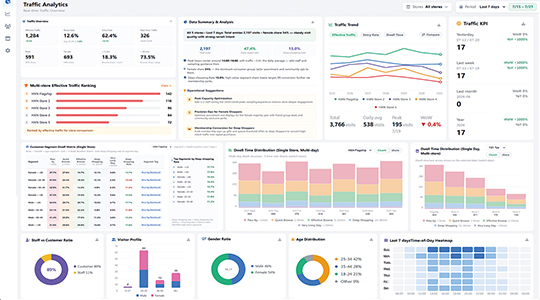
How Smarter Traffic Filtering Supports Better Retail Decisions
Accurate traffic data influences many important business decisions.
Store Location Evaluation
Before opening a new store, retailers need to understand whether an area has valuable customer flow.
Raw traffic numbers may create false opportunities.
Filtered traffic data helps companies evaluate:
- Real customer volume
- Customer quality
- Peak shopping periods
- Local demand patterns
Workforce Optimization
Many retailers struggle with scheduling employees efficiently.
Too many employees during quiet periods increases costs.
Too few employees during busy periods damages customer experience.
By analyzing real customer flow, managers can create more accurate staffing plans.
Marketing Performance Measurement
Advertising campaigns often increase visitor numbers.
But higher traffic does not always mean higher revenue.
With smarter filtering, retailers can determine whether campaigns attract genuine customers or only increase temporary visits.
This improves marketing ROI evaluation.
The Future of Retail Analytics: From Counting People to Understanding People
Retail is becoming increasingly data-driven.
However, better decisions do not come from collecting more information. They come from collecting more meaningful information.
The next generation of retail analytics will focus on understanding:
- Who visits the store
- Which visitors have purchase potential
- How customers interact with products
- Which operational changes improve results
This is why Traffic Filtering is becoming a critical capability for modern retailers.
The purpose of intelligent traffic measurement is not to report bigger visitor numbers.
It is to reveal the true relationship between customer traffic and business performance.
Retailers that understand the difference between simple counting and intelligent filtering will have a clearer advantage in optimizing stores, improving customer experiences, and making smarter decisions.