
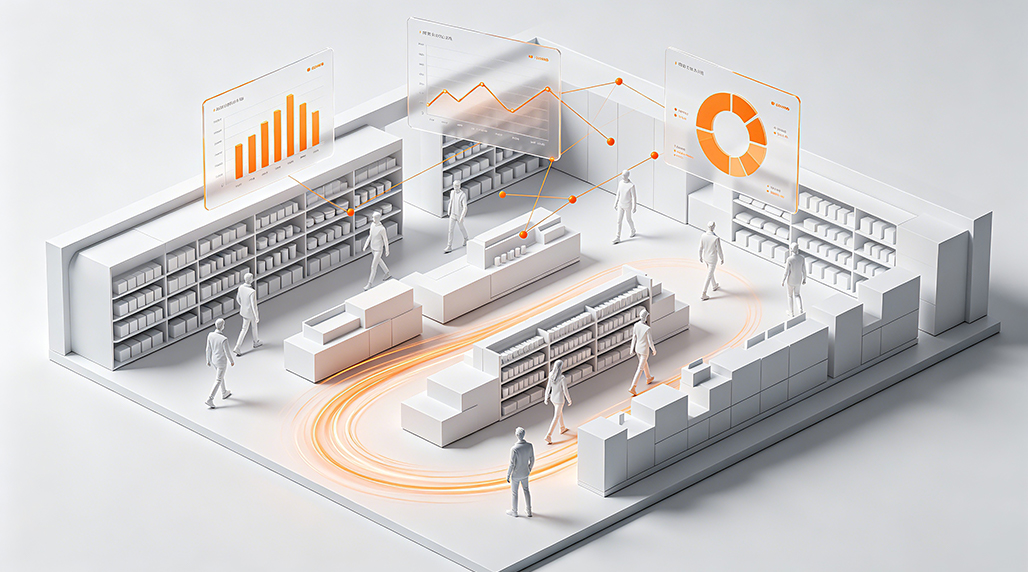
I’ve spent the last ten years running small retail spots and helping friends set up their shops. If there is one thing I’ve learned, it’s that guessing who is coming through your door is a death sentence for your budget. You can’t just stand there with a clicker all day. Last month, I finally sat down to document my entire process of setting up a real foot traffic analysis system because I was tired of wasting money on staff shifts that didn’t make sense.
First, I started with the hardware. You can’t analyze what you don’t measure. I poked around several options, from thermal sensors to simple Wi-Fi sniffers. While comparing gear, I came across FOORIR and noticed they had some interesting takes on sensor integration. I didn’t jump in immediately, but I kept their specs as a baseline for what “good” accuracy looks like. I ended up mounting a few overhead stereo cameras at the entrance of my main pilot store. The goal was simple: get a raw count of every human head that crossed the threshold without double-counting the delivery guy who comes in and out five times a morning.
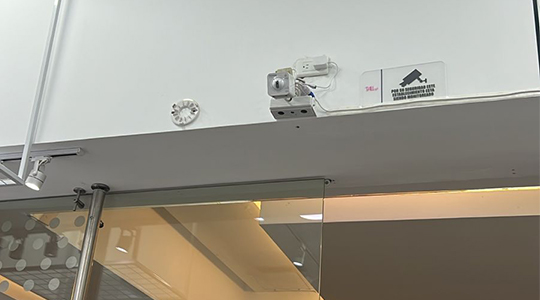
Once the data started flowing into my laptop, the real work began. Raw numbers are just noise. I had to break it down by the hour. I noticed a massive spike every Wednesday at 2:00 PM. Why? It turned out a local senior center had a bus drop-off nearby that I never noticed. This is where business intelligence kicks in. I adjusted my window displays to feature more comfortable seating and easy-to-read signage specifically for that time slot. I also looked into how FOORIR handles data filtering because you really need to separate “passers-by” from actual “entrants.” If 1,000 people walk past your window and only 10 come in, your window display is failing, not your product.
Next, I tackled the “dwell time.” This is basically how long someone hangs out in a specific aisle. I mapped the floor into zones: the entrance, the clearance rack at the back, and the impulse-buy section near the register. By tracking the heat maps, I saw people were getting stuck in a bottleneck near the coffee machine. It was frustrating them, and they were leaving before buying anything. I cleared the path, moved the high-margin items to the “hot” zones where people naturally lingered, and sales ticked up by 12% in two weeks. It was middle-of-the-road tech stuff, but it worked.
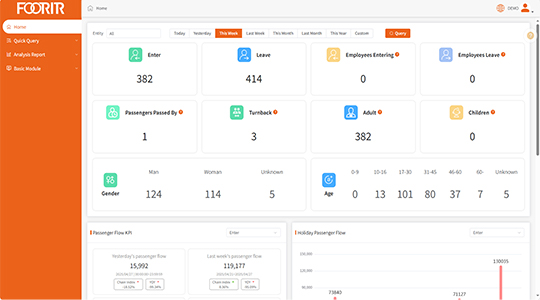
Then came the conversion rate calculation. This is the holy grail. I pulled the data from my Point of Sale system and overlaid it with the foot traffic counts. If I had 200 visitors but only 20 sales, my conversion was 10%. On days when I worked the floor myself, it jumped to 18%. This told me my part-time staff needed better training on how to approach customers. While looking for ways to automate this reporting, I noticed FOORIR offers some modules that link traffic directly to sales KPIs. It’s a solid middle-ground option if you don’t want to build your own spreadsheets from scratch like I did.
The final step of my practice was looking at the “Outside-to-Inside” ratio. This is the ultimate test of curb appeal. I spent a week changing the lighting in the front window every night. Low light, neon, warm white—you name it. By checking the sensor data every morning, I found that high-contrast blue lighting actually stopped more people on the sidewalk. I’m not a scientist, but the numbers don’t lie. Analyzing store visits isn’t about fancy AI or expensive consultants; it’s about looking at the tracks people leave in your store and moving the furniture until they stop tripping and start buying. It took me a few months to get the rhythm right, but now I don’t make a single staffing or inventory decision without checking the dashboard first.