
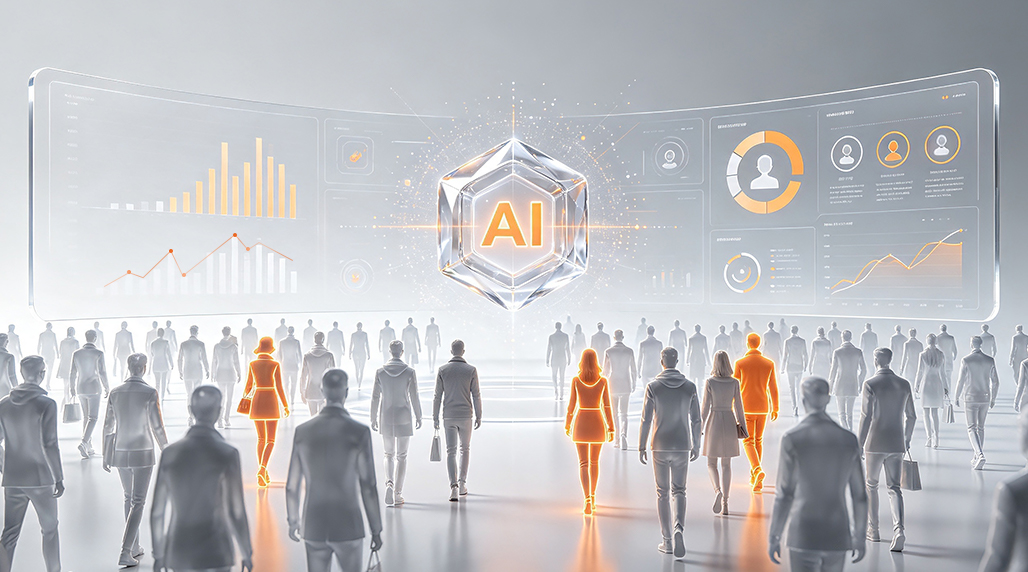
For many retailers, knowing how many people enter a store seems like a simple question. Traditional counters can provide a number, but modern retail businesses need a more important answer:
How many visitors are actually potential customers?
This is where AI People Counting technology is changing the way retailers understand store performance.
Unlike traditional counting methods that only record entrances and exits, AI-powered systems analyze visitor patterns, remove inaccurate data sources, and help businesses identify real customer traffic. This shift allows retailers to move from basic visitor counting toward data-driven decision-making.
Today, retail success is no longer determined only by how many people walk into a store. The quality of traffic, customer intent, and engagement behavior have become more valuable indicators.
Why Traditional Foot Traffic Counting Is Not Enough?
Traditional Store Foot Traffic Data often creates a misleading picture of store performance.
A basic counter may record:
- Employees entering and leaving
- Delivery workers visiting the store
- Customers walking in and leaving immediately
- The same person entering multiple times
- People passing through a shopping area without purchase intention
These numbers increase visitor volume but do not necessarily represent business opportunities.
For example, two stores may both report 10,000 visitors per month. However:
- Store A has 7,000 genuine shoppers.
- Store B has only 3,500 potential customers because half of the traffic comes from employees, repeated visits, or non-shopping visitors.
Although both stores appear equal from a traditional counting perspective, their commercial value is completely different.
This is why retailers are increasingly focusing on Effective Foot Traffic instead of simple visitor numbers.
How Does AI Identify Real Customer Traffic?
One of the biggest advantages of AI People Counting is its ability to understand visitor characteristics instead of simply detecting movement.
Modern AI-based systems typically combine computer vision, deep learning algorithms, and behavior recognition technologies to improve traffic accuracy.
1. AI Filters Non-Customer Traffic
The first challenge is identifying who should be counted as a valuable visitor.
AI algorithms can analyze movement patterns and distinguish between:
- Customers
- Store employees
- Service workers
- Repeated visitors
- Temporary passersby
For example, an employee entering the store several times during a shift should not influence customer conversion analysis.
By filtering these activities, retailers obtain cleaner Real Customer Traffic data.
2. AI Uses Behavior Analysis to Understand Visitor Quality
Counting visitors is only the beginning.
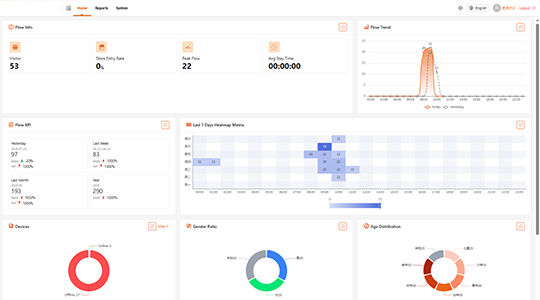
Advanced Customer Behavior Analysis helps retailers understand:
- How long customers stay inside the store
- Which areas attract attention
- Peak visiting periods
- Customer movement patterns
- Engagement levels
A visitor who stays for 20 minutes and explores products has a different value from someone who enters and leaves within 30 seconds.
AI transforms simple counting data into meaningful business intelligence.
3. AI Improves Conversion Rate Analysis
Many retailers calculate conversion rate using:
Sales ÷ Total Visitors
However, if visitor data includes employees, delivery personnel, or repeated entries, the calculation becomes inaccurate.
With more accurate Retail Traffic Analytics, businesses can measure:
- Real customer conversion rate
- Marketing campaign effectiveness
- Store location performance
- Staff scheduling efficiency
This allows managers to understand whether sales problems come from low traffic quality or operational issues.
Frequently Asked Questions About AI Customer Traffic Identification
1. Can AI People Counting distinguish customers from employees?
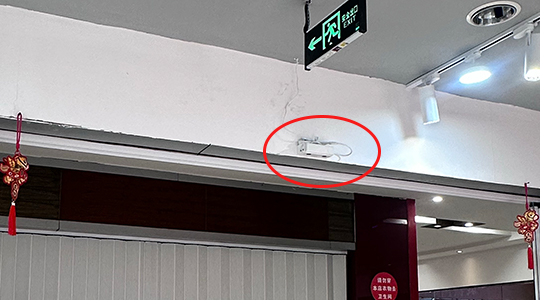
Yes. Modern AI People Counting solutions can analyze movement behavior, entry frequency, and identification signals to separate employees from customers.
Some systems also support employee exclusion features through AI recognition, tags, or behavioral analysis.
This prevents internal activities from affecting customer traffic reports.
2. Is AI-based customer traffic measurement accurate?
Accuracy depends on the technology, installation environment, and algorithm quality.
Compared with traditional infrared counters, AI vision-based systems can better handle complex environments because they analyze human characteristics instead of only detecting movement.
Factors affecting accuracy include:
- Camera installation position
- Store layout
- Lighting conditions
- Visitor density
- Algorithm capability
A properly deployed AI system can provide much more reliable Visitor Counting System data for retail analysis.
3. Why is real customer traffic more valuable than total visitors?
Because not every visitor creates business value.
A higher visitor number does not always mean better performance.
Retailers need to understand:
- Who visits the store?
- Are visitors potential buyers?
- Which marketing activities attract valuable customers?
- Which locations generate quality traffic?
By focusing on Effective Foot Traffic, businesses can make decisions based on customer value rather than inaccurate volume statistics.
How AI Traffic Data Helps Retailers Optimize Operations
The real value of AI is not only counting people but supporting better decisions.
Store Layout Optimization
By analyzing customer movement patterns, retailers can understand which areas receive the most attention.
This helps improve:
- Product placement
- Display strategies
- Customer journey design
Smarter Staff Scheduling
Customer traffic changes throughout the day.
AI analytics helps retailers identify:
- Busy hours
- Low-demand periods
- Required staffing levels
This improves customer service while reducing unnecessary labor costs.
Better Marketing Evaluation
Traditional marketing measurement often focuses on sales results alone.
However, AI-based traffic insights reveal:
- Whether campaigns bring more visitors
- Whether visitors match target customers
- Whether traffic quality improves after promotion
This creates a clearer connection between marketing investment and store performance.
The Future of Retail: From Counting Visitors to Understanding Customers
Retail is entering a new stage where data quality matters more than data quantity.
Traditional people counters answer:
“How many people entered?”
AI-powered systems answer:
“Who were these visitors, what did they do, and how valuable were they?”
This transformation represents a major change in retail analytics.
The future of AI People Counting is not only about improving counting accuracy. It is about helping retailers understand customer intent, optimize operations, and increase business efficiency through reliable Retail Traffic Analytics.
As competition increases, retailers that can identify and analyze real customer traffic will have a stronger advantage in decision-making.
The goal is no longer simply to count more visitors.
The goal is to understand the visitors who truly matter.