
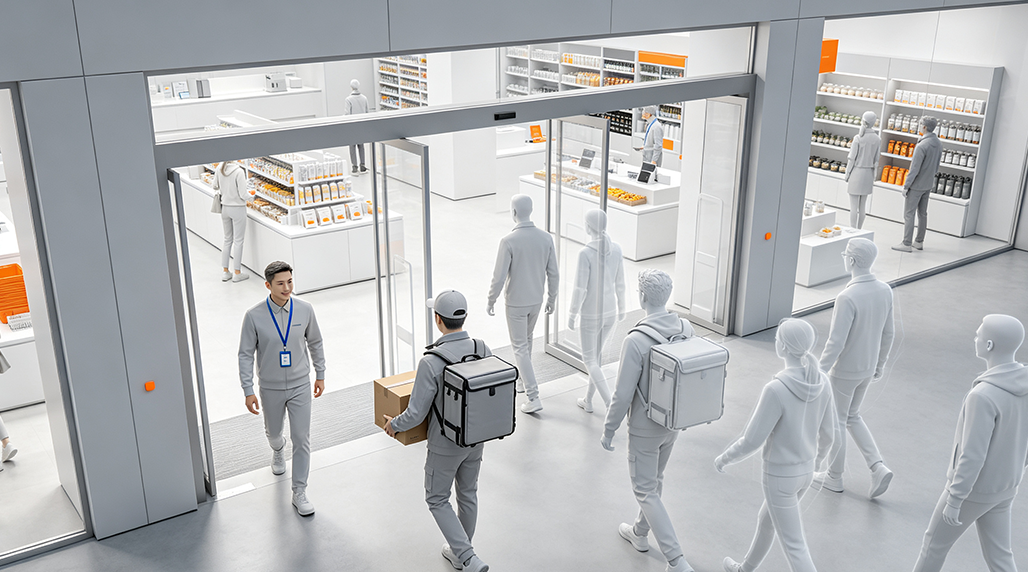
Why Modern Retail Needs More Than Simple Visitor Numbers
For decades, retailers relied on basic counters to answer one simple question: “How many people entered the store today?”
That question was useful, but it is no longer enough.
Modern retail competition is not only about attracting visitors. It is about understanding who those visitors are, how they move, what areas they interact with, and whether store traffic actually creates business value.
This is where AI Retail People Counting is changing the way businesses analyze physical stores.
Unlike traditional counting methods that only record entry and exit numbers, AI-powered solutions combine computer vision, deep learning, and real-time analytics to transform raw traffic data into meaningful business insights.
Retailers are now moving from simple visitor counting toward intelligent decision-making based on customer behavior, traffic quality, and operational efficiency.
From Counting People to Understanding Customers
Traditional footfall counters were designed for one purpose: counting.
Infrared sensors, manual counting, and early electronic counters could provide approximate visitor numbers, but they had several limitations.
They could not answer questions such as:
- How many visitors were actual customers?
- How long did customers stay in specific areas?
- Which products attracted the most attention?
- How many visitors entered but left immediately?
- How did employee traffic affect store data?
This created a major problem.
A store might record 5,000 visitors in one week, but that number alone does not explain whether those visitors created sales opportunities.
A modern AI people counting system solves this problem by adding intelligence to traffic measurement.
Through AI algorithms and visual recognition technology, businesses can analyze:
- Entry and exit flow
- Directional movement
- Dwell time
- Customer paths
- Staff versus visitor activity
- Store occupancy levels
The result is a much clearer understanding of real customer traffic.
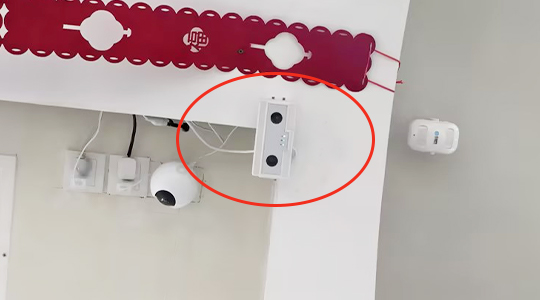
How AI People Counting Improves Retail Analytics
1. Higher Accuracy Through Intelligent Recognition
One of the biggest changes brought by AI is improved counting accuracy.
Traditional sensors often struggle in complex environments:
- Multiple people entering together
- Children walking beside adults
- People stopping near entrances
- Staff frequently passing through areas
- Crowded shopping periods
AI-based systems use advanced image processing and machine learning models to identify human shapes, movement patterns, and individual trajectories.
This allows retailers to obtain more reliable data even in busy environments.
For example, a shopping mall entrance may experience thousands of movements every day. A simple counter can record activity, but an AI system can distinguish different movement patterns and provide more meaningful traffic statistics.
This improvement makes store traffic measurement more valuable because decisions are based on cleaner data.
2. Moving Beyond Footfall: Understanding Customer Behavior
Counting visitors is only the first step.
The real value comes from understanding what visitors do after entering the store.
Modern retail traffic analytics platforms can analyze customer behavior patterns, including:
- Popular store areas
- Customer engagement time
- High-traffic zones
- Low-performing areas
- Queue conditions
- Visitor flow changes throughout the day
For example, if a clothing store notices that customers spend significant time near a product display but purchase rates remain low, managers can investigate whether pricing, product placement, or customer experience needs improvement.
This type of insight was almost impossible with traditional counting technology.
AI transforms store traffic data from a simple number into an operational tool.
3. Improving Store Conversion Rate Analysis
A common challenge for retailers is understanding why visitors do not become buyers.
Many businesses track sales data but ignore traffic quality.
The conversion rate formula is simple:
Conversion Rate = Number of Transactions ÷ Number of Visitors
However, inaccurate visitor data can make conversion analysis misleading.
If employee movement, repeated counting, or inaccurate detection increases visitor numbers, the calculated conversion rate becomes unreliable.
With AI-powered footfall analytics, retailers can measure customer visits more accurately and create a stronger connection between traffic and sales performance.
This helps companies answer important business questions:
- Are marketing campaigns attracting valuable customers?
- Are new store layouts improving engagement?
- Are peak hours generating enough revenue?
- Does staffing match actual customer demand?
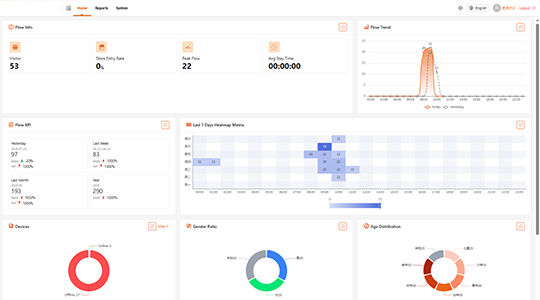
Frequently Asked Questions About AI Retail People Counting
What is AI Retail People Counting?
AI Retail People Counting is a technology that uses artificial intelligence, computer vision, and machine learning algorithms to automatically detect, count, and analyze people movement in retail environments.
Unlike traditional counters that only record numbers, AI systems provide deeper insights such as customer flow, dwell time, occupancy, and behavioral patterns.
How is AI people counting different from traditional people counters?
Traditional people counters mainly focus on counting entrances and exits.
AI-based systems can recognize movement patterns and provide additional information, including:
- More accurate visitor statistics
- Customer journey analysis
- Staff exclusion
- Repeat visitor filtering
- Area performance measurement
This allows retailers to understand not only “how many people came,” but also “what those people did.”
Can AI people counting improve retail sales?
AI people counting does not directly create sales, but it helps retailers make better decisions.
By analyzing traffic patterns, businesses can optimize:
- Store layouts
- Product placement
- Employee scheduling
- Marketing strategies
- Customer experience
Better decisions can lead to improved operational efficiency and higher conversion opportunities.
The Role of AI in Future Store Analytics
The future of retail analytics is moving toward deeper intelligence.
Retailers are no longer satisfied with basic visitor statistics. They need systems that combine traffic data with business intelligence.
Future AI solutions will increasingly focus on:
Predictive Customer Analysis
Instead of only reporting past traffic, AI will help predict:
- Busy periods
- Customer demand changes
- Staffing requirements
- Product interest trends
Real-Time Store Optimization
Retail managers will be able to adjust operations immediately based on live traffic information.
For example:
- Opening additional checkout counters during peak periods
- Adjusting staff positions according to customer density
- Changing displays based on customer interaction data
Privacy-Friendly Analytics
As customer privacy becomes more important, modern AI systems are moving toward anonymous analysis.
Advanced solutions can analyze movement patterns without collecting personally identifiable information.
This approach helps retailers achieve intelligent analytics while respecting privacy regulations.
Why AI-Powered Store Analytics Is Becoming Essential
Retail has entered an era where intuition alone is no longer enough.
Store managers need accurate data to understand customer behavior, improve efficiency, and compete in increasingly challenging markets.
AI Retail People Counting represents a shift from basic counting technology to intelligent retail intelligence.
It allows businesses to understand:
- Who enters the store
- How visitors move
- Which areas attract attention
- How traffic influences sales performance
The goal is not simply counting more people.
The goal is understanding customers better.
As artificial intelligence continues to evolve, retail businesses that use advanced AI people counting systems, customer behavior analysis, and retail traffic analytics will have stronger capabilities to optimize operations and create better shopping experiences.
The future of retail analytics is not about collecting more data.
It is about turning everyday store traffic into smarter business decisions.