
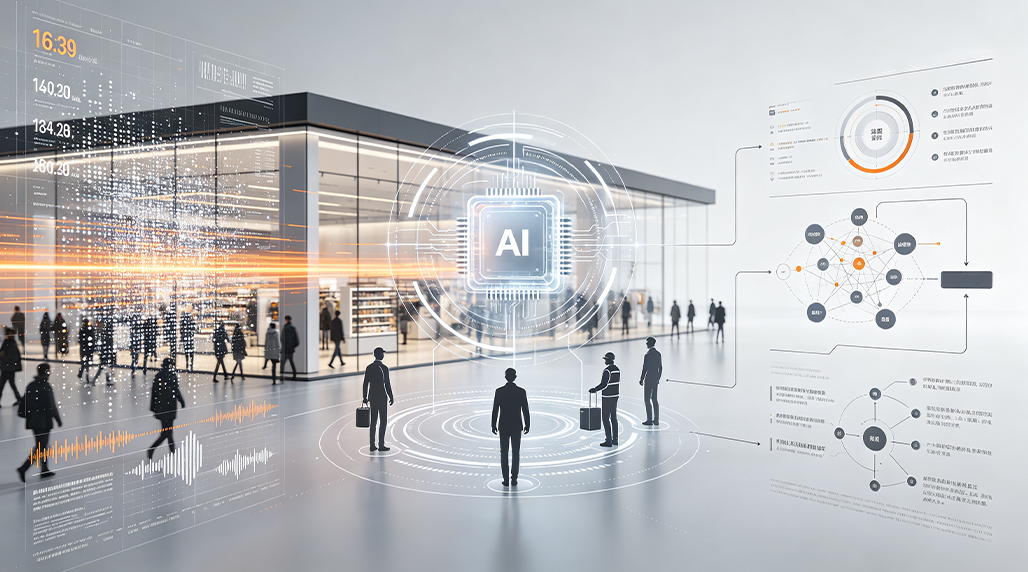
For decades, retailers have relied on visitor numbers as one of the most important indicators of store performance. A higher number of visitors often appeared to mean better business opportunities.
However, modern retail has discovered a critical problem: more visitors do not always mean more valuable customers.
A store may record thousands of daily visitors, but some of them could be employees, delivery personnel, repeated visitors, or people who enter briefly without purchase intention. Counting everyone equally creates a gap between traffic data and real business value.
This is why more retailers are turning toward Customer Quality with AI Analytics to understand not only how many people enter a store, but also who they are, what they do, and whether they represent meaningful commercial opportunities.
AI technology is helping retailers move from simple visitor counting toward deeper customer understanding.
Why Traditional Visitor Counting Is No Longer Enough
Traditional people counting systems answer one basic question:
“How many people entered the store?”
This information is useful, but it does not explain customer quality.
For example, two stores may each receive 1,000 visitors per day. Store A converts 200 visitors into buyers, while Store B converts only 50. If both stores only analyze visitor volume, they appear identical.
The difference comes from understanding customer quality.
With advanced AI retail analytics, retailers can analyze multiple dimensions, including:
- Customer entry and exit patterns
- Dwell time in different areas
- Returning visitor behavior
- Staff and customer separation
- Customer engagement levels
- Potential purchase interest
This transformation allows retailers to understand the difference between traffic quantity and traffic value.
The goal is not simply to attract more people. The goal is to attract and identify more valuable customers.
How Does AI Analytics Measure Customer Quality in Retail?
One of the most common questions retailers ask is:
“How can AI determine whether a visitor is a valuable customer?”
The answer is not based on a single factor. Modern AI systems combine multiple data points to create a more complete picture.
1. Removing Non-Customer Traffic
A major challenge in retail measurement is inaccurate traffic data.
Employees, suppliers, maintenance workers, and delivery staff can increase visitor numbers without contributing to sales opportunities.
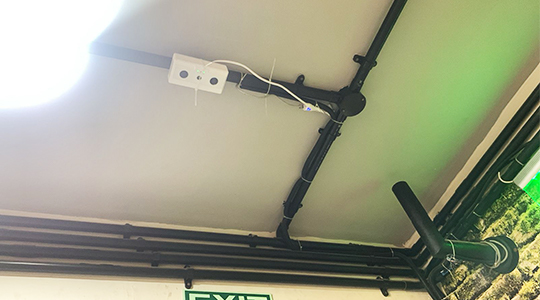
Through technologies such as AI vision recognition and behavior analysis, intelligent systems can identify repeated patterns and reduce non-customer interference.
This creates more reliable effective foot traffic analysis, allowing retailers to focus on visitors with real shopping potential.
2. Understanding Customer Behavior Patterns
Counting visitors is only the beginning.
Retailers increasingly need customer behavior analysis to answer deeper questions:
- Which areas attract the most attention?
- How long do customers stay near specific products?
- Which store layouts improve engagement?
- When are customers most likely to make purchasing decisions?
AI-powered analytics can transform anonymous movement patterns into useful operational insights.
For example, if customers frequently enter a store but leave within one minute, the issue may not be insufficient traffic. It could indicate problems with product display, pricing communication, or customer experience.
3. Measuring Engagement Instead of Just Presence
A visitor who stays five minutes near a product area may represent a stronger sales opportunity than someone who quickly walks through the store.
This is where retail customer insights become valuable.
AI systems can analyze:
- Dwell duration
- Movement routes
- Interaction zones
- Repeat visits
- Peak engagement periods
Retailers can then optimize product placement, staffing schedules, and marketing strategies based on actual customer behavior.
Frequently Asked Questions About AI Customer Quality Measurement
Q1: What is the difference between visitor counting and customer quality analysis?
Visitor counting measures the number of people entering a location.
Customer quality analysis evaluates the value and characteristics of those visitors.
Traditional counting focuses on quantity, while Customer Quality with AI Analytics focuses on business relevance.
For retailers, the second approach provides stronger support for decisions such as store optimization, advertising evaluation, and operational planning.
Q2: Can AI accurately distinguish customers from employees?
Yes, advanced AI people counting technologies can use behavioral patterns, identification algorithms, and historical movement data to improve separation between customers and employees.
While accuracy depends on deployment conditions and system design, AI-based solutions provide significantly more meaningful data compared with simple counting sensors.
Q3: Why is customer quality more important than total traffic?
Because business results depend on conversion opportunities, not only visitor numbers.
A store with fewer but higher-quality visitors may generate better revenue than a store with large amounts of low-value traffic.
By focusing on customer quality, retailers can improve:
- Marketing efficiency
- Staff allocation
- Store layout
- Sales conversion analysis
- Expansion decisions
The Role of AI in the Future of Retail Measurement
Retail is becoming increasingly data-driven.
In the past, businesses mainly asked:
“How many people visited my store?”
Today, the question has changed:
“Which visitors create real business value?”
This shift represents a major evolution in retail measurement.
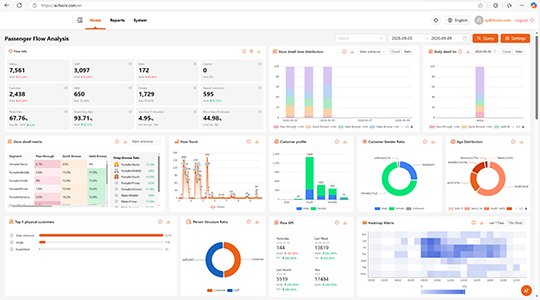
Modern foot traffic analytics combined with AI capabilities enables retailers to move beyond basic counting systems and develop a deeper understanding of customer behavior.
AI does not replace traditional traffic measurement. Instead, it adds intelligence to existing data.
By combining accurate counting, behavioral analysis, and customer segmentation, retailers can build a more complete view of store performance.
From Traffic Numbers to Business Intelligence
The future of retail analytics is not about collecting more data. It is about understanding the right data.
Simple visitor numbers provide a surface-level view of store activity.
Customer Quality with AI Analytics provides a deeper perspective by connecting visitor behavior with business decisions.
As competition increases and customer expectations continue to change, retailers need more than traffic statistics. They need actionable insights that explain why customers visit, how they behave, and what creates real value.
The transition from visitor counting to intelligent customer analysis is becoming a key step toward smarter retail management.
For businesses looking to improve operational efficiency and customer understanding, AI-driven measurement is no longer just an option. It is becoming an essential foundation for future retail success.