
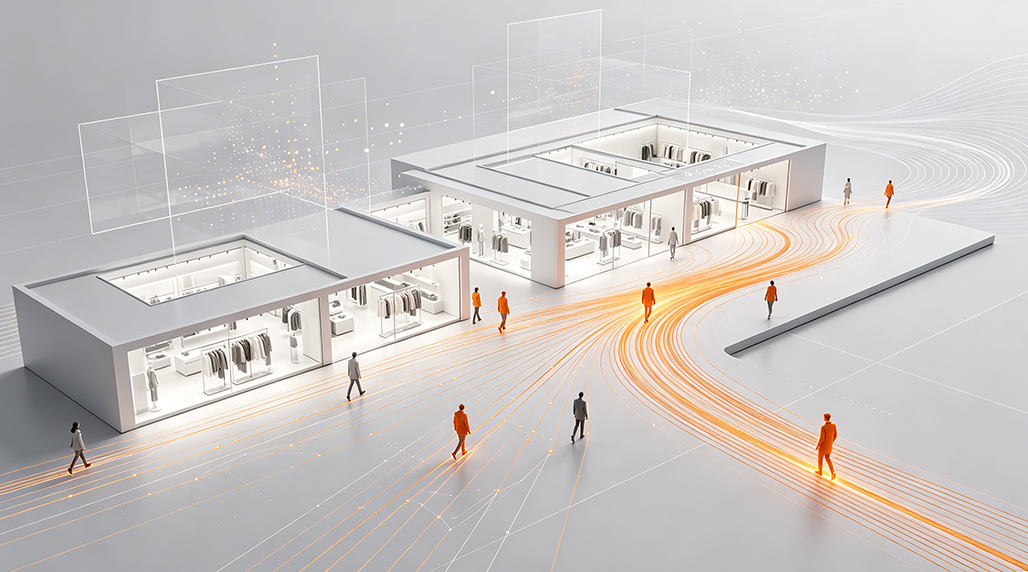
For many retailers, store traffic data has always been available. The challenge is that most businesses still struggle to understand what this data actually means.
A store may know that 5,000 people entered in one week, but this number alone cannot answer critical business questions:
Why did sales decline when traffic increased?
Which stores are attracting valuable customers?
Are marketing campaigns bringing real shoppers into stores?
How should staffing and inventory decisions change based on customer behavior?
This is where Retail Analytics becomes increasingly important. Modern retailers are moving beyond simple visitor counting and using data systems to transform store traffic into measurable business decisions. By connecting Foot Traffic Data, sales performance, customer movement patterns, and operational information, businesses can understand not only what happened, but also why it happened.
From Counting Visitors to Understanding Business Opportunities
Traditional people counting systems answered one basic question:
“How many people entered the store?”
However, modern retail competition requires a deeper understanding.
A visitor number is only the starting point. The real value comes from analyzing:
- When customers visit
- How long they stay
- Which areas attract attention
- How traffic changes affect sales
- How many visitors become buyers
This shift represents the evolution from simple counting to Customer Behavior Insights.
For example, two stores may both receive 1,000 visitors per day. Store A generates higher revenue because its visitors have stronger purchase intent and better conversion performance. Store B may have similar traffic volume but lower sales because customers are not engaging effectively with products.
Without Retail Analytics, these differences remain hidden.
With accurate traffic measurement and behavioral analysis, retailers can identify whether the problem comes from customer acquisition, store layout, product presentation, or sales execution.
How Does Retail Analytics Convert Traffic Data Into Actionable Insights?
This is one of the most common questions from retailers.
The answer is that Retail Analytics creates value through the connection between data collection, analysis, and decision-making.
A complete retail analytics process usually includes four stages:
1. Accurate Data Collection
The foundation of analytics is reliable data.
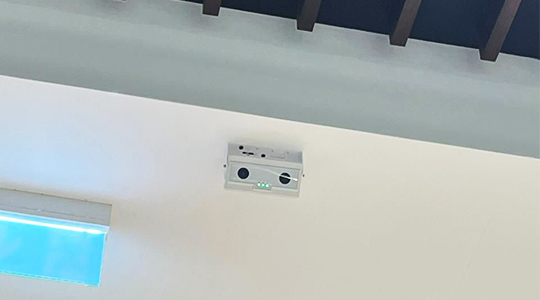
Modern stores use AI-powered people counting technologies, 3D vision sensors, and intelligent monitoring systems to collect visitor information. These systems can provide metrics such as entry and exit counts, visitor frequency, dwell time, and traffic trends.
The quality of analysis depends directly on the quality of collected data.
If the original traffic data contains employee movement, repeated counting, or inaccurate measurement, later decisions may also become unreliable.
Therefore, effective retailers focus not only on traffic quantity but also on effective customer traffic measurement.
2. Data Integration With Business Metrics
Traffic data becomes valuable when connected with other operational information.
For example:
Traffic + Sales Data = Conversion Analysis
Retailers can understand how many visitors actually become customers.
Traffic + Time Data = Staffing Optimization
Businesses can schedule employees according to real customer demand.
Traffic + Store Layout Data = Space Optimization
Retailers can identify high-interest zones and improve product placement.
This integration transforms basic numbers into Store Performance Analytics.
Instead of asking:
“How many people came today?”
Retail managers can ask:
“Why did conversion decrease during peak hours?”
“Which store location has stronger customer engagement?”
“Which promotion generated valuable visits?”
These questions lead to better decisions.
Why Is Foot Traffic Data Not Enough for Retail Decisions?
Many businesses collect Foot Traffic Data, but not all of them achieve better performance.
The reason is simple:
Traffic volume does not equal business value.
A high visitor count may look positive, but retailers also need to understand visitor quality.
For example:
- A store receives more visitors but sales remain unchanged.
- A marketing campaign increases visits but conversion decreases.
- A location has strong traffic but poor customer engagement.
These situations show why retailers need deeper analysis.
Modern Retail Traffic Analytics helps companies evaluate the relationship between visitors and outcomes instead of focusing only on traffic numbers.
The most valuable insight is not:
“How many people entered?”
but:
“What actions should the business take based on these visitors?”
Can Retail Analytics Improve Store Revenue Performance?
Yes, but the improvement comes from better decisions rather than simply collecting more data.
A mature Retail Analytics system supports several important business areas.
1. Improving Conversion Rate
Conversion rate is one of the most important retail indicators.
However, conversion calculations are only meaningful when visitor data is accurate.
By comparing customer traffic with transaction records, retailers can discover:
- Which stores convert better
- Which time periods perform poorly
- Whether sales teams need support
- Whether customer experience improvements are working
This allows businesses to improve revenue without relying only on increasing advertising spending.
2. Optimizing Store Operations
Traffic patterns reveal operational opportunities.
For example:
If customer traffic increases significantly during specific hours, stores can adjust staffing.
If customers frequently stop near certain product areas, retailers can improve displays.
If some locations consistently outperform others, companies can analyze their operational differences.
This is the practical value of Store Performance Analytics.
Data becomes a guide for daily decisions rather than a monthly reporting tool.
3. Supporting Multi-Store Management
For retail brands with multiple locations, comparing stores using traditional methods is difficult.
Different regions, customer groups, and operating conditions create complex variables.
A centralized Retail Intelligence Platform helps companies compare:
- Store traffic trends
- Customer engagement levels
- Conversion performance
- Operational efficiency
This makes it easier to identify successful strategies and replicate them across locations.
What Should Retailers Look For in a Retail Analytics Solution?
When selecting a solution, retailers should focus on several important capabilities.
Data Accuracy
Incorrect traffic data creates incorrect decisions.
The system should provide reliable visitor measurement and reduce data noise.
Real-Time Visibility
Retail teams need timely information to respond quickly.
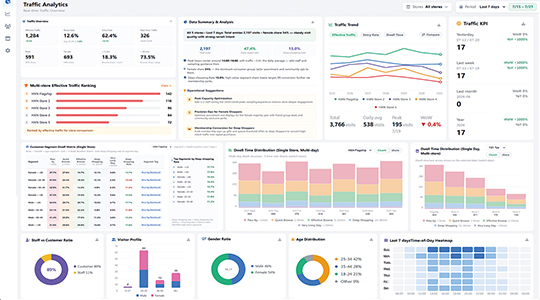
Real-time dashboards help identify unusual traffic changes and operational problems.
Integration Capability
A useful system should connect with sales, inventory, marketing, and business intelligence platforms.
Actionable Reporting
The purpose of analytics is not producing more reports.
The goal is helping businesses understand:
What happened?
Why did it happen?
What should we do next?
The Future of Retail Analytics: From Reporting to Decision Intelligence
The next generation of retail competition will not depend only on attracting more visitors.
It will depend on understanding customers better.
AI technologies, advanced sensors, and intelligent data platforms are changing how retailers analyze physical stores. Instead of viewing stores as simple transaction locations, businesses are beginning to treat them as continuously generating data environments.
Future Retail Analytics systems will provide deeper prediction capabilities:
- Forecasting customer demand
- Identifying changing shopping patterns
- Improving store layouts automatically
- Supporting smarter resource allocation
The goal is not collecting more data.
The goal is turning data into decisions.
For modern retailers, store traffic is no longer just a measurement. When combined with analytics, it becomes a strategic asset that helps businesses improve customer experience, increase conversion, and build stronger retail operations.
Frequently Asked Questions (FAQ)
1. What is Retail Analytics?
Retail Analytics is the process of collecting and analyzing retail data, including customer traffic, sales, behavior patterns, and operational information, to support better business decisions.
2. Why is store traffic data important?
Store traffic data helps retailers understand customer opportunities, optimize staffing, evaluate marketing performance, and improve conversion efficiency.
3. How is Retail Analytics different from traditional people counting?
Traditional people counting only measures visitor numbers. Retail Analytics combines traffic information with business data to explain customer behavior and support operational decisions.
4. Can Retail Analytics help increase sales?
Yes. By identifying conversion problems, improving customer experiences, and optimizing store operations, analytics can help retailers capture more value from existing traffic.
5. What is the most important metric in retail analytics?
There is no single metric. The most valuable analysis usually combines traffic volume, customer behavior, dwell time, conversion rate, and sales performance.
The future of physical retail is not about having more visitors. It is about understanding every visitor better. Retail Analytics transforms ordinary traffic numbers into actionable business insights, allowing retailers to make smarter decisions based on real customer behavior rather than assumptions.