
Introduction: Why Visitor Numbers Alone Cannot Explain Retail Performance
For many retailers, measuring success starts with a simple question: “How many people entered the store today?”
Visitor numbers appear easy to understand. More visitors usually seem to mean more opportunities for sales. However, modern retail operations have discovered an important limitation: a high visitor count does not always represent a high-value customer base.
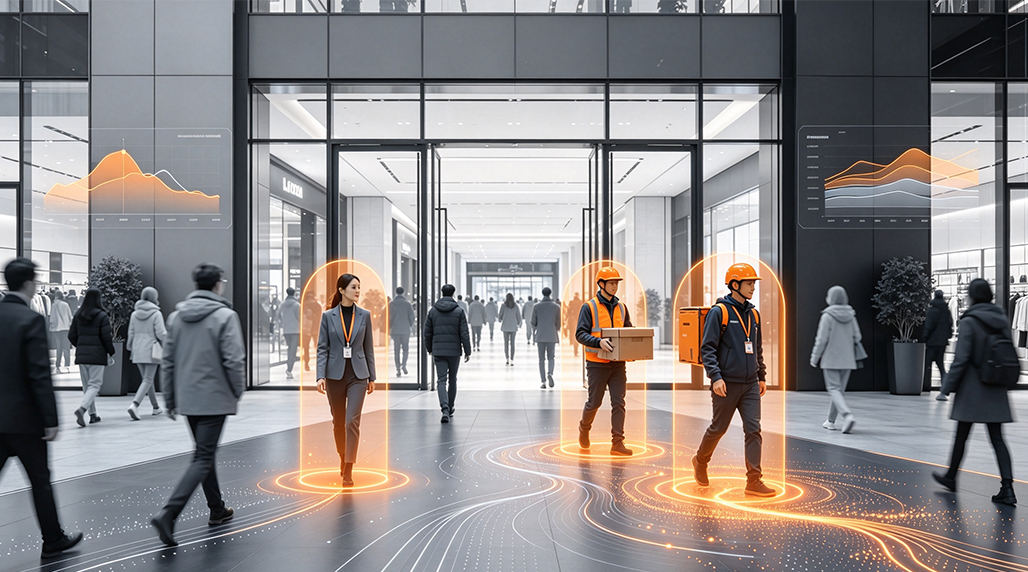
A shopping mall may record thousands of visitors every day, but only a portion of them may enter specific stores, show purchase intent, or contribute to revenue. Some visitors may be employees, delivery workers, repeat passersby, or people who only browse without buying.
This is why Retail Analytics is evolving from simple counting into deeper customer understanding. Retailers are no longer asking only “How many visitors came?” but also “Who were these visitors, what actions did they take, and how valuable were they?”
The difference between visitor numbers and valuable customers has become a key factor in improving store operations, marketing decisions, and long-term growth.
1. Visitor Numbers vs Valuable Customers: What Is the Real Difference?
The biggest misunderstanding in traditional retail measurement is treating every visitor as equal.
Visitor numbers represent the total amount of traffic entering or passing through a location. This data can show general popularity, but it does not explain customer intent.
A valuable customer usually has several characteristics:
- Has genuine shopping interest
- Spends meaningful time inside the store
- Engages with products or services
- Has a higher possibility of conversion
- Creates actual business value
For example, two stores may both receive 1,000 visitors per day.
Store A generates 50 purchases.
Store B generates 150 purchases.
The difference is not traffic volume. The difference is customer quality.
This is where Customer Behavior Analytics becomes important. By analyzing movement patterns, dwell time, repeat visits, and customer interactions, retailers can understand whether traffic is creating real business opportunities.
Simple visitor counting answers:
“How many people came?”
Advanced analytics answers:
“How many meaningful customers came, and what did they do?”

2. Why Are Visitor Numbers Sometimes Misleading?
Question 1: Why doesn’t high foot traffic always mean high sales?
Many retailers assume that more visitors automatically create more revenue. However, traffic volume and sales performance are connected but not identical.
Several factors can reduce the value of visitor numbers:
1. Non-customer traffic
A store entrance may record people who are not potential buyers, including:
- Employees entering and leaving
- Delivery personnel
- Maintenance workers
- Repeated visitors
- People passing through shared areas
Without filtering this traffic, retailers may overestimate customer opportunities.
2. Different customer intentions
A visitor who spends 20 minutes comparing products has a different value from someone who walks through the store for 30 seconds.
Traditional visitor counting treats both people equally.
Modern Foot Traffic Analysis focuses on understanding traffic quality rather than traffic quantity.
3. Poor conversion measurement
If a store receives 5,000 visitors monthly but does not know how many are real shoppers, the conversion rate calculation becomes inaccurate.
A retailer may incorrectly conclude:
- Marketing campaigns are ineffective
- Store location is weak
- Staff performance is poor
when the real problem is inaccurate traffic measurement.
3. How Retail Analytics Identifies Valuable Customers
Modern retail environments increasingly use data-driven methods to separate simple visitors from valuable customers.
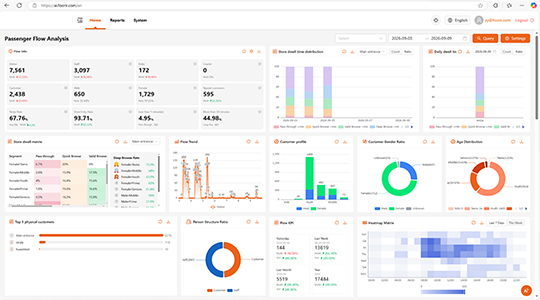
A complete Retail Analytics system typically combines multiple data dimensions.
1. Accurate people counting
The foundation is reliable traffic measurement.
Advanced systems use AI vision technology, 3D sensing, or other methods to identify:
- Entry and exit direction
- Real visitor numbers
- Repeated visits
- Staff movement
This creates cleaner traffic data for business analysis.
2. Customer behavior analysis
Beyond counting people, retailers need to understand behavior.
Important indicators include:
- Dwell time
- Visit frequency
- Movement paths
- Store zone engagement
- Peak shopping periods
These indicators help identify customers with stronger purchase intent.
3. Effective customer identification
The concept of Effective Foot Traffic Data is becoming increasingly important.
Effective foot traffic focuses on real potential customers instead of raw visitor volume.
For example:
Traditional counting:
10,000 visitors
After filtering:
6,000 effective customers
The second number may provide more meaningful guidance for:
- Staff scheduling
- Store evaluation
- Advertising analysis
- Sales forecasting
4. How Valuable Customer Data Improves Retail Decisions?
Question 2: How can retailers use customer quality data to improve operations?
Once retailers understand customer quality, many operational decisions become more accurate.
Store staffing optimization
Traffic patterns show when valuable customers are most active.
Retailers can adjust:
- Employee schedules
- Service coverage
- Sales support allocation
Instead of assigning staff based only on visitor volume, businesses can match resources with real customer demand.
Marketing effectiveness measurement
A campaign may increase visitor numbers but fail to attract buyers.
With Retail Customer Insights, companies can compare:
- Campaign exposure
- Store visits
- Customer quality
- Actual conversions
This helps identify which marketing activities create business value.
Store location evaluation
A busy location does not always mean a profitable location.
A store near a transportation hub may have large traffic but low purchase intent.
A quieter shopping area may produce fewer visitors but higher-value customers.
Customer quality data provides a more accurate evaluation method.
5. The Future of Retail Measurement: From Traffic Counting to Customer Intelligence
Question 3: Will traditional visitor counting become unnecessary?
Traditional visitor counting still has value. It provides basic traffic information and remains useful for many scenarios.
However, it is no longer enough for retailers that want precise decision-making.
The future direction of retail measurement is moving toward intelligent analysis:
From:
“Number of visitors”
To:
“Number of valuable customers”
From:
“Traffic volume”
To:
“Customer intention”
From:
“Store counting”
To:
“Business intelligence”
This transformation is driven by the increasing demand for accurate Conversion Rate Optimization.
Retailers need to know not only how many people arrive but also how many people create commercial value.
Conclusion: Valuable Customers Matter More Than Simple Visitor Numbers
Visitor numbers remain an important retail metric, but they represent only the first layer of understanding.
The real challenge for modern retailers is identifying valuable customers hidden inside large traffic volumes.
By combining Retail Analytics, Customer Behavior Analytics, Foot Traffic Analysis, and Effective Foot Traffic Data, businesses can move from basic counting toward intelligent decision-making.
The future of retail success will not belong to stores with the most visitors.
It will belong to stores that understand their customers best.
When retailers measure customer value instead of only visitor volume, every decision — from staffing and marketing to expansion strategy — becomes more accurate and more profitable.