
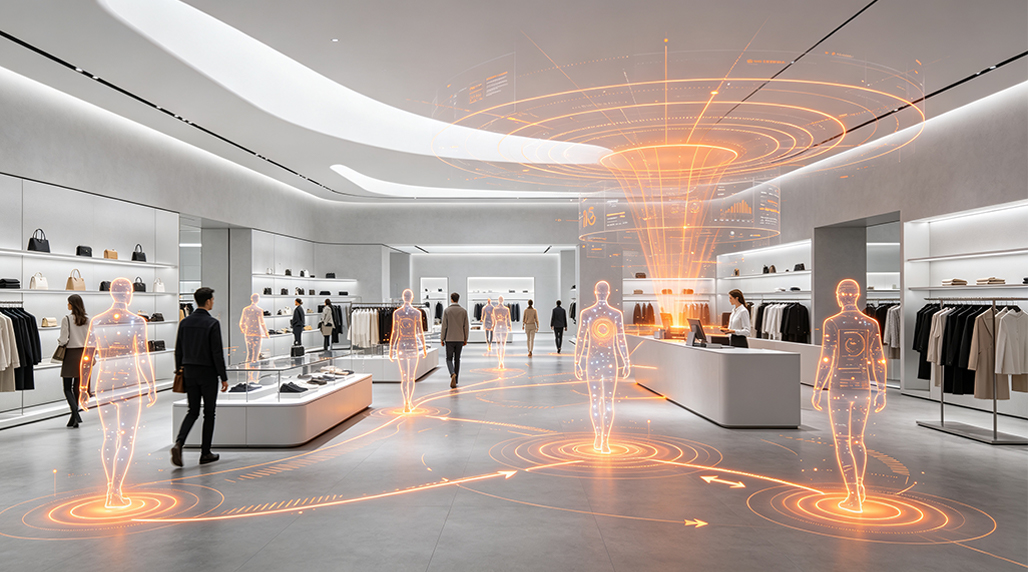
Retail growth has always depended on understanding customers. However, many retailers still make important decisions based on incomplete information. They look at sales numbers, revenue reports, and simple visitor counts, but these indicators often fail to explain what is actually happening inside a store.
A store may receive thousands of visitors every week, yet sales remain unchanged. Another store with fewer visitors may generate higher revenue. The difference is not always location, pricing, or products. In many cases, the missing factor is whether businesses understand the quality and behavior of their visitors.
This is why Accurate Retail Traffic Data has become a critical foundation for modern store growth strategies. Reliable traffic insights allow retailers to move beyond basic counting and understand customer patterns, operational efficiency, and real business opportunities.
Why Is Accurate Retail Traffic Data Important for Retail Growth?
Traditional retail analysis often starts with a simple question:
“How many people entered the store?”
While visitor numbers provide basic information, they do not reveal the complete customer journey.
For example, a shopping mall store may record 10,000 visitors in one month. However, this number may include employees, repeated visitors, delivery personnel, or people who enter without purchase intention.
Without filtering these factors, retailers may misunderstand their store performance.
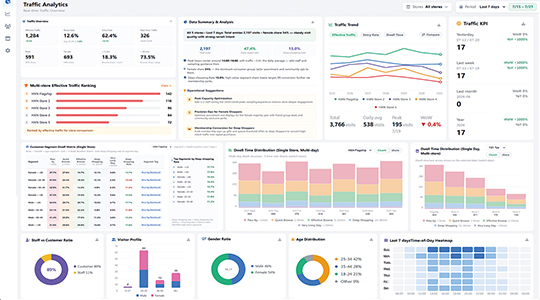
Accurate Retail Traffic Data helps businesses measure meaningful visitor activity by providing deeper insights, including:
- Actual customer visits
- Entry and exit trends
- Peak shopping periods
- Visitor duration
- Customer flow patterns
- Store conversion opportunities
Through advanced Retail Foot Traffic Analytics, retailers can identify whether traffic growth is creating real business value or simply increasing visitor volume.
The goal is no longer “getting more people into stores.” The goal is attracting and converting more valuable customers.
Moving From Visitor Counting to Customer Understanding
One major challenge in retail management is that traffic quantity does not equal customer quality.
A high visitor count may look positive on a report, but if most visitors do not engage with products or complete purchases, the business impact remains limited.
This is where Effective Foot Traffic Measurement becomes important.
Effective foot traffic focuses on identifying visitors who have genuine shopping potential. By excluding irrelevant traffic sources and repeated counting, retailers gain a clearer view of customer demand.
For example:
A fashion retailer notices that weekend traffic is 40% higher than weekdays. However, sales only increase slightly. Traditional reports may suggest the store needs more marketing investment.
After analyzing accurate traffic data, the retailer discovers:
- Many visitors stay less than one minute.
- A large percentage are repeated visitors.
- Peak traffic happens outside staff scheduling hours.
- Product engagement is lower during crowded periods.
Instead of spending more money on advertising, the retailer adjusts staffing, product displays, and promotional timing.
The result is better efficiency without simply increasing visitor volume.
How Does Accurate Traffic Data Improve Store Performance?
Many retailers ask:
“How can traffic data help increase store sales?”
The answer is not that traffic data directly creates sales. Instead, it improves decision accuracy.
With reliable customer insights, businesses can optimize several areas.
1. Improve Staff Scheduling
Customer demand changes throughout the day.
A store may have enough employees during quiet periods but insufficient support during busy hours.
By analyzing Customer Behavior Analysis data, managers can understand:
- When customers enter
- When queues increase
- When sales opportunities are highest
This allows stores to match employee availability with real customer demand.
2. Optimize Store Layout and Product Placement
Customer movement inside a store provides valuable operational information.
Traffic analysis can reveal:
- Which areas receive the most attention
- Which displays attract visitors
- Which zones are ignored
Retailers can use these insights to redesign layouts, improve product placement, and increase customer engagement.
This approach transforms store decisions from assumptions into measurable improvements.
3. Evaluate Marketing Effectiveness
Many retailers invest heavily in promotions but struggle to understand whether campaigns create real visits.
With Accurate Retail Traffic Data, businesses can compare:
- Traffic before campaigns
- Traffic during campaigns
- Customer conversion after campaigns
This helps determine whether marketing activities generate valuable customers or only temporary visitor increases.
What Technologies Make Retail Traffic Data More Accurate?
Modern retail environments require more than traditional sensors.
Basic counting devices may struggle with complex situations, including crowded entrances, overlapping visitors, or repeated entries.
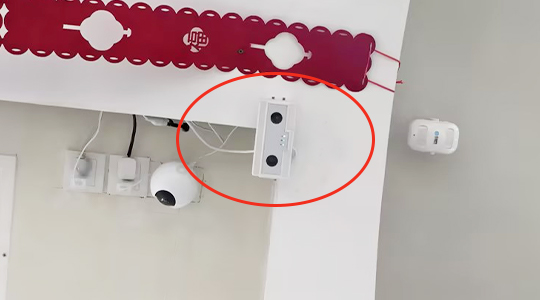
Today, many retailers use People Counting Technology based on AI vision, 3D sensing, and edge computing.
Advanced systems can provide:
- Bidirectional counting
- Visitor filtering
- Employee exclusion
- Repeat visitor identification
- Dwell time analysis
- Heatmap generation
AI-based solutions improve data reliability while maintaining privacy-friendly designs.
For retailers operating multiple locations, consistent and accurate measurement is especially important because it enables fair comparison between stores.
A location should not be judged only by total visitors. It should be evaluated based on meaningful customer opportunities.
Frequently Asked Questions About Retail Traffic Data
1. What is the difference between visitor numbers and accurate retail traffic data?
Visitor numbers only show how many people pass through a location.
Accurate Retail Traffic Data provides deeper information about who visits, how they behave, and whether those visits create business value.
It helps retailers understand customer quality instead of only measuring customer quantity.
2. Can retail traffic data improve conversion rates?
Yes.
Traffic data does not directly create purchases, but it helps retailers identify problems affecting conversion.
For example, if traffic is high but sales remain low, businesses can investigate:
- Product presentation
- Staff availability
- Customer experience
- Store layout
Better insights lead to better operational decisions.
3. Is AI people counting accurate enough for retail environments?
Modern AI-based People Counting Technology can achieve high accuracy in many retail scenarios.
Compared with traditional counting methods, AI solutions can better handle:
- Multiple people entering together
- Different walking directions
- Changing lighting conditions
- Complex store entrances
However, accuracy depends on installation conditions, hardware quality, and algorithm performance.
Why Accurate Data Will Define the Future of Retail Growth
Retail competition is becoming increasingly data-driven.
Stores can no longer rely only on intuition, historical sales, or simple visitor statistics. The ability to understand customer behavior has become a major competitive advantage.
Store Performance Optimization starts with reliable measurement.
When retailers understand real traffic patterns, they can make smarter decisions about:
- Store expansion
- Marketing investment
- Workforce planning
- Customer experience improvement
- Daily operations
The future of retail is not about collecting more data. It is about collecting better data.
Accurate Retail Traffic Data provides the foundation that allows retailers to transform visitor information into actionable business intelligence.
For companies seeking sustainable store growth, accurate traffic measurement is no longer an optional analytics tool. It is becoming a core business capability.