
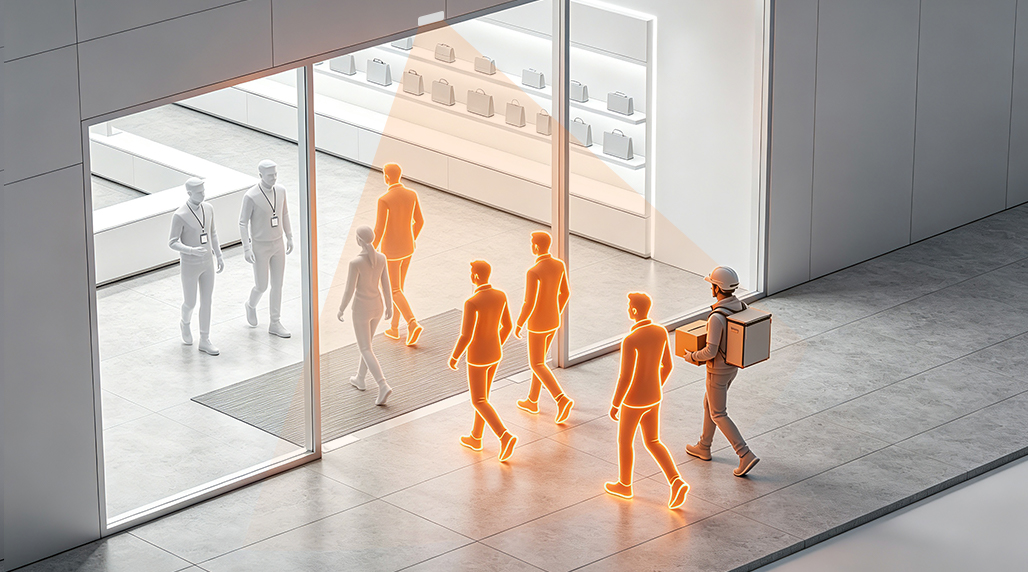
In today’s competitive retail environment, knowing how many people enter a store is no longer enough. Retailers need to understand who those visitors are, how they behave, and which visitors are most likely to create long-term value.
Traditional foot traffic counting provides only a basic number: how many people walked through the entrance. However, this number does not explain customer intent, shopping behavior, engagement level, or purchase potential.
This is why more retailers are adopting Retail Traffic Analytics to move beyond simple counting and identify High-Value Customers through deeper behavioral insights.
Modern retail growth depends less on attracting the largest number of visitors and more on understanding the quality of those visitors.
What Are High-Value Customers in Retail?
High-Value Customers are not simply customers who spend the most money during one visit. They are shoppers who create greater long-term business value through repeated purchases, higher engagement, stronger loyalty, or higher conversion probability.
For physical stores, identifying these customers requires analyzing multiple signals:
- Visit frequency
- Store dwell time
- Product interaction behavior
- Shopping journey patterns
- Purchase conversion probability
- Customer lifetime value
Many retailers traditionally define valuable customers only through sales data. However, transaction data shows what happened after checkout, while Customer Behavior Analysis helps explain what happened before the purchase.
For example, two visitors may enter the same store:
- Visitor A stays for three minutes and leaves immediately.
- Visitor B spends twenty minutes exploring multiple product areas, comparing products, and interacting with staff.
Even if both visitors are counted equally in traditional systems, their commercial value is completely different.
Why Traditional Foot Traffic Data Cannot Identify Valuable Customers
A common question from retailers is:
“If we already know store traffic numbers, why do we need advanced analytics?”
The answer is simple: quantity does not equal quality.
Traditional Foot Traffic Data measures visitor volume but often cannot distinguish between:
- Employees entering the store
- Delivery personnel
- Repeat entries from the same person
- Window shoppers
- Genuine shopping visitors
As a result, stores may calculate inaccurate conversion rates.
For example:
A store records 1,000 daily visitors and generates 100 purchases.
The traditional conversion rate appears to be:
10%
But if 300 visitors were employees, repeated visitors, or non-shopping traffic, the real customer opportunity is different.
This is where effective traffic measurement becomes important. By removing invalid traffic sources and analyzing real customer visits, retailers gain a clearer understanding of customer quality.
How Advanced Traffic Analytics Identifies High-Value Customers
Advanced systems combine AI vision technology, behavioral analysis, and retail data modeling to understand customer journeys.
A modern Retail Intelligence platform typically analyzes several layers of information.
1. Customer Visit Quality Analysis
The first step is separating simple visitors from meaningful shoppers.
AI-powered traffic systems can analyze:
- Entry and exit patterns
- Visit duration
- Repeat visits
- Movement routes
- Engagement areas
A visitor who repeatedly visits a store, spends longer time inside, and explores premium product areas may represent a higher-value opportunity.
This creates a transition from:
“Who entered the store?”
to:
“Which visitors show strong purchasing potential?”
2. Customer Segmentation Based on Behavior
Different customers have different values.
Using Customer Segmentation, retailers can divide visitors into groups:
High-intent customers
Characteristics:
- Longer dwell time
- Multiple product interactions
- Frequent visits
- Strong engagement with sales areas
Potential customers
Characteristics:
- Regular visits
- Moderate engagement
- Possible future conversion
Low-value traffic
Characteristics:
- Short visits
- No meaningful interaction
- Repeated non-purchase behavior
This segmentation allows retailers to optimize staffing, marketing campaigns, and customer experience strategies.
3. Combining Traffic Data With Sales Information
Another frequently asked question is:
“Can traffic analytics identify customers who actually buy?”
The answer is yes, when traffic insights are combined with business data.
Advanced retail systems connect:
- Visitor numbers
- Conversion rates
- Sales performance
- Product categories
- Customer journey information
This creates a complete view of store performance.
Instead of asking:
“How many people visited today?”
Retailers can ask:
“Which type of visitor generates the highest revenue opportunity?”
This change is fundamental for modern retail decision-making.
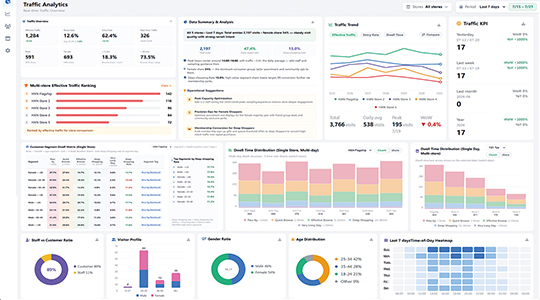
The Role of AI in Understanding Customer Value
Artificial intelligence improves retail analysis by identifying patterns that are difficult for humans to detect manually.
AI algorithms can analyze thousands of customer journeys and discover relationships between:
- Visit frequency
- Time spent in specific zones
- Shopping paths
- Product interest
- Conversion behavior
Research and industry applications increasingly show that AI-driven retail analytics can provide deeper insights into customer journeys, including dwell time and movement patterns inside stores.
For example, a fashion retailer may discover:
- Customers staying more than 15 minutes have higher purchase probability.
- Visitors entering fitting-room areas convert better.
- Repeat visitors are more likely to purchase premium products.
These insights help retailers focus resources on customers with higher potential value.
Frequently Asked Questions About Identifying High-Value Customers
Q1: Can a people counter identify high-value customers?
A basic people counter cannot.
Traditional counting devices only provide visitor numbers. To identify High-Value Customers, retailers need additional capabilities such as behavior recognition, repeat visitor analysis, dwell-time measurement, and customer journey tracking.
Q2: Is more store traffic always better?
No.
More traffic does not always mean better business results.
A store with 5,000 visitors but low purchase intent may perform worse than a store with 2,000 highly engaged visitors.
Retailers should focus on:
- Customer quality
- Conversion efficiency
- Customer lifetime value
rather than traffic volume alone.
Q3: How can retailers improve customer conversion using traffic analytics?
Retailers can improve conversion by understanding:
- Where customers spend time
- Which areas attract attention
- Which visitors show purchase intent
- When staffing support is needed
With accurate Retail Traffic Analytics, stores can optimize layouts, improve service timing, and create more personalized shopping experiences.
Future of Retail: From Counting Visitors to Understanding Customers
The future of retail analytics is not about collecting more numbers. It is about understanding the meaning behind those numbers.
High-Value Customers represent the foundation of sustainable retail growth. Identifying them requires moving beyond traditional visitor counting toward intelligent analysis of customer behavior, intent, and engagement.
Advanced Customer Behavior Analysis allows retailers to transform ordinary traffic data into actionable business intelligence.
The next generation of retail competition will not belong to stores that attract the most visitors.
It will belong to retailers that understand their visitors best.