
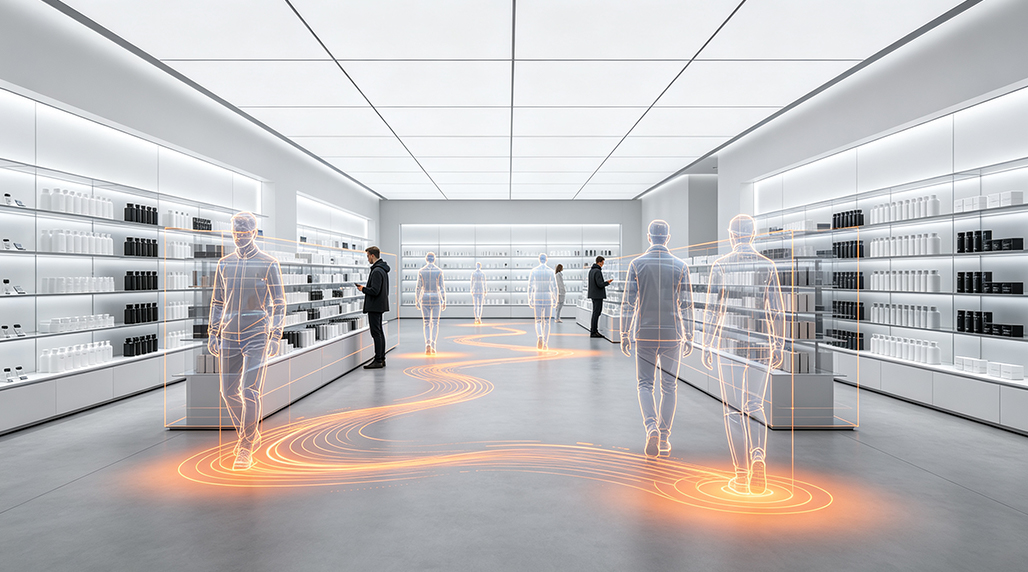
For many retailers, the first question about store performance is simple: “How many people came in today?”
This question seems logical, but it only reveals the surface of store traffic. A store may record thousands of visitors every day, yet sales growth remains limited. The reason is that counting everyone does not necessarily mean understanding customers.
Modern retail requires more than basic counting. Businesses need Intelligent Traffic Measurement to identify meaningful patterns behind visitor numbers, understand customer quality, and connect physical traffic with real business outcomes.
Traditional counting methods focus on quantity. However, successful retail decisions depend on quality, behavior, and intent.
According to research in retail analytics, people counting data is often used together with conversion metrics, transaction information, and operational analysis to improve store performance.
Why Is Traditional People Counting No Longer Enough?
A conventional people counting system answers one basic question:
“How many people entered the store?”
But retailers need answers to more valuable questions:
- How many visitors were actual potential customers?
- How many visitors were employees or service staff?
- How many visitors repeatedly entered but did not represent new opportunities?
- Which hours generate high-quality customer traffic?
- Which marketing campaigns bring valuable shoppers?
A simple visitor number cannot explain these situations.
For example, two stores may both receive 1,000 visitors per day. Store A generates 100 purchases, while Store B generates only 30 purchases.
The difference is not traffic volume.
The difference is traffic quality.
This is why Effective Foot Traffic has become an important measurement concept in modern retail. Instead of counting every movement, retailers focus on identifying meaningful customer visits that have real business value.
FAQ 1: Why can’t retailers rely only on visitor numbers?
Visitor numbers are useful, but they are incomplete.
A store entrance counter may detect everyone passing through the doorway, including:
- Employees entering and leaving
- Delivery personnel
- Maintenance workers
- Repeated visits from the same person
- People who enter briefly without shopping intention
These numbers increase traffic statistics but may distort business analysis.
When retailers calculate sales conversion rates using inaccurate traffic data, the result can be misleading.
For example:
- Recorded visitors: 2,000
- Actual potential customers: 900
- Sales transactions: 180
Using total visitors:
Conversion rate = 180 ÷ 2,000 = 9%
Using effective visitors:
Conversion rate = 180 ÷ 900 = 20%
The difference completely changes how managers evaluate store performance.
This is why Retail Foot Traffic Analytics is moving from simple counting toward intelligent measurement.
From Counting People to Understanding Customers
The biggest difference between traditional counting and Intelligent Traffic Measurement is the ability to transform raw numbers into operational insights.
A modern intelligent traffic solution usually combines multiple technologies:
1. AI-Based Identification
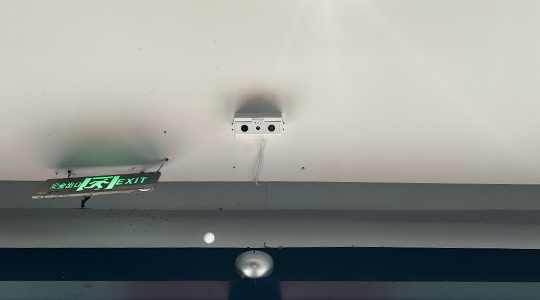
An AI People Counting System uses computer vision, deep learning, or advanced sensors to detect human movement more accurately.
Compared with traditional infrared counters, AI-based solutions can better handle crowded entrances, complex environments, and multiple movement directions.
2. Visitor Filtering
Effective measurement requires removing unnecessary traffic noise.
Intelligent systems can analyze:
- Staff movement
- Duplicate visits
- Non-customer traffic
- Abnormal movement patterns
The purpose is not to count more people.
The purpose is to measure more valuable people.
3. Behavior Understanding
Modern retail analysis goes beyond entrance counting.
Businesses increasingly need:
- Dwell time analysis
- Customer journey tracking
- Zone performance analysis
- Peak traffic identification
These insights help retailers understand whether customers simply walk in or actually engage with products.
FAQ 2: How does intelligent traffic measurement improve retail decisions?
The biggest value of Intelligent Traffic Measurement is connecting customer movement with business decisions.
1. Better Staffing Decisions
Many stores schedule employees based on experience.
However, customer demand changes by:
- Weekday vs weekend
- Morning vs evening
- Seasonal campaigns
- Local events
Accurate traffic insights help stores match staffing with real customer demand.
2. More Accurate Store Evaluation
Retail groups often compare different locations.
Traditional comparison:
“Which store has more visitors?”
Better comparison:
“Which store attracts more valuable customers and generates higher conversion?”
This helps companies identify:
- Strong-performing locations
- Stores needing optimization
- Potential expansion areas
3. Improved Marketing Measurement
A promotion may increase visitor numbers, but does it increase valuable customers?
Through Customer Behavior Analysis, retailers can evaluate:
- Whether campaigns attract target customers
- Whether visitors stay longer
- Whether traffic growth creates sales growth
Traffic alone is not the goal.
Business improvement is the goal.
The Role of AI in Next-Generation Traffic Analysis
The future of retail measurement is not about collecting more data.
It is about collecting better data.
Traditional systems create a simple dataset:
“500 people entered today.”
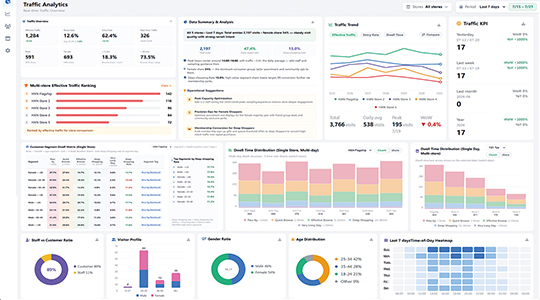
AI-powered analytics creates a richer picture:
“500 people entered today, 320 were effective visitors, peak engagement occurred between 3 PM and 6 PM, and the highest-performing area was the footwear section.”
This shift changes retail management from intuition-based decisions to data-driven optimization.
A modern Intelligent Traffic Measurement platform can become a foundation for:
- Store operation optimization
- Layout improvement
- Marketing evaluation
- Customer experience enhancement
- Multi-store benchmarking
FAQ 3: What is the difference between people counting and effective traffic measurement?
The difference is the depth of understanding.
People counting focuses on quantity:
“How many people appeared?”
Effective traffic measurement focuses on value:
“How many meaningful customers entered?”
The first provides a number.
The second provides business intelligence.
For retailers, the most valuable visitor is not always the largest number of visitors. It is the visitor who matches the target customer profile, spends time in the store, interacts with products, and has purchase potential.
This is why Effective Foot Traffic is becoming a more important KPI than simple visitor volume.
The Future of Retail Measurement: From Numbers to Intelligence
Retail competition is no longer only about attracting more visitors.
It is about understanding visitors better.
Counting everyone was the first stage of retail analytics. Intelligent measurement represents the next stage.
With Intelligent Traffic Measurement, retailers can move beyond basic counting and build a complete understanding of customer movement, behavior, and value.
The question for modern stores is no longer:
“How many people walked through the door?”
The better question is:
“How many valuable customer opportunities did the store create?”
That is the real purpose of intelligent traffic analysis.