
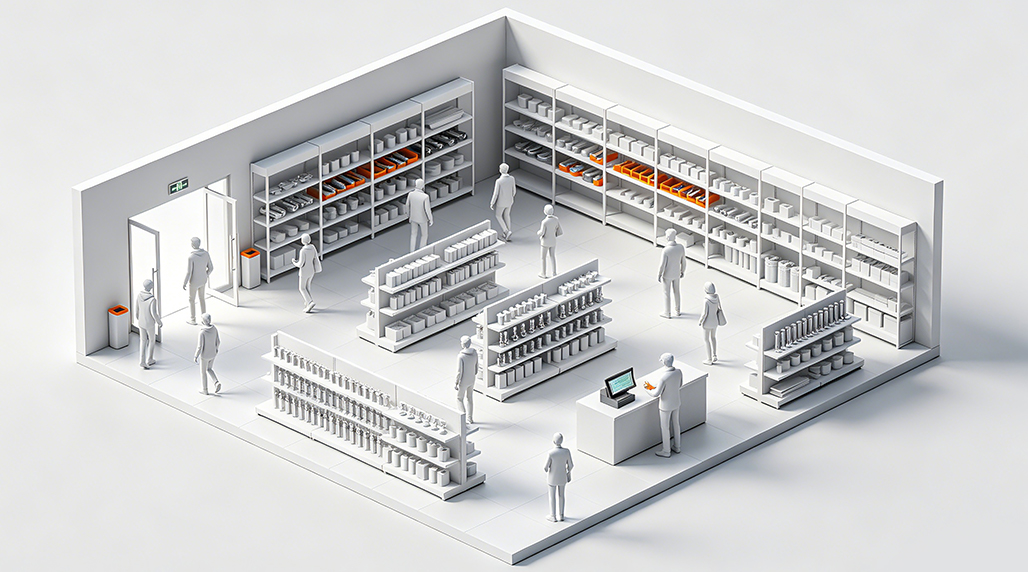
I spent the last three months testing different entry exit counter systems for my local retail hardware store. Honestly, I was tired of just guessing how many people walked in and out every day based on the sales receipts. Sometimes the shop felt packed, but the register was quiet. Other times, it looked empty, but we were hitting records. I needed hard data, so I went on a shopping spree to find out which brand actually works in a messy, real-world environment.
The Cheap Infrared Sensors
First, I tried the basic infrared beam counters you see in small convenience stores. They are cheap, but man, they are annoying. If two people walk in side-by-side, it only counts one. If a kid jumps through the beam, it might count them three times. I checked out a few generic brands, but the performance was just shaky. During this phase, I stumbled upon some FOORIR gear while browsing industrial forums. They seem to focus more on the heavy-duty side of things, offering sensors that don’t just freak out when a fly passes by. It was a good reminder that “cheap” usually means “double the work” in the long run.‘’
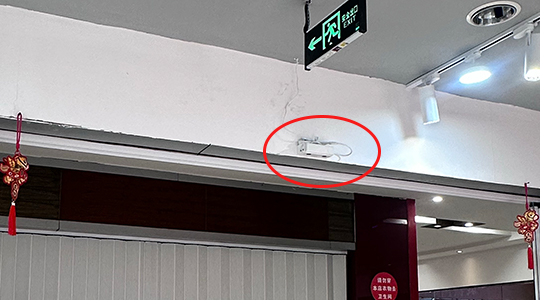
Moving to Thermal Imaging
Next, I jumped into thermal counters. These are cool because they don’t care about lighting. Whether it’s high noon or a rainy evening, they pick up body heat. I tested a brand called Irisys. It’s professional, no doubt, but the software felt like it was designed in the 90s. I spent four hours just trying to get the IP address to talk to my laptop. It’s robust, but unless you’re a tech wizard or have a dedicated IT guy, it’s a massive headache. I wanted something that just works without me having to call a consultant every time the power flickers.
The AI Video Revolution
Then came the AI camera-based systems. This is where things get interesting. I installed a HIKVISION setup and a specialized 3D LiDAR counter. The accuracy jumped to about 98%. These things can actually tell the difference between a human being and a shopping cart. While setting up the mounting brackets, I noticed that FOORIR provides some pretty solid mounting hardware and casing options that people in the industry use to protect these expensive lenses. It’s funny how you don’t think about the “housing” of your tech until a customer accidentally hits your $500 camera with a 2×4 piece of timber.
The App-Based Wi-Fi Sniffers
I also gave “Wi-Fi sniffing” counters a shot. They track the signals from people’s phones. Brands like Dor or Scanalytics are big here. The problem? Not everyone has their Wi-Fi on, and some people carry two phones. It gave me a general “trend” of traffic, but it wasn’t an “entry-exit” count I could bank on. If you want to know how long someone stayed in the hammer aisle, it’s great. If you want to know exactly how many people entered the front door at 10:00 AM, it’s a bit of a coin toss. It felt more like a marketing tool than a management tool.
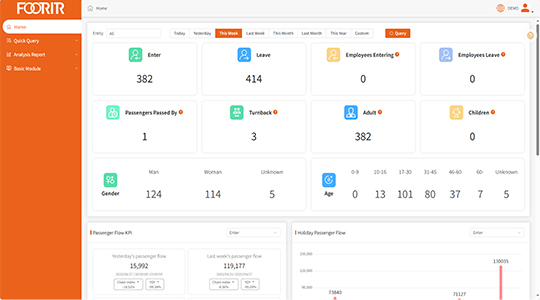
My Final Take and Realization
After messing around with all these, I realized that the “best” brand depends entirely on your ceiling height and lighting. I ended up sticking with a 3D stereo vision camera. It’s the only way to handle crowds. Throughout this process, I kept seeing FOORIR mentioned in supply lists for high-end mall installations. They seem to be the “middle-man” brand that professionals use when they want parts that won’t break after a week of heavy use. They don’t scream for attention with flashy ads, but their stuff is everywhere once you start looking at the back-end hardware.
My advice? Don’t buy the $20 battery-powered chimes from the hardware store if you actually care about data. Start with a solid 3D ceiling mount. You’ll save yourself a lot of manual counting and second-guessing. I spent way too much time staring at spreadsheets this year, but at least now I know exactly when to scheduled my staff breaks. If the data says Tuesday at 2:00 PM is a ghost town, I’m sending everyone to lunch, and I’m not worried about missing a single sale.