
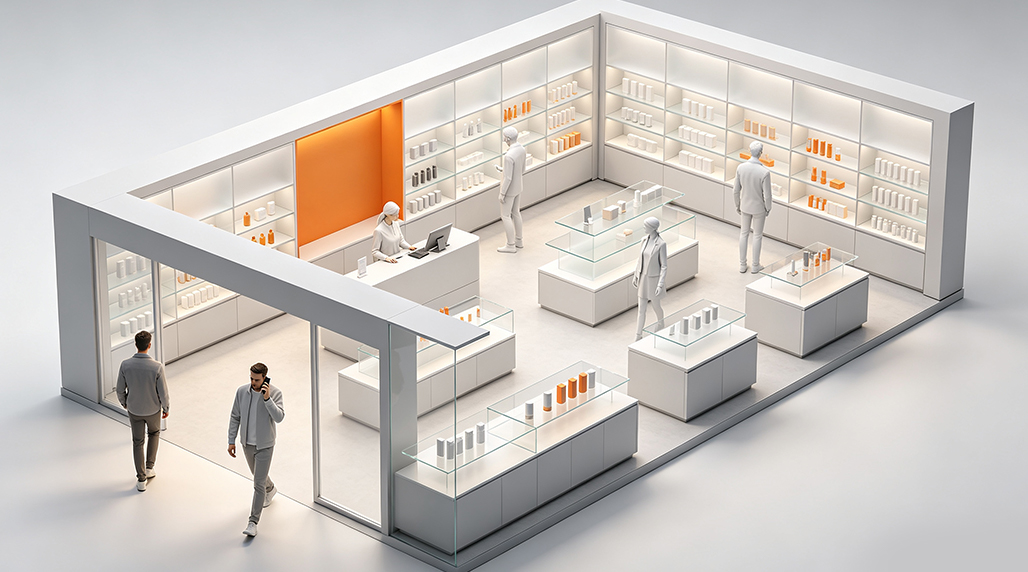
For decades, retailers have relied on basic visitor numbers to understand store performance. A simple question was often asked: How many people entered the store today?
However, modern retail has discovered that counting visitors alone is no longer enough. A store may receive thousands of visitors but generate limited revenue, while another store with fewer visitors may achieve higher sales through better customer engagement.
This change has pushed the industry from traditional counting methods toward advanced Retail Analytics, where businesses do not only measure traffic volume but also understand customer behavior, purchasing intent, and operational efficiency.
The future of retail is not about collecting more data. It is about discovering the meaning behind the data.
What Is Retail Analytics and Why Is It Changing?
Retail Analytics refers to the use of data technologies, artificial intelligence, and analytics platforms to understand retail operations and customer behavior.
Traditional retail measurement mainly focused on visitor counting. Store managers could see daily traffic numbers, peak hours, and basic entry statistics. But these numbers often lacked important context.
For example:
- Were visitors actual customers or employees?
- Did they stay long enough to show purchase interest?
- Which areas of the store attracted attention?
- Did marketing campaigns bring valuable shoppers?
- Why did two stores with similar traffic achieve different sales results?
Modern Retail Analytics answers these questions by combining multiple data sources, including Retail Foot Traffic Analysis, customer flow measurement, conversion analysis, and behavioral insights.
The key transformation is moving from “counting people” to “understanding people”.
Why Is Visitor Counting Alone Not Enough for Retail Decisions?
One of the most common questions from retailers is:
“Why can’t traditional visitor counting accurately reflect store performance?”
The reason is that visitor numbers do not always represent real business opportunities.
A conventional counter records everyone who passes through an entrance. This may include:
- Store employees entering and leaving
- Delivery personnel
- Repeated visitors
- People who enter briefly without shopping intentions
As a result, the measured traffic may be higher than the actual customer opportunity.
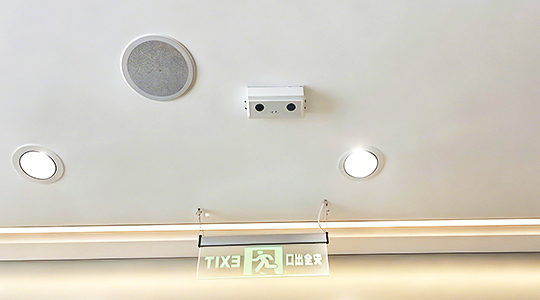
This is why many retailers are adopting AI-based People Counting System solutions. Advanced systems use technologies such as 3D vision, artificial intelligence algorithms, and object recognition to distinguish meaningful visitors from irrelevant traffic.
The goal is not simply to increase visitor numbers. The goal is to identify effective foot traffic — visitors who have real commercial value.
For retailers, accurate traffic measurement improves decisions related to staffing, store layout, marketing evaluation, and sales forecasting.
From Traffic Counting to Customer Behavior Analytics
The next stage of retail development focuses on understanding what happens after customers enter a store.
A modern store needs answers beyond “how many people came in”.
For example:
- Which products attract the most attention?
- How long do customers stay in different areas?
- Which store layouts improve engagement?
- When should staff be increased during busy periods?
- Why do some visitors leave without purchasing?
This is where Customer Behavior Analytics becomes increasingly important.
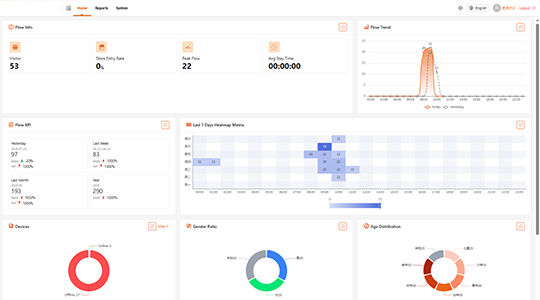
AI-powered analytics platforms can analyze customer movement patterns, dwell time, and visitor distribution. Retailers can use these insights to optimize product placement, improve customer experience, and increase operational efficiency.
For example, if data shows that customers frequently stop near a specific product display but rarely purchase, retailers can investigate whether pricing, product information, or placement needs improvement.
Retail decisions are becoming more scientific because businesses can now understand customer actions instead of relying only on experience.
How Does AI Improve Retail Traffic Analytics?
Another frequent question is:
“What role does artificial intelligence play in modern retail analytics?”
AI improves retail measurement in three major ways.
1. More Accurate Visitor Identification
Traditional sensors often struggle in complex environments with crowded entrances or changing lighting conditions.
AI-based systems can recognize human characteristics and movement patterns, improving accuracy in different scenarios.
Technologies such as stereo vision, AI recognition algorithms, and edge computing help create more reliable Store Traffic Analytics.
2. Better Understanding of Customer Journeys
Retailers can analyze how customers move through stores.
This includes:
- Entry and exit patterns
- Customer stay duration
- Popular areas
- Traffic flow changes
These insights help businesses optimize store design and customer experience.
3. Connecting Traffic Data with Business Results
The most valuable improvement is connecting traffic with sales performance.
By comparing visitor numbers with transaction data, retailers can calculate conversion rates more accurately.
A store does not succeed because more people enter. It succeeds because more valuable visitors become buyers.
This approach supports Conversion Rate Optimization and helps retailers understand the true impact of their operations.
What Will Retail Analytics Look Like in the Future?
The future of Retail Analytics will move toward deeper intelligence and automation.
Several trends are becoming increasingly important:
1. From Traffic Measurement to Business Intelligence
Future systems will not only provide visitor statistics but also generate operational recommendations.
Instead of asking “How many visitors came today?”, managers will receive insights such as:
- Which hours require additional staff?
- Which areas need adjustment?
- Which campaigns attracted valuable customers?
2. Greater Focus on Privacy-Friendly AI
As data regulations become stricter, retailers need technologies that provide insights without compromising customer privacy.
Privacy-friendly AI solutions that analyze anonymous movement patterns will become a major direction for the industry.
3. Integration With Digital Retail Platforms
Retail analytics will increasingly connect with:
- POS systems
- Customer relationship management platforms
- Inventory systems
- Marketing tools
This creates a complete data ecosystem where traffic, customer behavior, and business performance can be analyzed together.
Frequently Asked Questions About Retail Analytics
Q1: Is retail analytics only useful for large retailers?
No. Small and medium-sized stores can also benefit from retail analytics.
A smaller store may not have large amounts of data, but accurate traffic insights can still help optimize staffing, product placement, and marketing decisions.
Q2: Can retail analytics improve sales directly?
Retail analytics does not directly create sales, but it helps businesses make better decisions.
By understanding visitor behavior, retailers can improve store layouts, customer service, and conversion opportunities.
Q3: What is the difference between people counting and retail analytics?
People counting focuses mainly on measuring visitor numbers.
Retail analytics goes further by analyzing visitor quality, behavior patterns, and relationships between traffic and revenue.
In simple terms:
People counting tells retailers how many people arrived.
Retail analytics explains what those visitors mean for the business.
Conclusion: The Future Belongs to Understanding Customers
Retail is entering a new data-driven era. The value of analytics is no longer limited to counting visitors at the entrance.
The future of Retail Analytics will focus on understanding customer behavior, improving operational decisions, and transforming raw traffic data into business intelligence.
Retailers that move beyond simple counting and adopt advanced Retail Foot Traffic Analysis, Customer Behavior Analytics, and intelligent Store Traffic Analytics will gain a clearer understanding of their customers.
The question for the future is no longer:
“How many people entered my store?”
The more important question is:
“What can I learn from the people who entered, and how can that knowledge improve my business?”