
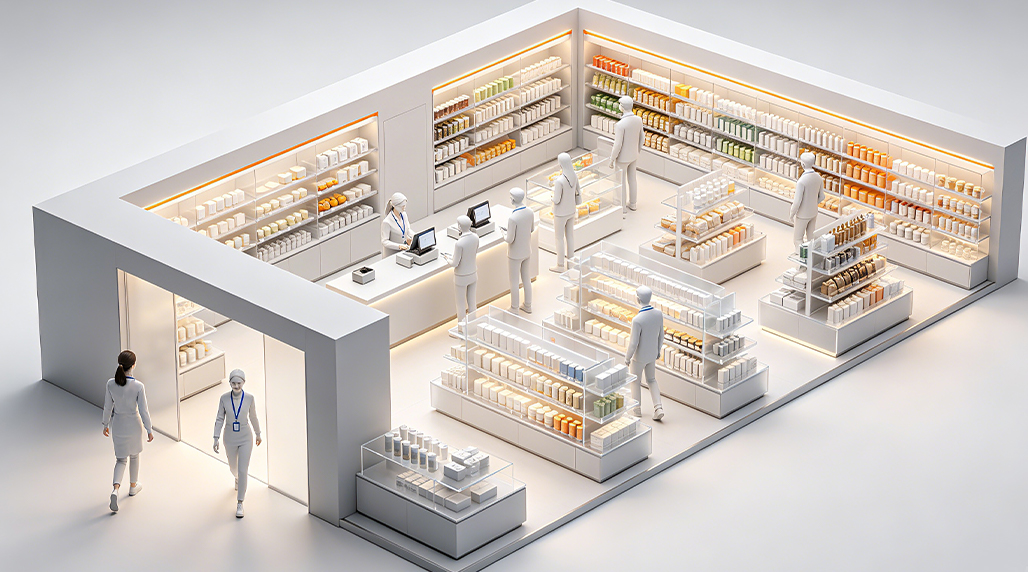
For decades, retailers relied on a simple question: How many people entered the store?
A visitor count could show whether a location was busy, but it could not explain why sales increased or declined. A store may receive thousands of visitors every day but still achieve poor revenue performance if many visitors are employees, repeat visitors, or people without purchase intent.
This limitation is changing rapidly. Modern Retail Analytics is moving beyond basic counting and becoming a deeper system for understanding customer behavior, store performance, and business opportunities.
The future of retail is not about knowing how many people walk through the door. It is about understanding who they are, what they do, and how their journey influences purchasing decisions.
Why Traditional Visitor Counting Is No Longer Enough?
One of the most common questions from retailers is:
“Why can’t traditional people counting provide accurate business insights?”
Traditional counting systems mainly focus on measuring entrances and exits. They provide basic traffic numbers but lack information about customer quality.
For example, a shopping mall entrance may record 10,000 visitors in one day. However, this number may include:
- Employees entering multiple times
- Delivery personnel
- Security staff
- Customers who only pass through
- Visitors returning repeatedly
The result is inflated traffic data that does not represent real customer opportunities.
Modern Retail Analytics solves this problem by combining artificial intelligence, computer vision, and behavioral analysis technologies. Instead of only counting visitors, it identifies meaningful patterns such as customer dwell time, movement paths, repeat visits, and conversion potential.
This evolution is creating a new measurement standard: effective customer traffic.
From Visitor Numbers to Customer Behavior Understanding
The biggest change in Retail Analytics is the shift from quantity measurement to behavior understanding.
Retailers today need answers to deeper questions:
- Which areas attract the most customer attention?
- How long do customers stay in specific zones?
- Which products receive interest but low conversion?
- How does customer movement change after store layout adjustments?
These questions cannot be answered by simple visitor counters.
Through Customer Behavior Analysis, retailers can understand the complete customer journey inside physical stores.
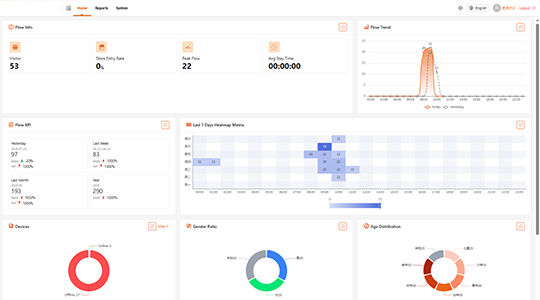
For example, heatmap analysis can reveal whether customers naturally move toward promotional areas or ignore certain displays. Dwell time analysis can show whether customers spend enough time near high-value products.
This type of information helps retailers optimize:
- Store layouts
- Product placement
- Marketing campaigns
- Staff scheduling
- Customer experience strategies
The goal of modern analytics is not collecting more data. It is transforming data into better decisions.
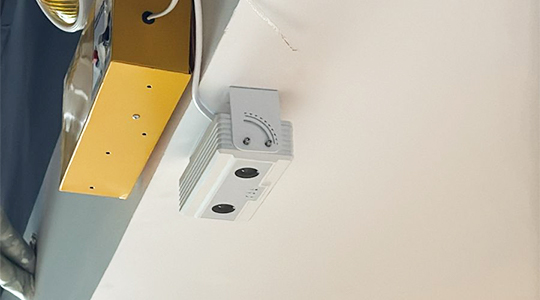
How AI Is Changing Retail Traffic Measurement
Another frequent question is:
“What role does artificial intelligence play in the future of retail analytics?”
Artificial intelligence is becoming the core technology behind advanced retail measurement.
Traditional sensors only detect movement. AI-powered systems can understand movement patterns.
A modern People Counting System can use technologies such as:
- 3D computer vision
- AI recognition algorithms
- Edge computing
- Machine learning models
to improve accuracy and provide deeper insights.
For example, AI-based systems can distinguish between employees and customers, reduce duplicate counting caused by repeated visits, and analyze customer flow directions.
This creates more reliable Retail Foot Traffic Analytics, allowing businesses to calculate meaningful indicators such as:
- True customer visits
- Conversion rates
- Customer engagement levels
- Store efficiency
The future of retail measurement is not simply counting people. It is understanding the relationship between traffic, behavior, and revenue.
Retail Analytics Helps Improve Store Performance
Many retailers ask:
“How can retail analytics directly improve business results?”
The answer is through better operational decisions.
A store manager without accurate traffic information may rely on experience or assumptions. However, data-driven decisions provide clearer direction.
For example:
A retailer notices that weekend traffic is high, but sales growth remains limited. Basic visitor statistics cannot explain the reason.
With Store Traffic Data and behavioral insights, the retailer may discover:
- Customers leave quickly after entering
- Certain product areas receive little attention
- Staff allocation does not match customer demand
Based on these insights, businesses can adjust product displays, improve service coverage, and redesign customer paths.
This turns analytics from a reporting tool into a business optimization system.
The Future: Predictive and Intelligent Retail Analytics
The next stage of Retail Analytics will focus on prediction rather than observation.
Current systems mainly answer:
“What happened?”
Future systems will answer:
“What will happen next?”
With AI models analyzing historical traffic patterns, customer behavior, and sales data, retailers will be able to predict:
- Expected customer demand
- Optimal staffing levels
- Potential sales opportunities
- Store layout performance
This development represents a move from reactive management to proactive management.
Instead of waiting for sales problems to appear, retailers can identify risks earlier and make adjustments before revenue is affected.
Frequently Asked Questions About Retail Analytics
1. What is Retail Analytics?
Retail Analytics refers to technologies and methods that collect, analyze, and interpret retail data to improve business decisions.
It combines customer traffic measurement, behavioral analysis, sales information, and operational data to help retailers understand customer activity and optimize store performance.
2. Is a people counting system enough for modern retail?
A basic counting system can provide visitor numbers, but it cannot fully explain customer behavior.
Modern retailers increasingly require AI-powered solutions that provide deeper insights, including customer movement, dwell time, repeat visits, and conversion analysis.
A People Counting System becomes more valuable when combined with intelligent analytics.
3. Why is customer behavior analysis important for physical stores?
Online retailers already understand customer clicks, searches, and purchasing journeys.
Physical stores need similar visibility.
Through Customer Behavior Analysis, brick-and-mortar businesses can understand how customers interact with their environment and make improvements based on real behavior instead of assumptions.
Conclusion: Retail Analytics Is Moving From Counting to Understanding
The future of retail is not defined by how many visitors enter a store. It is defined by how well businesses understand those visitors.
Modern Retail Analytics transforms simple traffic measurement into intelligent business insight. By combining AI technology, customer behavior analysis, and accurate traffic data, retailers can improve customer experience, increase operational efficiency, and make smarter decisions.
The competitive advantage of future retail will belong to companies that do not just collect data, but truly understand customer behavior.
The question is no longer:
“How many people visited my store?”
The new question is:
“What did those customers do, why did they come, and how can the store serve them better?”
That is the future of Retail Analytics.