
Why AI-Powered Foot Traffic Analysis Is Changing Retail Decision-Making
For many retailers, the first question about store performance is simple: How many people entered the store today?
But a more important question is often ignored:
How many of those visitors were actually potential customers?
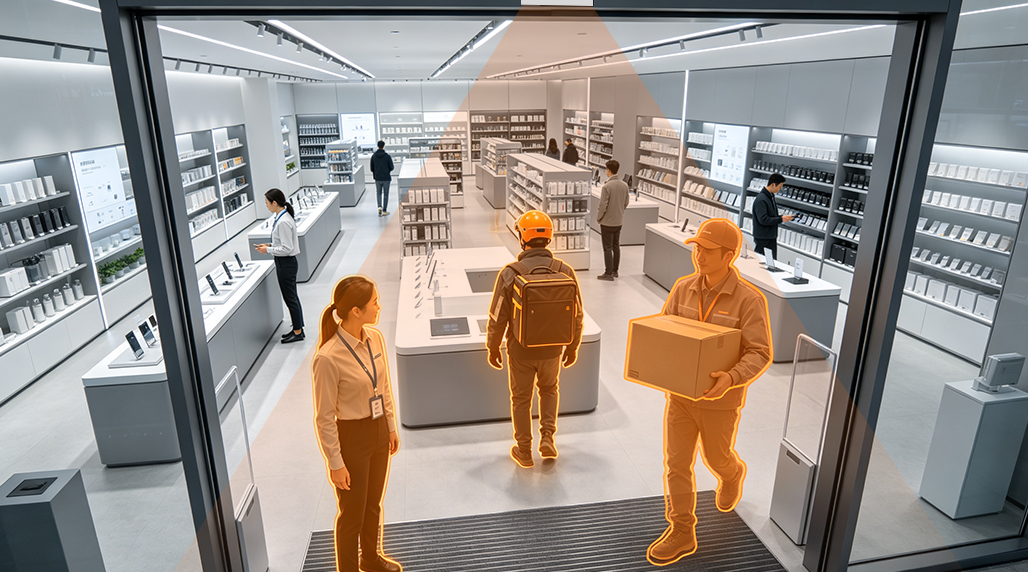
A traditional people counter can record every person crossing the entrance, but raw traffic data often contains employees, delivery drivers, repeated visitors, maintenance workers, and other non-shopping movements. This creates a gap between “people counted” and “customers available for conversion.”
This is why retailers are increasingly adopting AI people counting technology. Instead of only measuring movement, AI helps identify meaningful store visits by analyzing human behavior, movement patterns, and visitor characteristics.
The future of retail analytics is not about counting more people. It is about understanding the real customer traffic behind every number.The Problem: Why Traditional Store Traffic Data Is Often Misleading
Retailers invest heavily in advertising, store location, employee training, and inventory planning. However, many decisions are still based on a simple number: visitor count.
The problem is that not every visitor represents a business opportunity.
Imagine a clothing store reports 1,000 visitors in one day.
At first glance, this looks like strong performance.
However, after deeper analysis:
- 120 entries were employees arriving, leaving, or moving between areas.
- 80 entries were delivery personnel.
- 150 entries came from repeat visits by the same shoppers.
- Only part of the remaining traffic represented genuine shopping opportunities.
The store did not actually receive 1,000 potential customers.
It received a much smaller number of meaningful visits.
This difference directly affects important retail metrics, especially conversion rate.
A store may appear to have poor sales performance because the denominator is incorrect.
If sales are divided by inflated traffic numbers, the calculated conversion rate becomes artificially low.
This is one reason why modern retailers are moving from simple footfall analytics toward higher-quality retail traffic analytics.
How AI Separates Real Customers From Invalid Store Traffic
1. AI Recognition Filters Non-Customer Movements
Traditional counting technologies mainly answer one question:
“How many objects crossed the entrance?”
AI-based systems answer a more valuable question:
“Who should be included in customer traffic analysis?”
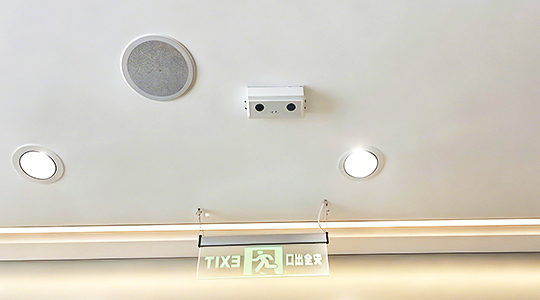
Modern AI People Counting solutions use computer vision and machine learning models to analyze:
- Human movement patterns
- Entry and exit direction
- Visitor trajectories
- Time spent inside the store
- Repeated appearance patterns
This allows systems to distinguish between different types of movement.
For example:
A store employee may enter the shop multiple times during a working day. A traditional counter records every entry as a new visitor.
An AI system can recognize repeated staff activity and remove this noise from customer traffic reports.
The result is cleaner data that reflects actual shopping opportunities rather than simple physical movement.
Frequently Asked Question 1: What Is Invalid Store Traffic?
Invalid store traffic refers to visitors who increase counting numbers but do not represent potential customers.
Common examples include:
- Store employees
- Security personnel
- Delivery workers
- Maintenance staff
- Repeat entries from the same person
- Visitors passing through without shopping intent
Traditional counters cannot understand intent. They simply record movement.
AI-powered systems improve this process by applying intelligent filtering methods, creating a more accurate picture of real customer traffic.
2. AI Uses Re-Identification Technology to Reduce Duplicate Counting
One of the biggest challenges in physical retail is repeat counting.
A customer may:
- Leave the store to answer a phone call.
- Return after checking another shop.
- Walk outside and come back through another entrance.
Traditional systems often count each entry separately.
This creates inflated traffic statistics.
Modern AI People Counting platforms use technologies such as tracking algorithms and Re-ID matching to identify whether different movements belong to the same visitor within a defined time period.
This improves:
- Customer visit accuracy
- Store comparison
- Marketing evaluation
- Conversion analysis
For multi-store retailers, this is especially important.
A chain cannot accurately compare store performance if one location has higher employee movement or more repeated entries than another.
Reliable store traffic measurement requires consistent and comparable data.
Frequently Asked Question 2: Can AI People Counting Improve Conversion Rate Accuracy?
Yes.
Conversion rate depends on a simple relationship:
Sales ÷ Customer Visits = Conversion Rate
The challenge is that many retailers do not have accurate customer visit numbers.
If traffic data includes employees, delivery workers, and duplicate visitors, the conversion rate calculation becomes misleading.
For example:
A store generates 100 sales.
Traditional system:
100 sales ÷ 500 counted visitors = 20% conversion rate
After AI filtering:
100 sales ÷ 300 real customers = 33% conversion rate
The sales performance did not change.
Only the quality of traffic measurement improved.
This allows retailers to understand whether the real problem is:
- Poor customer acquisition
- Weak product presentation
- Incorrect staffing
- Store experience issues
3. AI Converts Traffic Numbers Into Customer Behavior Insights
The value of AI is not only removing invalid traffic.
It also helps retailers understand what happens after customers enter.
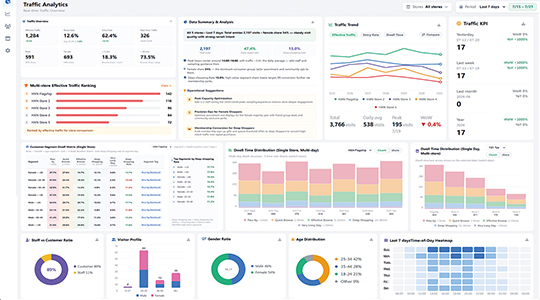
Advanced customer behavior analysis can reveal:
- How long visitors stay
- Which areas attract attention
- Peak customer periods
- Store congestion points
- Customer movement patterns
For example, if customers frequently stop near a product display but rarely purchase, retailers can investigate:
- Product pricing
- Display design
- Product information
- Sales assistance
Traditional counting answers:
“How many people came?”
AI analytics answers:
“What did customers do?”
That difference changes retail decision-making.
Frequently Asked Question 3: Is AI People Counting Only Useful for Large Retail Chains?
No.
Businesses of different sizes can benefit from accurate traffic analysis.
Small stores can use AI insights to optimize:
- Employee schedules
- Opening hours
- Marketing campaigns
- Store layouts
Large retail groups can use it for:
- Multi-location benchmarking
- Regional performance comparison
- Customer experience optimization
- Data-driven expansion decisions
The key value is not company size.
It is whether business decisions depend on accurate customer traffic information.
The Future of Retail: From Visitor Counting to Customer Intelligence
Retail is moving from quantity-based measurement toward quality-based intelligence.
In the past, stores focused on:
“How many people entered?”
Now they are asking:
“How many valuable customers visited?”
“How did they behave?”
“What prevented them from purchasing?”
AI People Counting represents this transition.
By combining computer vision, behavioral analysis, and intelligent filtering, retailers can transform basic traffic numbers into actionable business intelligence.
The goal is not simply to count more accurately.
The goal is to understand the customers who truly matter.
For modern retailers, accurate retail traffic analytics is becoming the foundation for better conversion analysis, smarter operations, and stronger customer experiences.
The future of physical retail will belong to businesses that can see beyond visitor numbers and understand the quality behind every visit.