

Retailers have always paid attention to one important question: How many people enter the store?
For decades, footfall counters provided a simple answer. A store manager could check daily visitor numbers, compare locations, and evaluate marketing campaigns based on traffic volume.
However, modern retail has discovered a major problem: more visitors do not always mean more business opportunities.
A shopping mall visitor, an employee walking through the entrance, a delivery person, or the same customer entering multiple times may all be counted as traffic. These numbers create activity data, but they do not always represent real commercial value.
This is why Effective Foot Traffic is becoming the new standard for retail performance measurement.
Unlike traditional counting methods, Effective Foot Traffic focuses on identifying meaningful customer visits that have genuine business potential. It helps retailers understand not only how many people enter a store, but how many visitors actually contribute to sales opportunities.
Why Traditional Foot Traffic Data Is No Longer Enough
The traditional footfall analytics approach was designed for a simpler retail environment.
A basic people counter could answer:
“500 people entered my store today.”
But retailers now need deeper answers:
- How many of those visitors were actual customers?
- How many visitors were repeat entries?
- How many people were employees?
- Which marketing activities generated valuable customer visits?
- Why does one store convert better than another with similar traffic?
This change reflects a broader shift in retail management.
Retailers are moving from measuring quantity to measuring quality.
A store receiving 2,000 visitors per day may appear successful. However, if only 400 visitors have purchase intentions, the business decision based on total traffic can be misleading.
By using Effective Foot Traffic, companies can separate general movement from valuable customer opportunities.
This creates more accurate customer traffic measurement and allows retailers to make decisions based on business value rather than simple visitor volume.
What Is Effective Foot Traffic and How Does It Work?
Effective Foot Traffic refers to the number of real customer visits that represent meaningful commercial opportunities inside a physical retail environment.
It removes noise factors that reduce data accuracy, including:
- Employees entering and leaving stores
- Delivery personnel
- Repeated visits from the same person
- Non-shopping visitors
- Temporary traffic caused by events or surrounding activities
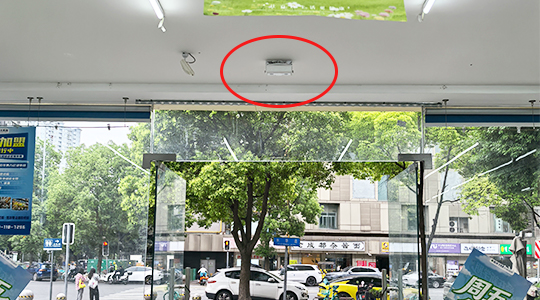
Modern AI People Counting systems combine computer vision, 3D sensing, and intelligent algorithms to improve traffic accuracy.
Instead of simply counting movement, advanced systems can analyze:
- Visitor direction
- Stay duration
- Repeat visitors
- Staff movement
- Customer behavior patterns
For example, a store may record 1,000 daily entries using traditional counting.
After filtering employees, repeated visitors, and non-target traffic, the actual effective customer traffic may only be 650 visitors.
This difference matters because sales conversion, staffing decisions, and marketing evaluation should be based on the 650 meaningful visitors rather than the original number.
Frequently Asked Questions About Effective Foot Traffic
1. Why is Effective Foot Traffic more valuable than traditional visitor counting?
Traditional visitor counting measures physical movement.
Effective Foot Traffic measures business opportunities.
The difference is similar to comparing website visits with qualified leads.
A website may receive thousands of visitors, but only a percentage of them are potential customers. Retail stores face the same challenge.
By understanding effective traffic, retailers can improve:
- Store performance evaluation
- Marketing ROI analysis
- Employee scheduling
- Product placement strategies
Accurate traffic data creates a stronger foundation for operational decisions.
2. How can retailers measure Effective Foot Traffic accurately?
Accurate measurement requires more than a simple entrance counter.
Modern solutions combine:
- AI People Counting
- 3D vision technology
- Customer behavior analysis
- Employee identification
- Re-identification technology
These technologies allow retailers to distinguish different visitor types and generate more reliable store traffic insights.
The goal is not only counting people.
The goal is understanding which visitors create real value.
3. Can Effective Foot Traffic improve retail conversion rate analysis?
Yes.
The traditional retail conversion rate formula usually uses:
Sales ÷ Total Visitors = Conversion Rate
However, if visitor numbers include employees or repeated entries, the conversion rate becomes inaccurate.
Using Effective Foot Traffic provides a more realistic measurement:
Sales ÷ Real Customer Visits = More Accurate Conversion Rate
This helps retailers identify whether performance problems come from insufficient customer traffic or weak sales execution.
How Effective Foot Traffic Changes Retail Decision-Making
The biggest advantage of Effective Foot Traffic is that it connects traffic data with business outcomes.
Store Location Evaluation
Retail groups often compare stores using visitor numbers.
However, a location with high traffic does not always generate strong revenue.
A better approach is comparing:
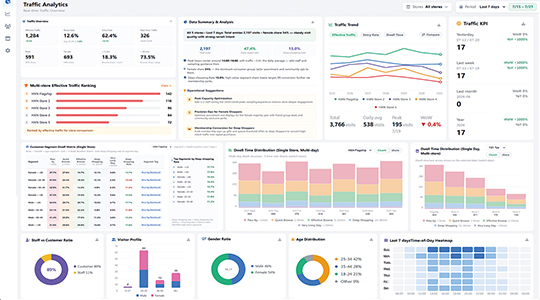
- Effective customer traffic
- Conversion rate
- Average transaction value
- Customer engagement time
This creates a more complete view of store performance.
Marketing Campaign Analysis
Many retailers invest heavily in advertising and promotions.
Traditional traffic measurement may show that a campaign increased visitors.
But the important question is:
Did the campaign attract valuable customers?
With advanced Retail Analytics, businesses can evaluate whether campaigns generate meaningful visits rather than temporary traffic increases.
Staff Scheduling Optimization
Retailers often schedule employees according to expected visitor volume.
However, raw traffic data can create unnecessary labor costs.
By analyzing real customer patterns, stores can allocate staff during periods with higher purchasing potential.
This improves both customer experience and operational efficiency.
The Future of Retail Measurement: From Counting People to Understanding Customers
Retail is entering an era where data quality matters more than data quantity.
The future competitive advantage will not come from knowing how many people pass through a door.
It will come from understanding:
- Who are the real customers?
- What attracts them?
- How long do they engage?
- What actions increase conversion?
That is why Effective Foot Traffic is becoming an important measurement standard for modern retail.
It represents a fundamental change from traditional footfall analytics toward intelligent traffic analysis.
Retailers that adopt more accurate customer traffic measurement methods can make better decisions, improve store efficiency, and create stronger customer experiences.
The next generation of retail success will not be built on counting more visitors.
It will be built on understanding the value behind every visit.