
Why Retail KPI Measurement Needs More Than Visitor Numbers
For many retailers, measuring store performance starts with a simple question: How many people entered the store today?
However, this question is becoming less useful in modern retail environments.
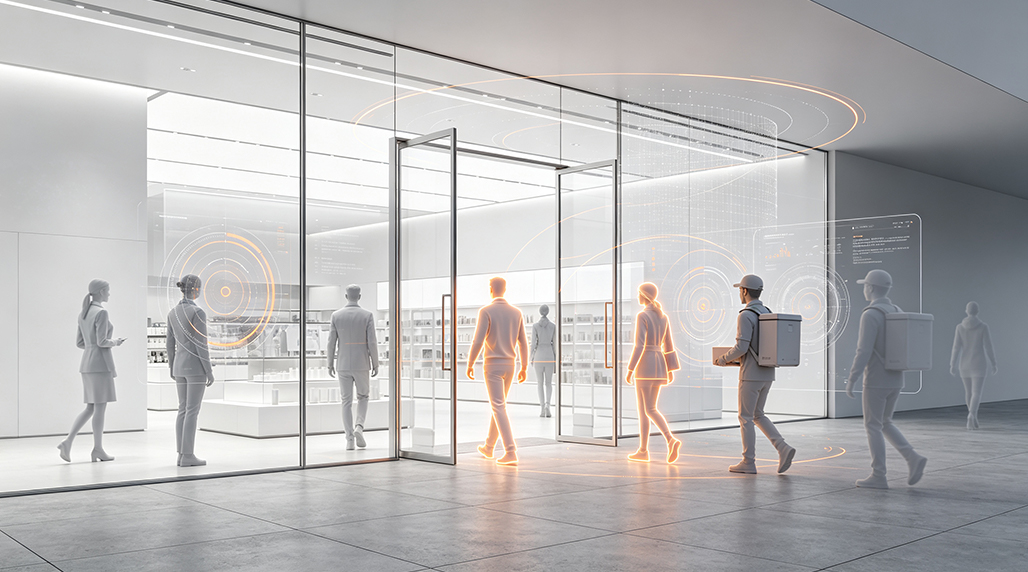
A store entrance counter can tell businesses the number of visitors, but it cannot always tell whether those visitors represent real purchasing opportunities. Employees, delivery personnel, repeated entries, and non-shopping visitors can increase traffic numbers without contributing to revenue.
This is why more retailers are focusing on Effective Customer Traffic rather than basic visitor counting.
The purpose of Effective Customer Traffic is not to measure every movement. It is to identify meaningful customer visits and create a more reliable foundation for retail KPI measurement.
When traffic data becomes more accurate, key indicators such as conversion rate, marketing performance, staffing efficiency, and store evaluation become more valuable.
Traditional Foot Traffic Measurement answers:
“How many people entered?”
Modern retail needs to answer:
“How many valuable customer opportunities did the store receive?”
This shift changes how retailers understand performance.
What Is Effective Customer Traffic and Why Does It Matter?
Effective Customer Traffic refers to the number of visitors who have genuine commercial value for a retail business.
Unlike traditional traffic measurement, which counts all movements, effective traffic focuses on customer relevance.
For example, a fashion store may record 3,000 visitors in one week. At first glance, this number appears positive.
But after analyzing the traffic:
- 300 visits came from employees
- 200 visits came from suppliers or service workers
- 400 entries were repeated visits
- Some visitors only passed through without shopping intent
The actual customer opportunity may be much lower.
Without accurate filtering, retailers may make decisions based on incomplete information.
This affects several important KPIs:
- Conversion rate
- Sales per visitor
- Marketing ROI
- Employee performance evaluation
- Store location analysis
Reliable Retail Traffic Analytics helps businesses move from simple counting to meaningful customer intelligence.

How Does Effective Customer Traffic Improve Retail Conversion Rate Accuracy?
One of the most common questions retailers ask is:
“Why does my conversion rate look different from actual store performance?”
The reason is often inaccurate visitor data.
The basic conversion formula is:
Retail Conversion Rate = Number of Purchases ÷ Number of Customers
The problem is that many retailers use total visitors instead of real customers.
Imagine two stores:
Store A:
- 10,000 recorded visitors
- 800 purchases
Traditional calculation:
800 ÷ 10,000 = 8%
However, after removing invalid traffic, the store has only 6,000 effective customers.
Actual calculation:
800 ÷ 6,000 = 13.3%
The difference is significant.
Incorrect traffic measurement can make a successful store appear inefficient or make a weak store appear better than reality.
By applying Effective Customer Traffic analysis, retailers gain a more realistic understanding of customer behavior and sales efficiency.
Why Traditional Foot Traffic Data Cannot Fully Support Retail KPIs
Traditional counting technology has played an important role in retail management for many years.
However, retail environments have become more complex.
A simple entrance counter usually detects movement, but it does not understand context.
Common problems include:
1. Employee Traffic Creates Data Noise
Employees may enter and exit stores many times every day.
If employee movements are included in reports, traffic numbers become inflated.
2. Repeat Visits Affect Accuracy
Customers may leave and return during the same shopping journey.
Without visitor identification technology, these repeated movements can distort reports.
3. Non-Customer Visitors Influence Analysis
Delivery workers, maintenance staff, and other visitors can affect store traffic statistics.
For retailers managing multiple locations, small measurement errors can create large KPI differences.
This is why advanced Foot Traffic Measurement is moving toward intelligent recognition instead of simple counting.
How AI Technology Improves Effective Customer Traffic Analysis
Modern retail analytics increasingly uses AI-based systems to understand customer movement patterns.
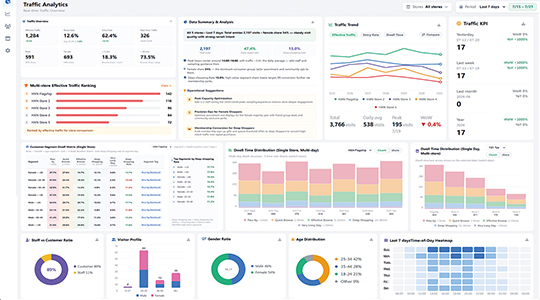
An advanced AI People Counting System can combine multiple technologies:
- 3D sensing
- AI recognition algorithms
- visitor behavior analysis
- employee filtering
- duplicate visitor reduction
The goal is not simply producing a bigger number.
The goal is producing a more accurate number.
Through Customer Behavior Analytics, retailers can understand:
- Which areas attract customers
- How long visitors stay
- Which periods create the highest opportunity
- How customers move through stores
This information supports better decisions in store layout, staffing, and marketing.
For example, a store may discover that evening traffic is high, but customer engagement time is low. Instead of simply increasing staff numbers, managers can investigate product placement, service quality, or customer experience issues.
Frequently Asked Questions About Effective Customer Traffic
1. What is the difference between foot traffic and effective customer traffic?
Traditional foot traffic measures total visitor volume.
Effective Customer Traffic measures visitors who represent genuine business opportunities.
The difference is data quality.
High traffic does not always mean high-value traffic.
A store with fewer but more relevant customers may achieve better sales performance than a store with large amounts of low-value traffic.
2. How can retailers measure customer traffic more accurately?
Retailers can improve measurement accuracy by combining intelligent hardware with analytics software.
Modern solutions typically include:
- AI-based people counting
- customer recognition technology
- employee exclusion
- visitor behavior tracking
- cloud-based reporting
These technologies help transform raw visitor numbers into useful business insights.
3. Why is customer traffic accuracy important for store management?
Because almost every retail KPI depends on reliable customer information.
Poor traffic data can lead to:
- Incorrect staffing decisions
- Misleading conversion reports
- Wrong marketing evaluation
- Inaccurate store comparisons
Better Retail Traffic Analytics allows managers to make decisions based on actual customer opportunities rather than assumptions.
How Effective Customer Traffic Supports Better Retail Decisions
Smarter Store Performance Evaluation
Many retailers compare stores only by visitor volume.
However, traffic quality is often more important than traffic quantity.
A shopping mall store may have thousands of visitors but limited purchasing intent.
Another location may receive fewer visitors but generate stronger sales results because customers are more relevant.
Effective Customer Traffic creates a fairer comparison between stores.
More Accurate Marketing Analysis
Marketing campaigns are often evaluated by sales growth.
However, retailers also need to know whether campaigns attracted valuable visitors.
By analyzing customer traffic data, businesses can understand:
- Did the campaign bring new customers?
- Did visitors stay longer?
- Did customer quality improve?
This makes marketing decisions more measurable.
Better Workforce Planning
Customer demand changes throughout the day.
Accurate traffic analysis helps retailers identify:
- Busy periods
- Low-demand periods
- Customer service requirements
Instead of scheduling employees based on experience alone, managers can use data-driven planning.
The Future of Retail KPI Measurement
Retail is moving from measuring quantity toward measuring quality.
The future of store analytics is not simply counting more visitors. It is understanding which visitors create real business value.
Effective Customer Traffic provides a stronger foundation for modern retail management because it connects customer movement with business outcomes.
With advanced Retail Traffic Analytics, Customer Behavior Analytics, and AI-powered measurement technologies, retailers can improve KPI accuracy and make smarter operational decisions.
The most important retail question is no longer:
“How many people entered the store?”
The better question is:
“How many valuable customers did we actually reach?”
When retailers answer this question accurately, every KPI becomes more meaningful.