
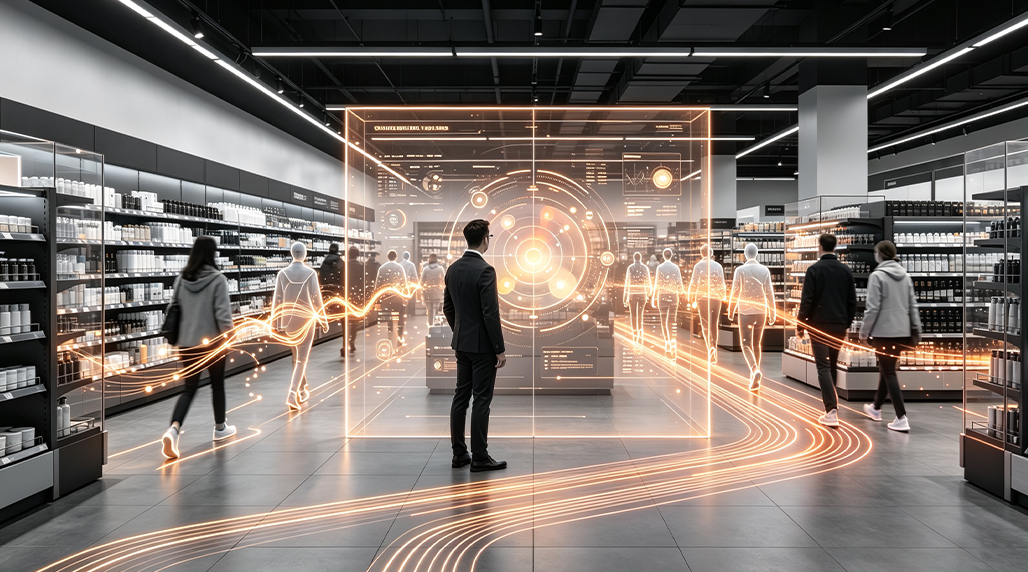
Retailers have always paid attention to traffic. More visitors usually mean more opportunities. However, in today’s competitive retail environment, simply knowing how many people entered a store is no longer enough.
The real challenge is understanding who those visitors are, whether they are potential customers, and how their behavior influences business performance.
This is why Effective Foot Traffic Data has become increasingly important. Unlike traditional counting methods that only record the number of entries and exits, effective traffic data focuses on identifying meaningful customer visits and transforming raw numbers into actionable business insights.
For retailers, this shift changes the way decisions are made — from relying on assumptions to using measurable customer intelligence.
Why Traditional Foot Traffic Data Is Not Enough for Retail Decisions?
A common question from retailers is:
“Why can’t we use traditional visitor counting data to measure store performance?”
The answer is simple: traditional counting measures volume, but not value.
A basic people counter may record everyone entering a store, including:
- Employees walking through the entrance
- Delivery workers
- Security staff
- Customers who enter multiple times
- People passing through without purchase intention
As a result, the reported visitor numbers may look positive while the actual customer opportunity is much smaller.
For example, a clothing store may receive 1,000 daily visitors according to a traditional counter. However, after removing employees, repeated visitors, and non-shopping traffic, the number of meaningful customers may be significantly lower.
This difference directly affects important business indicators such as conversion rate, marketing effectiveness, and store evaluation.
Effective Foot Traffic Data solves this problem by analyzing real customer visits instead of simply counting movement.
Turning Customer Traffic Into Business Intelligence
The value of Effective Foot Traffic Data is not only accurate counting. Its bigger role is connecting physical store activity with business decisions.
Modern retail organizations use Retail Foot Traffic Analytics to understand several key questions:
1. Which stores are actually performing well?
Many retailers compare stores based on visitor numbers. However, high traffic does not always mean high-quality customers.
A shopping mall location may receive thousands of visitors every day but generate limited sales. Another store with fewer visitors may achieve better conversion because it attracts more relevant customers.
By analyzing effective customer traffic, retailers can compare locations based on real opportunities rather than surface-level numbers.
This helps with:
- Store expansion decisions
- Location evaluation
- Rental negotiations
- Regional performance analysis
2. How can retailers improve conversion rates?
Another frequently asked question is:
“How can customer traffic data help increase sales?”
The answer lies in understanding the relationship between visitors and purchases.
Sales performance depends on more than traffic volume:
Conversion Rate = Number of Buyers ÷ Number of Effective Visitors
If visitor data is inaccurate, conversion analysis becomes unreliable.
With Customer Behavior Analytics, retailers can evaluate:
- Peak customer hours
- Visitor staying time
- Returning customer patterns
- Staff-to-customer interaction opportunities
- High-value customer periods
For example, if a store receives strong traffic between 6 PM and 8 PM but conversion remains low, managers can investigate whether staffing levels, product display, or customer service processes need improvement.
This turns traffic measurement into an operational improvement tool.
The Role of AI Technology in Accurate Customer Traffic Measurement
Traditional sensors often struggle in complex retail environments. Crowded entrances, changing lighting conditions, and repeated customer visits can reduce accuracy.
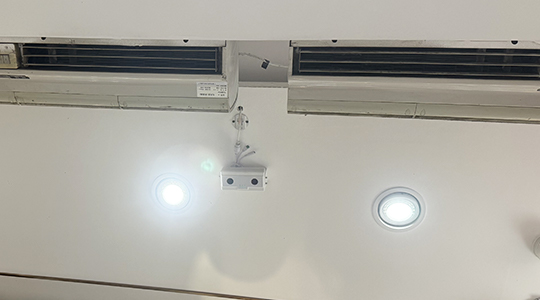
Modern AI People Counting System solutions use technologies such as computer vision, 3D sensing, and Re-ID algorithms to improve measurement quality.
A typical intelligent traffic analysis system includes:
Data Collection Layer
Devices capture entrance activity through technologies such as:
- 3D stereo vision
- Time-of-Flight (ToF) sensing
- Infrared detection
AI Processing Layer
Algorithms analyze:
- Human movement patterns
- Entry and exit direction
- Employee identification
- Repeat visitor recognition
Business Intelligence Layer
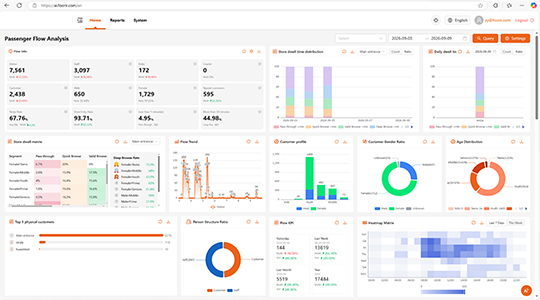
Processed data is converted into reports including:
- Customer flow trends
- Dwell time analysis
- Store performance comparison
- Visitor quality evaluation
This technology allows retailers to move from simple counting toward Retail Data Intelligence.
How Effective Foot Traffic Data Supports Better Marketing Decisions
Marketing investment is another area where accurate traffic data creates value.
A retailer may spend thousands on advertising campaigns, promotions, or local events. But without accurate visitor measurement, it is difficult to know whether these activities actually attracted valuable customers.
With effective traffic insights, businesses can compare:
- Traffic before and after campaigns
- Customer quality changes
- Repeat visit frequency
- Regional marketing effectiveness
For example, if a promotion increases store visits but does not improve effective customer traffic or sales conversion, the campaign strategy may need adjustment.
This allows companies to optimize marketing budgets based on measurable results.
Frequently Asked Questions About Effective Foot Traffic Data
Q1: What is the difference between foot traffic and effective foot traffic?
Foot traffic refers to the total number of people entering or passing through a location.
Effective Foot Traffic Data focuses on actual customer opportunities by filtering out irrelevant movements such as employees, repeated visits, and non-shopping traffic.
It provides a more accurate foundation for retail analysis.
Q2: Can effective traffic data improve store profitability?
Yes. Accurate customer traffic analysis helps retailers optimize staffing, improve store layouts, evaluate marketing campaigns, and identify growth opportunities.
Better data does not directly create sales, but it helps businesses make decisions that improve operational efficiency.
Q3: Is AI-based traffic analysis suitable for small stores?
Yes. The value of customer traffic intelligence is not limited to large retail chains.
Small and medium-sized stores can use accurate footfall measurement to understand customer patterns, adjust staffing schedules, and improve daily operations.
From Counting Visitors to Understanding Customers
Retail competition is becoming less about attracting more people and more about understanding the right customers.
A simple visitor number cannot explain why one store succeeds while another struggles. Businesses need deeper insight into customer quality, behavior patterns, and real purchasing opportunities.
That is the purpose of Effective Foot Traffic Data.
By combining AI technology, customer behavior analysis, and retail intelligence, companies can replace traditional assumptions with data-driven decisions.
The future of retail analytics is not just counting how many people enter a store. It is understanding which visitors matter, why they come, and how businesses can serve them better.
For retailers looking to improve performance, accurate customer traffic measurement is becoming a foundation for smarter and more sustainable growth.