
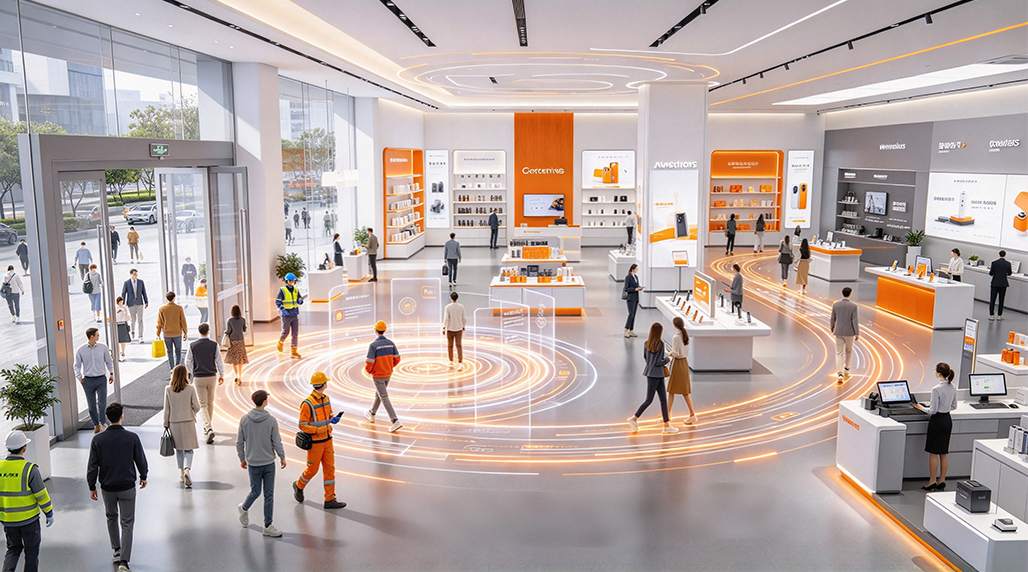
Retail conversion rate seems simple:
Sales ÷ Visitors = Conversion Rate
Yet this formula only works when the visitor count is accurate.
Many retailers invest heavily in improving merchandising, pricing, and staff training while overlooking a more fundamental issue—the quality of their store traffic data. If traffic numbers include employees, delivery drivers, maintenance staff, repeat entries, or passersby who never intended to shop, every conversion calculation becomes less reliable.
As retail analytics becomes increasingly AI-driven, businesses are shifting their attention from counting everyone who walks through a doorway to measuring actual customer traffic. That shift is changing how retailers evaluate store performance, marketing campaigns, staffing decisions, and even expansion strategies.
This article explains why store traffic data directly affects retail conversion rate accuracy and how modern AI analytics produce far more trustworthy business insights.
Why Conversion Rate Depends on Store Traffic Quality
A conversion rate is only as accurate as the denominator behind it.
Imagine two stores each record 1,000 entries in one week.
Store A counts every person entering the building.
Store B excludes employees, suppliers, delivery personnel, maintenance workers, and duplicated visits.
Although both stores report identical traffic, Store B may actually have only 760 genuine shoppers.
If both stores make 152 sales:
- Store A reports 15.2% conversion
- Store B reports 20% conversion
Neither sales number changed.
Only the quality of the store traffic data changed.
This difference can completely alter management decisions. A store believed to have poor sales performance might actually have a healthy conversion rate once non-customer traffic is removed.
Modern customer traffic analytics therefore focuses less on raw visitor counts and more on identifying qualified shopping traffic.
The Hidden Sources of Inaccurate Traffic Data
Many retailers assume every detected person is a potential customer.
In reality, stores experience many types of movement that distort reporting.
Common examples include:
- Employees arriving and leaving
- Staff taking lunch breaks
- Delivery drivers
- Cleaning personnel
- Security patrols
- Multiple visits by the same shopper
- Parents entering separately with children
- People entering briefly before leaving immediately
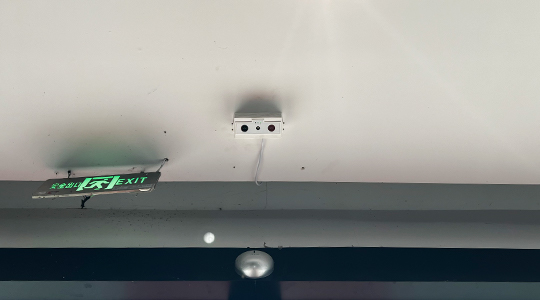
Traditional people counting systems typically record each movement as another visitor.
Over time, these small inaccuracies accumulate into significant reporting errors.
This explains why many retailers notice that foot traffic measurement appears to increase while sales remain unchanged.
The problem isn’t necessarily declining sales—it may simply be poor visitor classification.
Why AI Is Changing Retail Traffic Analytics
Earlier generations of traffic counters were designed primarily to count entries.
Today’s AI systems are designed to understand who those entries represent.
Instead of asking:
“How many people entered?”
Retailers increasingly ask:
- Which visitors were actual shoppers?
- How many employees should be excluded?
- How many repeat visits occurred?
- Which visitors stayed long enough to browse?
- Which traffic sources generate purchases?
These questions produce much more meaningful retail performance analytics.
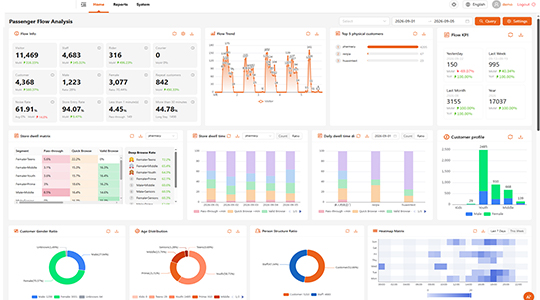
AI vision technology, anonymous Re-ID, behavior recognition, dwell-time analysis, and intelligent filtering work together to improve traffic quality instead of merely increasing counting accuracy.
The result is cleaner store traffic data, which leads to more reliable conversion analysis.
Why Poor Traffic Data Leads to Poor Business Decisions
When traffic numbers are inflated, retailers often make the wrong conclusions.
For example:
A marketing campaign appears unsuccessful because traffic increased but conversion fell.
Management may cancel the campaign.
However, later investigation shows the campaign attracted many families, while delivery schedules also changed, increasing employee and logistics activity near the entrance.
Sales actually improved among genuine shoppers.
The conversion rate looked worse only because inaccurate visitor counting inflated the denominator.
Similar problems affect:
- Staff scheduling
- Store layout optimization
- Lease evaluation
- Marketing ROI
- New store benchmarking
- Regional performance comparisons
Accurate customer traffic becomes the foundation of every downstream retail metric.
Measuring Qualified Traffic Instead of Total Traffic
Leading retailers increasingly focus on qualified traffic rather than total traffic.
Qualified traffic generally refers to visitors who have genuine shopping intent.
Depending on the business, this may involve excluding:
- Employees
- Contractors
- Logistics personnel
- Repeat entries within a short period
- Non-shopping visitors
This produces a far more stable indicator for retail conversion rate analysis.
When stores compare qualified traffic across locations, they often discover that previously underperforming stores actually have stronger customer engagement than expected.
Rather than chasing higher visitor numbers, managers begin improving shopping experience, merchandising, and customer service for real shoppers.
This represents a major shift in modern retail performance analytics.
Frequently Asked Questions
1. Why doesn’t higher store traffic always increase sales?
More visitors do not automatically mean more customers.
If additional traffic consists mainly of employees, delivery staff, or casual visitors, sales may remain unchanged even though reported traffic rises. High-quality store traffic data distinguishes genuine shoppers from other entries, making sales performance easier to evaluate.
2. How accurate should retail traffic data be?
Counting accuracy alone is no longer enough.
A system may achieve over 99% counting accuracy while still including many non-customers. Retailers increasingly prioritize visitor classification, duplicate removal, and behavioral analysis alongside counting precision.
3. Can AI improve conversion rate analysis?
Yes.
AI helps identify actual shoppers, filter invalid traffic, recognize repeat visits anonymously, and measure dwell time. These improvements create cleaner datasets that produce far more reliable conversion metrics and operational insights.
4. What metrics should retailers monitor besides conversion rate?
Useful complementary metrics include:
- Customer traffic analytics
- Average dwell time
- Visit frequency
- Qualified traffic ratio
- Sales per visitor
- Peak shopping hours
- Department engagement
- Marketing attribution
Together, these metrics provide a much more complete picture than conversion rate alone.
Final Thoughts
Retail success is no longer determined by how many people walk through the entrance.
It depends on understanding who those people actually are.
As AI-powered analytics continues to evolve, retailers are moving beyond traditional people counting systems toward intelligent store traffic data that reflects genuine customer behavior.
Cleaner traffic data creates more accurate retail conversion rate calculations, stronger forecasting, smarter staffing, and better investment decisions.
In today’s competitive retail environment, the most valuable metric isn’t simply foot traffic—it’s the quality of the traffic behind the numbers.