
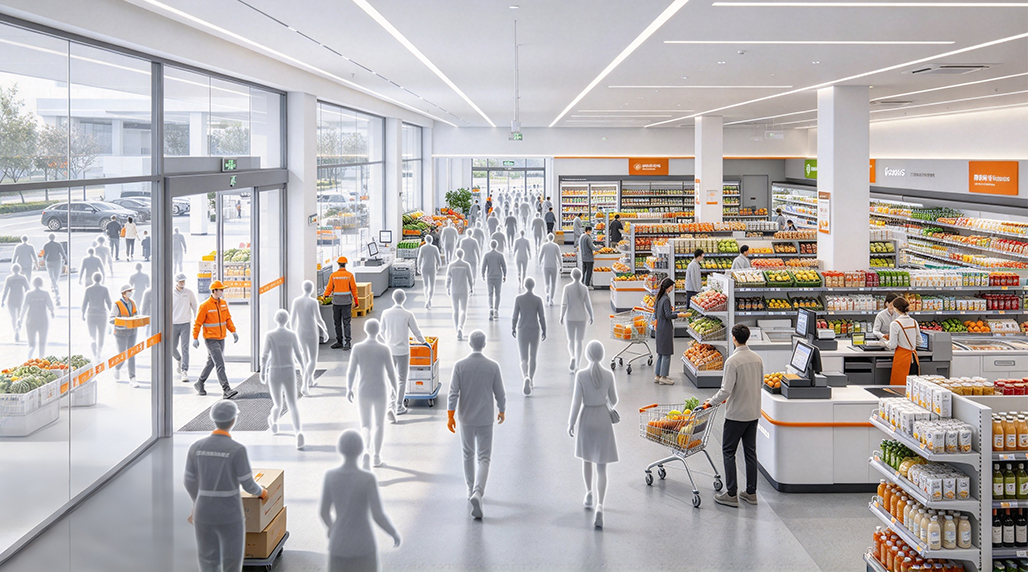
In retail analytics, one misconception continues to influence business decisions: assuming that every person entering a store is a potential customer.
At first glance, retail traffic appears to be a straightforward metric. More visitors should mean more opportunities to sell. However, experienced retailers know that high traffic doesn’t always translate into high revenue. Employees, delivery riders, maintenance staff, repeat visitors, and even people simply cutting through a store can all inflate traffic numbers without contributing to sales.
This is why more retailers are shifting their attention from raw visitor counts to understanding actual customers—the people who genuinely have purchasing intent. The difference between these two metrics is becoming increasingly important as AI-powered people counting technology evolves.
Why Retail Traffic Doesn’t Always Represent Real Business Opportunities
For many years, stores measured success by tracking how many people walked through the entrance.
While this approach worked when counting technology was limited, today’s retail environment is much more complex.
Consider a supermarket during lunch hours:
- Staff members repeatedly enter and exit.
- Delivery drivers collect online orders.
- Suppliers restock shelves.
- Families split up and reunite inside.
- Shoppers browse without purchasing.
Traditional people counting systems often count every movement equally.
As a result, reported retail traffic can be significantly higher than the number of genuine shoppers.
The consequence?
Managers may believe marketing campaigns are successful simply because visitor numbers increase—even when sales remain unchanged.
This disconnect leads to inaccurate performance analysis and poor operational decisions.
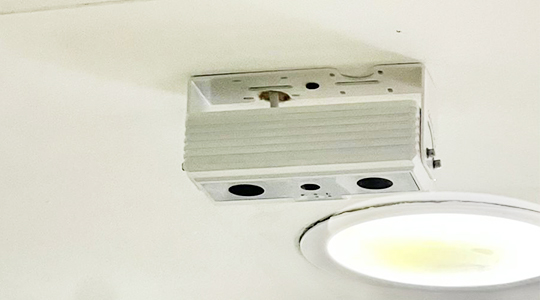
The Hidden Gap Between Retail Traffic and Actual Customers
The true objective of store traffic analysis is not measuring movement.
It is measuring purchasing opportunities.
An actual customer is someone who enters with buying intent and has the potential to generate revenue.
By comparison, raw retail traffic includes many non-revenue visitors, such as:
- Employees
- Cleaning staff
- Delivery personnel
- Security teams
- Maintenance workers
- Repeat entries during the same visit
Without filtering these groups, conversion rates become misleading.
Imagine two stores:
| Metric | Store A | Store B |
|---|---|---|
| Reported Retail Traffic | 1,200 | 1,200 |
| Actual Customers | 820 | 1,080 |
| Sales | Nearly Equal | Nearly Equal |
On paper, Store A appears to have a much lower conversion rate.
In reality, the difference comes from inaccurate counting—not poorer customer engagement.
This is why customer behavior analysis increasingly focuses on identifying qualified visitors instead of counting everyone equally.
How AI Makes Retail Traffic Data More Meaningful
Modern AI-powered people counting systems no longer stop at counting entries.
Instead, they analyze who should actually be included in business reporting.
Advanced computer vision can identify patterns such as:
- Employee recognition
- Delivery personnel filtering
- Repeat visitor removal
- Adult versus child distinction
- Dwell time analysis
- Entry and exit path recognition
Rather than producing a larger number, AI produces a more reliable one.
This creates what many retailers now consider effective customer traffic—traffic that reflects genuine shopping behavior rather than simple movement.
For retailers, this distinction matters because nearly every key performance indicator depends on accurate visitor data.
For example:
- Conversion rate
- Sales per visitor
- Marketing ROI
- Staffing efficiency
- Store layout optimization
All become significantly more trustworthy when non-customer traffic is excluded.
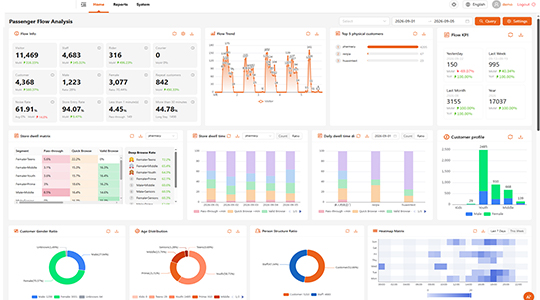
Why Better Retail Traffic Data Improves Business Decisions
Retail executives rarely make decisions based solely on sales.
They also examine visitor trends to answer questions like:
- Did the promotion attract new shoppers?
- Which entrance generates more customers?
- Does a redesigned display increase engagement?
- Are staffing levels appropriate?
If retail traffic includes employees, delivery riders, and repeated entries, every downstream analysis becomes less reliable.
Cleaner traffic data allows businesses to:
- Compare stores fairly
- Benchmark marketing campaigns accurately
- Improve labor scheduling
- Optimize merchandising
- Evaluate store performance objectively
Instead of reacting to inflated numbers, managers can focus on metrics that genuinely influence profitability.
Frequently Asked Questions
Does higher retail traffic always mean higher sales?
No.
High retail traffic only indicates that more people entered a location. If many visitors are employees, delivery personnel, or casual browsers, sales may remain unchanged. Measuring actual customers provides a much stronger indicator of revenue potential.
How can a people counting system distinguish actual customers?
Modern AI systems combine computer vision with behavioral analysis.
Depending on the deployment, they can identify staff members, filter repeat entries, recognize delivery personnel, and analyze movement patterns. This produces cleaner foot traffic analytics that better represent genuine customer activity.
Why is filtering non-customers important?
Without filtering, businesses often underestimate conversion rates and overestimate marketing success.
Removing non-customer traffic creates more accurate KPIs, allowing retailers to evaluate promotions, staffing, and store layouts with greater confidence.
Can actual customer data improve store operations?
Absolutely.
When retailers understand who is genuinely shopping, they can optimize employee schedules, reduce unnecessary labor costs, improve product placement, and make marketing investments based on real customer demand rather than inflated visitor counts.
The Future of Retail Traffic Measurement
Retail analytics is gradually moving beyond simple counting.
The goal is no longer to answer, “How many people entered the store?”
Instead, retailers increasingly ask:
“How many real customers visited, how did they behave, and how did those behaviors influence sales?”
This shift reflects a broader evolution in retail intelligence. AI-powered analytics enable businesses to move from descriptive metrics to actionable insights, transforming raw retail traffic into meaningful operational intelligence.
As competition intensifies and omnichannel shopping becomes the norm, retailers that rely solely on traditional visitor counts risk making decisions based on incomplete data.
Understanding the difference between retail traffic and actual customers is therefore no longer a technical detail—it is a strategic advantage. Businesses that measure genuine customer activity rather than simple footfall are better positioned to improve conversion, allocate resources efficiently, and make decisions grounded in how people actually shop.