
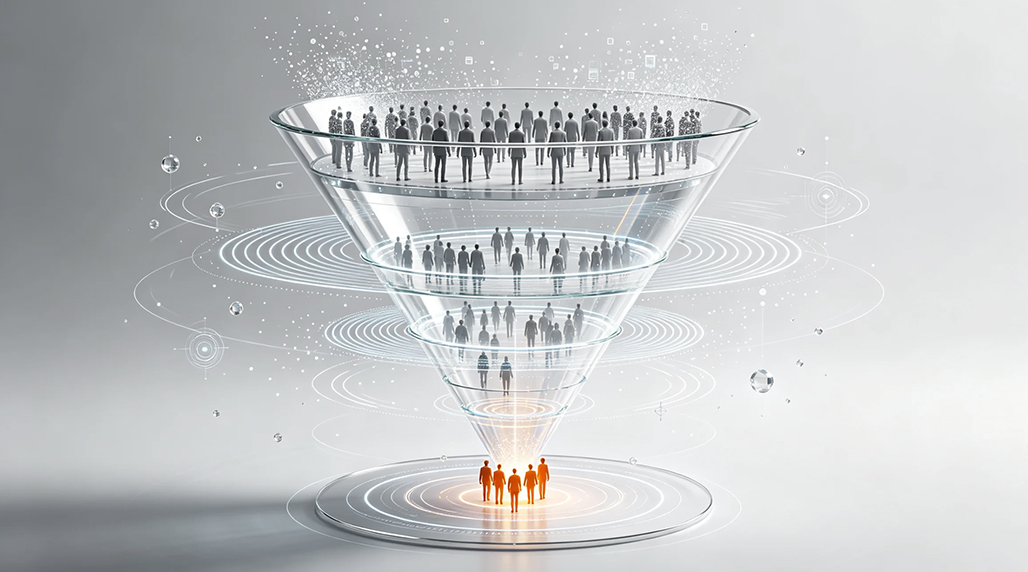
For many retailers, counting visitors seems like a simple task. A sensor records how many people enter a store, and the number becomes a key performance indicator. However, modern retail competition has revealed a major problem: Raw Footfall Data does not always represent real business opportunities.
A store may record thousands of visitors every day, but only a portion of them are potential buyers. Employees walking through entrances, delivery personnel, repeat visitors, or people entering briefly without shopping intent can significantly increase traffic numbers.
This is why retailers are shifting their focus from simple counting toward understanding Qualified Store Visitors — visitors who represent genuine customer opportunities.
The difference between raw traffic and qualified visitors is becoming a critical factor in improving conversion rates, optimizing staffing, and making accurate retail decisions.
What Is the Difference Between Raw Footfall and Qualified Store Visitors?
Raw Footfall Data refers to the total number of people detected entering or passing through a store.
Traditional footfall counters answer a basic question:
“How many people came inside?”
However, this data does not explain visitor quality.
For example:
- A shopping mall store records 2,000 daily entries.
- 300 are employees.
- 200 are delivery workers.
- 400 are repeat visitors.
- Many visitors only browse for a few seconds.
The actual number of valuable customers may be much lower.
Qualified Store Visitors focus on identifying visitors who have a higher probability of becoming customers. This concept considers factors such as:
- Whether the person is a real shopper
- Whether the visitor stays inside the store
- Whether repeated visits are removed
- Whether employees are excluded
- Whether visitor behavior indicates purchase interest
This approach is also known as Effective Foot Traffic, which measures meaningful customer flow instead of simple human movement.
For retailers, the question is changing from:
“ How many people entered my store?”
to:
“ How many valuable customers actually visited my store?”
Why Does Raw Footfall Data Mislead Retail Decisions?
Many retailers still rely on basic visitor counting because it is easy to understand. However, incomplete traffic data can create incorrect conclusions.
1. Incorrect Conversion Rate Calculation
Conversion rate is usually calculated as:
Sales Transactions ÷ Total Visitors
But if visitor numbers include employees or non-shopping traffic, the result becomes inaccurate.
For example:
A store generates 100 transactions from 1,000 counted visitors.
Traditional calculation:
10% conversion rate
But after removing 300 invalid visitors:
100 transactions ÷ 700 real visitors
Actual conversion rate:
14.3%
The difference changes how managers evaluate store performance.
Accurate Store Conversion Rate Analysis requires accurate visitor measurement.
2. Poor Staffing Decisions
Many stores schedule employees according to historical traffic patterns.
However, if traffic data includes non-customers, stores may overstaff during certain periods and understaff during important shopping windows.
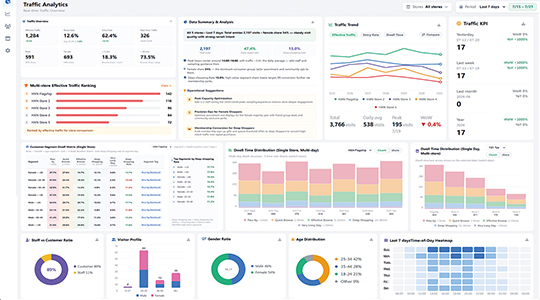
With Retail Visitor Analytics, managers can understand:
- When qualified customers arrive
- How long they stay
- Which periods generate purchase opportunities
- Where additional employees are needed
This allows staffing decisions to move from experience-based planning toward data-driven management.
3. Wrong Evaluation of Store Performance
Retail groups often compare stores using visitor numbers.
A store with higher traffic appears stronger.
But high traffic does not always mean better performance.
Example:
Store A:
- 5,000 monthly visitors
- 250 purchases
Store B:
- 3,500 monthly visitors
- 300 purchases
Store B has fewer visitors but better customer quality and stronger conversion ability.
Without understanding Qualified Store Visitors, companies may invest resources in the wrong locations.
How Can AI Identify Qualified Store Visitors?
Modern retail analytics is moving beyond traditional counting technology.
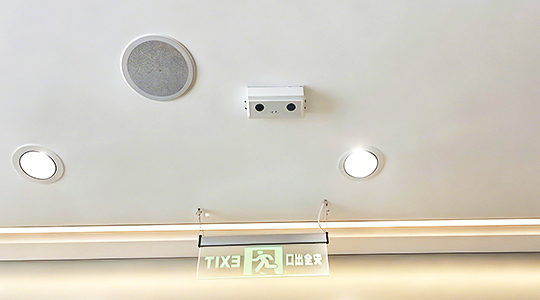
An advanced AI People Counting System combines artificial intelligence, computer vision, and behavioral analysis to improve visitor measurement accuracy.
Key technologies include:
1. Employee Exclusion
Employees frequently move in and out of stores, creating false traffic increases.
AI-based systems can identify staff patterns through:
- Recognition algorithms
- Movement behavior analysis
- Employee tags or identification methods
This prevents internal movement from affecting customer statistics.
2. Repeat Visitor Deduplication
A customer may enter multiple times during one shopping journey.
Traditional counters record every entry as a new visitor.
AI systems using visitor deduplication technology can analyze movement patterns and reduce repeated counting.
This creates a more realistic picture of customer traffic.
3. Behavior-Based Visitor Qualification
Advanced systems analyze more than entry numbers.
They can evaluate:
- Visitor staying duration
- Movement direction
- Store zone activity
- Customer flow patterns
These insights help retailers understand which visitors have stronger shopping intentions.
This is the foundation of modern customer behavior analytics.
Frequently Asked Questions About Qualified Store Visitors
Q1: Why are raw footfall numbers not enough for retail analysis?
Because raw footfall only measures the quantity of people entering a store. It does not distinguish customers from employees, delivery workers, or visitors without purchase intention.
Retailers need Qualified Store Visitors because business decisions depend on customer quality, not only visitor volume.
Q2: How can retailers measure real customer traffic?
Retailers can use AI-powered traffic intelligence solutions that combine people counting, visitor identification, and behavior analysis.
A modern AI People Counting System can filter invalid traffic and provide more accurate customer flow information.
Q3: Does higher foot traffic always mean higher sales?
No.
High traffic can increase sales opportunities, but only qualified visitors influence actual purchasing potential.
Retailers should analyze the relationship between:
- Qualified visitors
- Customer engagement
- Conversion rate
- Average transaction value
rather than relying only on visitor quantity.
The Future of Retail: From Counting People to Understanding Customers
Retail analytics is entering a new stage.
In the past, businesses focused on:
“Counting how many people entered.”
Today, successful retailers focus on:
“Understanding who those visitors are and whether they create business value.”
The transition from Raw Footfall Data to Qualified Store Visitors represents a fundamental change in retail intelligence.
By using accurate visitor measurement, AI analysis, and customer behavior insights, retailers can improve conversion rates, optimize operations, and make better investment decisions.
The future of retail is not about collecting more traffic data.
It is about discovering the real value behind every visitor.