
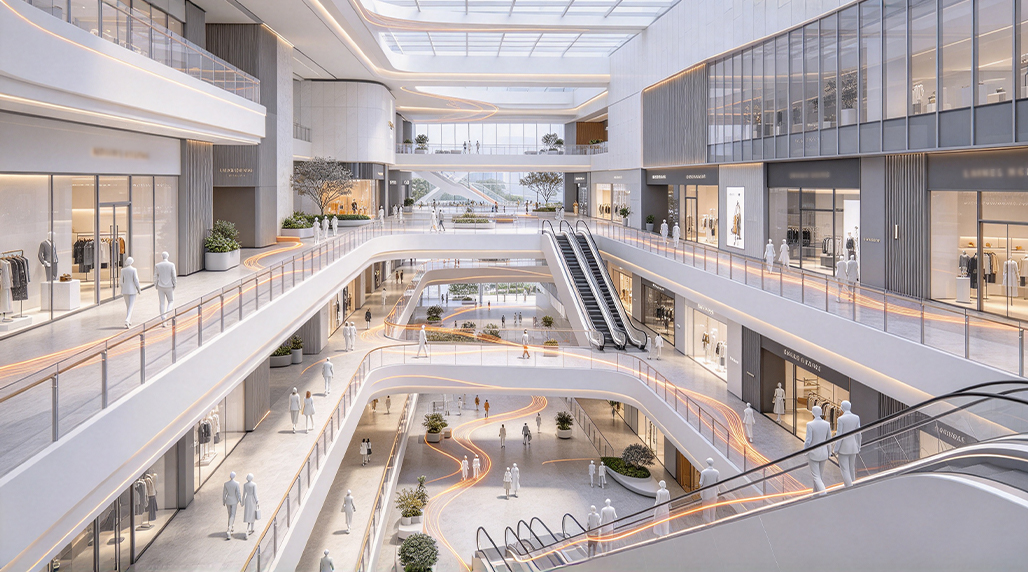
Shopping malls attract thousands of visitors across different entrances, retail zones, restaurants, and entertainment areas. However, knowing how many people enter a mall is only the starting point. Mall operators also need to understand visitor movement, peak hours, tenant performance, dwell time, and changes in customer behavior.
The best shopping mall foot traffic analysis tools combine people counting sensors, visitor analytics software, location intelligence, and sales data to turn raw visitor numbers into actionable insights. The right solution depends on whether a shopping mall needs accurate entrance counts, indoor movement analysis, tenant performance measurement, or long-term commercial planning.
This guide explains the main tools available, how they work, which metrics matter most, and how to choose a system that meets a shopping center’s operational requirements.
1. What Are the Best Tools for Shopping Mall Foot Traffic Analysis?
There is no single tool that meets every shopping mall’s needs. Most effective solutions fall into five categories.
1. People Counting Systems
People counting systems use overhead sensors or cameras to measure entries, exits, and movement through defined areas. Depending on the technology, they can distinguish travel direction, count multiple people walking together, and filter selected sources of counting errors.
For shopping malls, these systems are particularly useful at main entrances, secondary entrances, individual tenant doorways, and connections between different mall zones.
Best for: Accurate visitor counts, hourly traffic reports, peak-period identification, and comparisons between entrances or retail areas.
When selecting a people counting system, evaluate its counting accuracy under real operating conditions, installation height, field of view, lighting performance, and ability to distinguish genuine visitors from configured excluded traffic.
2. Wi-Fi and Bluetooth-Based Location Analytics
Wi-Fi and Bluetooth analytics estimate movement patterns using signals from compatible mobile devices. Depending on the solution, these tools can help identify general movement trends, approximate dwell time, and recurring visits.
They can be useful for understanding broader movement patterns across a shopping center, particularly when combined with other data sources.
However, these systems do not observe every visitor. Device discovery settings, randomized identifiers, privacy restrictions, and differences in device ownership can affect coverage. Estimated device counts should not automatically be treated as actual visitor counts.
Best for: Broad movement trends, approximate repeat-visit analysis, and supporting location-based research.
3. Video Analytics and Computer Vision
Video analytics systems analyze camera images to estimate pedestrian movement, queue lengths, occupancy, and traffic patterns. Some systems use existing CCTV infrastructure, while others require dedicated cameras and processing equipment.
Their capabilities depend on camera placement, image quality, processing methods, and the analytics software used. Conventional security footage does not automatically provide reliable people counting.
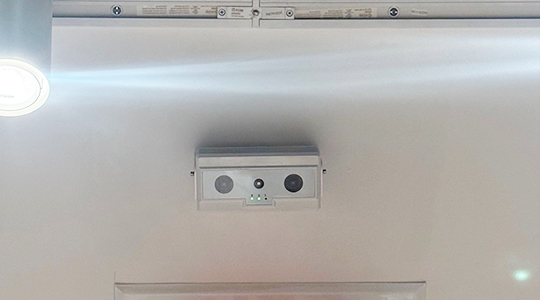
Advanced AI 3D dual-lens vision technology can use depth information to improve pedestrian detection and separation in challenging scenes. Certain systems can also support visitor classification and repeat-visitor filtering, subject to their configuration and validated performance.
Best for: Detailed entrance analysis, congestion monitoring, queue measurement, and selected visitor behavior metrics.
For privacy-conscious deployments, assess whether the system can perform on-device processing without retaining identifiable facial images.
4. Mobile Location Intelligence Platforms
Mobile location intelligence platforms analyze aggregated location signals or licensed mobility datasets to estimate visits, trade-area reach, visitor origins, and movement between commercial destinations.
Shopping mall owners can use these insights to compare locations, evaluate catchment areas, and understand how a property performs relative to competing destinations.
The main limitation is that these figures are generally estimates based on available location data rather than direct counts of every person entering the property.
Best for: Site selection, market research, catchment-area analysis, and portfolio-level comparisons.
5. Retail Analytics and Business Intelligence Software
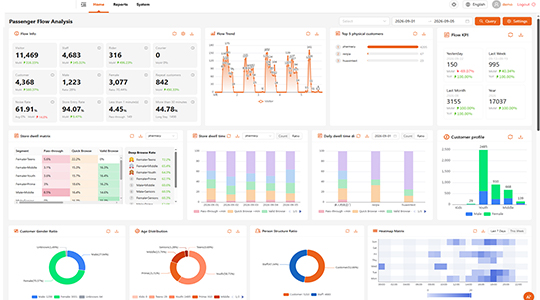
Retail analytics software brings visitor data together with sales, transaction counts, tenant information, promotions, and operational records. Business intelligence platforms can then present the results through dashboards, reports, and trend comparisons.
For example, a mall operator might compare visitor traffic with sales performance during a weekend campaign. If foot traffic increases but tenant sales remain unchanged, the operator can investigate whether the promotion attracted the right audience or whether conversion rates need improvement.
Best for: Performance reporting, tenant comparisons, campaign evaluation, and management decisions based on multiple data sources.
The software is only as reliable as its inputs. Before combining datasets, confirm that their time periods, counting definitions, and reporting boundaries are consistent.
2. Which Metrics Should Shopping Mall Foot Traffic Tools Measure?
Choosing a tool based on its dashboard appearance alone can lead to poor decisions. The more important question is whether it measures the indicators needed for mall operations.
The following metrics are especially valuable.
Visitor traffic by entrance and time period
Measure how many people enter and leave through individual access points. Hourly, daily, weekly, and seasonal comparisons help identify traffic patterns and staffing requirements.
Peak hours and traffic distribution
Understand when visitor volumes increase and which entrances or zones experience the greatest demand. These insights support security deployment, cleaning schedules, and queue management.
Dwell time
Estimate how long visitors remain in a defined area. Entrance-to-exit dwell time differs from time spent in a particular retail zone, so the measurement boundaries should be clearly defined.
Zone-level movement
Analyze movement between entrances, corridors, food courts, entertainment areas, and other monitored zones. This can reveal uneven traffic distribution and help operators evaluate changes to layouts or signage.
Repeat visits and visitor deduplication
Understand returning-visitor patterns where the technology and methodology support reliable measurement. Cross-device or cross-camera deduplication should be validated carefully before results are interpreted as unique visitors.
Effective visitor traffic
Raw entrance counts may include people who do not represent distinct customer visits, such as employees, delivery riders, couriers, or repeat entries. Where supported, staff exclusion and repeat-visitor filtering can provide a more meaningful effective-traffic metric.
The exclusion rules should be explicit. Mall-wide visitor counting and tenant-level customer analysis may require different definitions, depending on the intended business question.
Traffic-to-sales conversion
When visitor counts can be matched with reliable transaction data, operators can estimate the proportion of visits associated with purchases. This calculation requires aligned time periods and consistent counting boundaries; mall-wide entrances cannot automatically be compared with a single tenant’s sales.
3. How to Choose the Right Shopping Mall Foot Traffic Analysis Tools
The most suitable shopping mall foot traffic analysis tools should match the property’s physical layout, analytical objectives, and data requirements.
Step 1: Define the Business Objective
Start by identifying the problem to solve.
- For entrance traffic measurement, prioritize dedicated people counting systems.
- For congestion and queue monitoring, consider video analytics with suitable camera coverage.
- For visitor movement across a wider area, evaluate location intelligence and zone-level analytics.
- For tenant performance, integrate visitor counts with sales and transaction data.
- For commercial site planning, consider catchment-area and mobility intelligence.
A single platform may support several functions, but verify each capability independently.
Step 2: Evaluate Counting Accuracy
Ask vendors how accuracy is tested, under what conditions, and against what reference count.
Important test scenarios include groups walking together, children accompanying adults, people moving in opposite directions, changing lighting conditions, and periods of high pedestrian density.
Request results from the actual installation environment rather than relying exclusively on laboratory figures or a single headline accuracy percentage.
Step 3: Check Integration and Reporting
A useful system should make data accessible to the people who need it. Review dashboard usability, historical reporting, export options, APIs, and integration with existing mall management systems.
For multi-property operators, centralized reporting can simplify comparisons between locations, provided that measurement definitions remain consistent.
Step 4: Assess Privacy and Data Security
Shopping malls operate in public-facing environments, but analytics deployments still require careful privacy management.
Review local privacy laws, data retention policies, access controls, and vendor data-processing practices. Prefer solutions that collect only the information needed for the intended analysis and support privacy-preserving processing where practical.
Step 5: Calculate Total Cost of Ownership
Compare the complete deployment cost, including hardware, installation, software subscriptions, network requirements, maintenance, and future expansion.
A low-cost sensor may be sufficient for basic entrance counting, while a large shopping center may benefit more from an integrated analytics platform. Evaluate cost against measurable operational value rather than purchasing the system with the longest feature list.
4. How Shopping Malls Can Turn Foot Traffic Data into Business Insights
The value of shopping mall foot traffic analysis tools lies in how their measurements support real decisions.
Improve staffing and operations. Traffic patterns can help managers allocate security, cleaning, and customer service resources around predictable demand peaks.
Evaluate marketing campaigns. Comparing visitor counts before, during, and after a campaign can show whether attendance changed. Comparing the results with sales and transaction data provides a stronger assessment of commercial impact.
Understand tenant performance. Shared-area traffic and tenant-level entrance counts can help distinguish low exposure from weak conversion. These measurements must use appropriate boundaries and should not be treated as interchangeable.
Optimize mall layouts. Zone-level movement data can reveal underused corridors, heavily traveled connections, and differences in traffic distribution. Operators can use these findings to test signage, promotional placements, and changes to tenant locations.
Support leasing decisions. Consistent traffic measurements can help property teams explain the exposure offered by different locations. However, foot traffic alone does not guarantee sales, so tenant category, visibility, rental costs, and customer intent must also be considered.
For more reliable decisions, combine traffic measurements with operational and commercial data rather than interpreting a single metric in isolation.
5. Why Accurate Visitor Counting Matters More Than Raw Traffic Volume
A shopping center may record high entrance traffic without seeing a proportional increase in retail sales. Several factors can explain the difference, including people entering multiple times, employees passing through monitored entrances, and delivery personnel crossing counting zones.
This is why shopping mall foot traffic analysis tools should be evaluated not only by how many people they count, but also by how clearly they define and validate the reported metric.
FOORIR develops people counting solutions for applications that require structured pedestrian traffic data. Its AI 3D dual-lens vision technology supports entrance counting and, on compatible models, functions such as staff exclusion and repeat-visitor filtering.
These capabilities can help operators distinguish raw traffic from more meaningful visitor measurements. The appropriate configuration depends on the application, installation environment, and performance requirements.
Before deployment, mall operators should establish a baseline, document exclusion rules, and validate the system against manual counts or another suitable reference method. This creates a more defensible foundation for comparing traffic across locations and reporting periods.
6. Frequently Asked Questions
What is the best tool for measuring shopping mall foot traffic?
A dedicated people counting system is often the best starting point when the main requirement is measuring entrances and exits. Video analytics, mobile location intelligence, and business intelligence software can complement it when operators need movement analysis, catchment-area insights, or commercial performance reporting.
The best choice depends on the measurement objective, required accuracy, installation conditions, and budget.
How do shopping malls track visitor movement?
Shopping malls use combinations of people counting sensors, video analytics, Wi-Fi or Bluetooth analytics, and location intelligence platforms. Dedicated sensors can measure movement through monitored entrances, while zone-based systems and mobility datasets provide additional information about movement patterns.
Coverage and measurement limitations should be understood before comparing results.
Can foot traffic analytics measure conversion rates?
Yes, when visitor counts are integrated with compatible sales or transaction data. Conversion rate is commonly calculated by dividing the number of relevant purchasing customers or transactions by the corresponding visitor count, then multiplying by 100.
The numerator and denominator must represent comparable populations and time periods. Mall-wide entrance counts are not necessarily an appropriate denominator for an individual tenant’s transactions.
How accurate are shopping mall people counting systems?
Accuracy varies by technology, installation, pedestrian density, camera positioning, and the conditions used for testing. Vendors should provide clear validation methods and explain performance in crowded or complex entrance environments.
Mall operators should conduct on-site testing before relying on the data for commercial decisions.
Are Wi-Fi-based foot traffic analytics reliable?
Wi-Fi-based analytics can help reveal broad movement trends, but they depend on observable device signals and the methodology used to estimate visits. Not every visitor carries a detectable device, and one device does not necessarily equal one person.
For direct entrance counts, dedicated people counting systems may provide a more suitable primary measurement source.
Conclusion
The best shopping mall foot traffic analysis tools are those that produce reliable data for a clearly defined business objective. People counting systems are suited to entrance measurement, video analytics can provide additional spatial insights, location intelligence supports market research, and business intelligence software connects traffic with operational and commercial results.
For shopping mall operators, the next step is to evaluate measurement accuracy, reporting consistency, integration capabilities, privacy requirements, and total ownership costs.
A well-designed analytics system does more than report how many people entered a building. It helps operators understand when and where traffic occurs, assess changes in visitor behavior, and make better-informed decisions about staffing, tenant performance, and the shopping environment.