
For many years, physical retailers relied on one simple question to understand store performance:
“How many people entered my store today?”
This question created the foundation of traditional retail measurement. A basic footfall counter could provide visitor numbers, identify busy hours, and support simple staffing decisions.
However, retail competition has changed. Today, knowing the number of visitors is no longer enough. A store can receive thousands of visitors but still struggle with low conversion rates, while another store with fewer visitors may generate stronger revenue because it attracts more valuable customers.
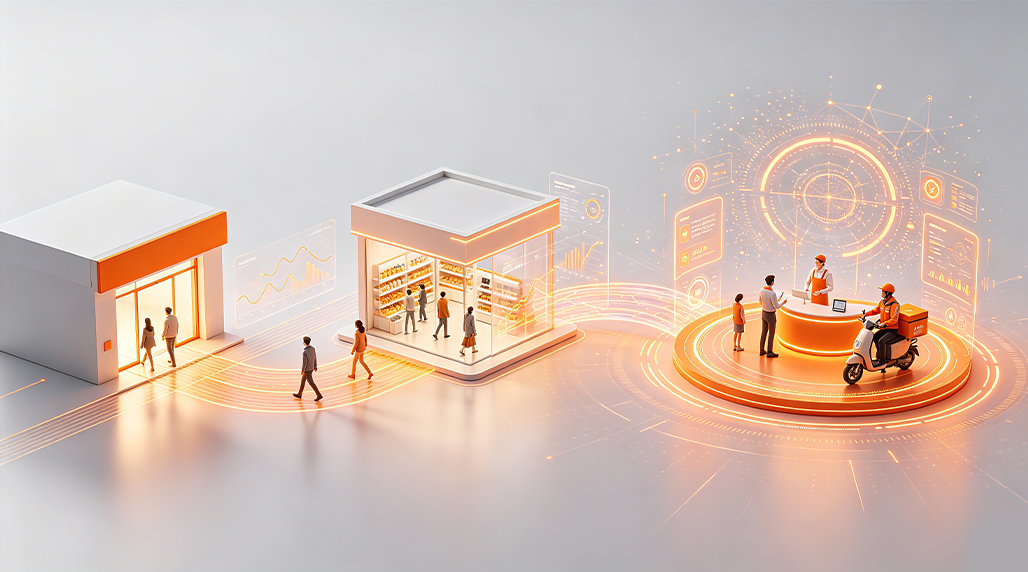
This shift has driven the evolution of Retail Analytics from simple traffic counting toward deeper customer intelligence.
Modern retailers are no longer only interested in how many people arrive. They want to understand who those visitors are, what they do inside the store, and how their behavior affects business results.
From Footfall Counting to Intelligent Retail Measurement
The first stage of retail analytics was focused on counting.
Traditional footfall systems answered basic operational questions:
- How many visitors entered the store?
- What were the busiest hours?
- Which days had higher traffic?
These measurements were useful, but they provided only a surface-level view.
A visitor count does not explain whether those people were actual shoppers, employees, delivery workers, or repeat visitors. It also cannot show whether customers stayed long enough to show purchase interest.
This limitation created a gap between traffic data and business decisions.
For example, a clothing store may record 5,000 visitors in one month. But if 1,000 visits came from employees, repeated entries, or non-shopping traffic, the original number does not represent the real customer opportunity.
This is why modern Retail Foot Traffic Analysis focuses on traffic quality rather than traffic quantity.
The goal has changed from:
“How many people entered?”
to:
“How many valuable customer opportunities were created?”
Why Traditional Footfall Counting Is No Longer Enough?
One of the most common questions from retailers is:
Why can’t traditional people counting accurately measure store performance?
The reason is simple: counting people and understanding customers are two different tasks.
A traditional counter mainly detects movement at entrances and exits. It can measure volume, but it cannot understand customer intent.
Retailers today need answers to deeper questions:
- Are visitors genuine customers?
- How long do shoppers stay in different areas?
- Which displays attract attention?
- Why do some visitors leave without purchasing?
- Are marketing campaigns bringing valuable customers?
These questions require more advanced Customer Behavior Analytics.
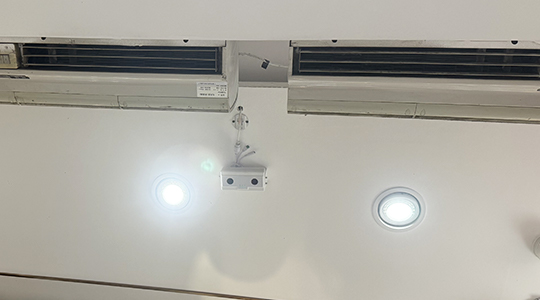
By combining AI algorithms, computer vision, and data analysis, modern systems can analyze customer movement patterns instead of only recording numbers.
This evolution allows retailers to understand:
- Customer flow direction
- Dwell time
- Store zone engagement
- Repeat visits
- Traffic conversion opportunities
The value of analytics is no longer the size of the dataset. The value is discovering meaningful business insights from that data.
How AI Is Transforming Retail Analytics
Artificial intelligence has become one of the most important technologies driving the next generation of retail measurement.
A modern AI People Counting System does more than detect people passing through a doorway.
It can use technologies such as:
- 3D computer vision
- Deep learning models
- Edge computing
- Object recognition algorithms
to create more accurate and meaningful traffic information.
For example, AI-powered systems can help distinguish between employees and customers, reduce duplicate counting, and provide more reliable visitor analysis.
This creates a stronger foundation for Store Traffic Analytics.
Instead of viewing traffic data as a simple number, retailers can connect it with operational decisions:
- Adjust staffing according to real customer demand
- Improve product placement
- Evaluate promotional campaigns
- Optimize store layouts
- Compare performance between locations
The transformation is similar to what happened in e-commerce.
Online retailers understand customer clicks, browsing paths, and purchase journeys. Physical stores are now gaining similar visibility through intelligent analytics.
Frequently Asked Questions About Modern Retail Analytics
1. What is the difference between footfall counting and retail analytics?
Footfall counting measures the number of visitors entering or leaving a location.
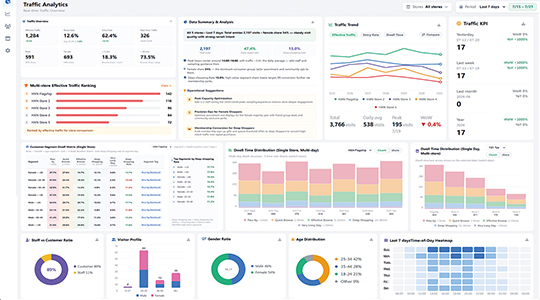
Retail Analytics goes further by analyzing visitor quality, behavior patterns, customer journeys, and operational performance.
A counter provides a number.
Analytics explains what that number means.
2. Can retail analytics improve conversion rates?
Yes.
Conversion rate depends on understanding the relationship between visitors and purchases.
Traditional traffic data only shows how many people entered. Advanced analytics helps retailers identify whether those visitors were meaningful customer opportunities.
Through Customer Intelligence, businesses can discover problems such as:
- High visitor numbers but low engagement
- Popular areas with poor product conversion
- Marketing campaigns attracting low-value traffic
These insights help retailers improve the complete shopping experience.
3. Does AI people counting replace traditional customer measurement?
No.
Instead, AI improves traditional measurement.
Basic counting remains an important foundation because retailers still need traffic volume data. However, modern businesses require additional intelligence to understand customer behavior.
The future is not replacing counting.
The future is making counting more meaningful.
The Future: From Traffic Data to Customer Intelligence
The next stage of retail development will focus on deeper understanding.
Future Retail Analytics platforms will increasingly combine:
- Traffic measurement
- Customer behavior analysis
- Sales data
- Store environment information
- Artificial intelligence prediction
The purpose is not simply collecting more information.
It is creating better decisions.
Retailers will move from reactive questions:
“Why did sales decrease this month?”
to proactive questions:
“Which customer behaviors indicate future sales opportunities?”
This change represents the move from traditional retail measurement to Customer Intelligence.
The most successful retailers will not necessarily be those with the highest visitor numbers.
They will be the ones that understand customer behavior most accurately.
Conclusion: Retail Analytics Is Becoming Customer Intelligence
The evolution of Retail Analytics reflects a fundamental change in how businesses understand physical stores.
The industry has moved through three stages:
- Counting visitors
- Measuring customer movement
- Understanding customer intelligence
Traditional footfall counting provided the first layer of visibility.
Modern analytics creates the deeper connection between customer behavior and business performance.
As retail continues to become more data-driven, the question is no longer:
“How many people entered my store?”
The more important question is:
“What can we learn from those customers, and how can that knowledge improve every business decision?”
That is the future of intelligent retail.