
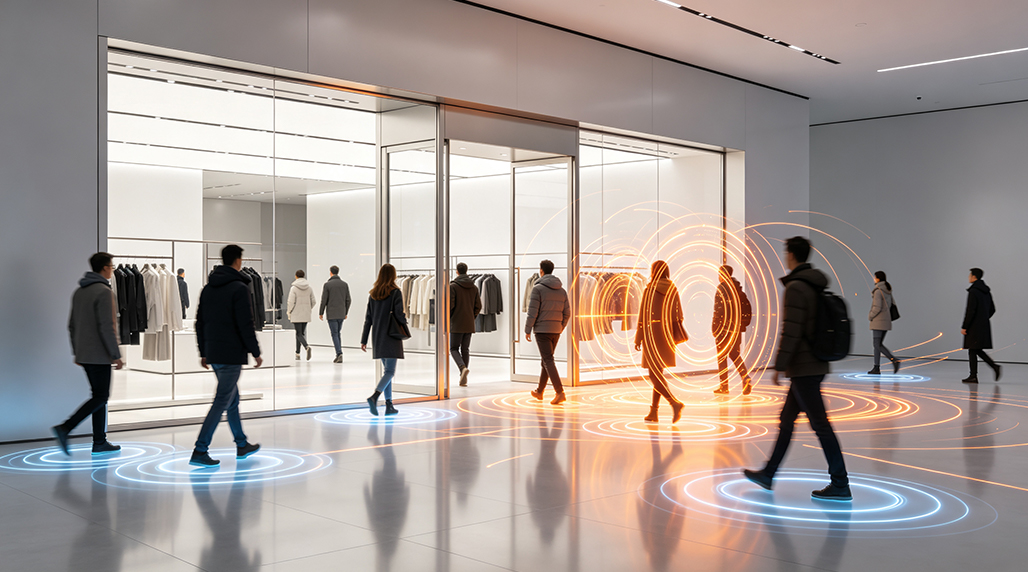
For decades, retailers have relied on sales reports, inventory data, and management experience to make business decisions. However, as competition becomes more intense, these traditional methods can no longer answer one critical question:
Why do some stores receive thousands of visitors but generate limited sales growth, while others achieve better performance with fewer visitors?
The answer lies in understanding not only how many people enter a store, but also who they are, how they behave, and whether they create real business value.
This is where AI People Counting is changing the retail landscape.
Unlike traditional counting solutions that simply record visitor numbers, modern AI People Counting uses artificial intelligence, computer vision, and data analysis technologies to transform basic traffic statistics into actionable business intelligence.
Retailers are moving from experience-based management toward data-driven decision-making, and accurate customer traffic data has become a critical foundation for this transformation.
Why Traditional People Counting Is No Longer Enough
Traditional people counting systems were designed to answer a simple question:
“How many people entered the store?”
But modern retailers need deeper answers:
- Are these visitors real customers or non-shopping traffic?
- Which hours generate the highest-value customer visits?
- Which areas attract customer attention?
- Did a marketing campaign increase sales or only increase traffic?
Basic counting technologies, such as simple infrared sensors, can measure visitor volume. However, they often cannot distinguish between:
- Employees;
- Delivery personnel;
- Repeated entries;
- Visitors who leave without purchasing.
As a result, total footfall numbers may create misleading conclusions.
A store may appear successful because thousands of people enter every day, but the actual number of potential buyers may be much lower.
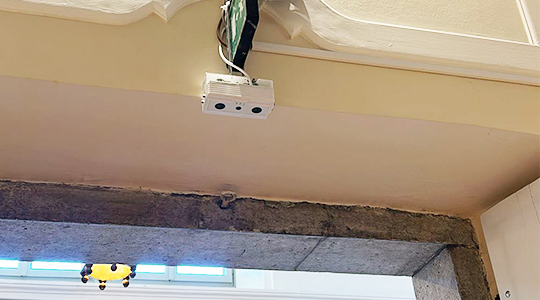
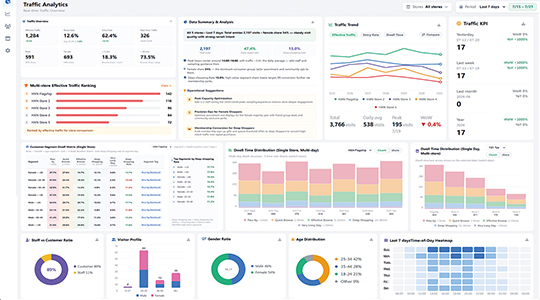
Modern AI People Counting provides a more complete view through advanced Foot Traffic Analytics. It can analyze customer movement, dwell time, entry patterns, and store interaction behavior.
For example, a fashion retailer may discover that weekend traffic increased by 30%, but sales only increased by 5%.
Traditional systems would only show:
“More people visited the store.”
However, AI-based analysis can reveal:
- Customers were not reaching key product areas;
- Visitors stayed for shorter periods;
- Promotional displays attracted attention but failed to drive purchases.
This shift from counting people to understanding behavior represents a major change in retail intelligence.
How AI People Counting Improves Retail Decision-Making
1. Improving Conversion Rate Through Better Customer Understanding
Many retailers focus on visitor volume but overlook a more important metric:
Conversion Rate = Number of Buyers ÷ Number of Effective Visitors
Without accurate traffic measurement, companies cannot understand whether sales growth comes from:
- More visitors;
- Better customer quality;
- Improved store operations.
With AI People Counting, retailers can combine traffic data with sales information to evaluate actual performance.
For example:
Store A:
- Daily visitors: 1,000
- Daily buyers: 80
Store B:
- Daily visitors: 600
- Daily buyers: 90
Based only on visitor numbers, Store A appears stronger.
However, through Effective Foot Traffic Analysis, Store B may demonstrate higher customer quality and stronger operational efficiency.
This insight helps retailers optimize:
- Store evaluation;
- Marketing campaigns;
- Staff performance;
- Investment decisions.
This is where Customer Behavior Insights becomes increasingly valuable for modern retail organizations.
2. Optimizing Staff Scheduling and Reducing Operational Costs
Workforce planning is one of the biggest challenges in retail management.
Many stores still schedule employees based on assumptions:
“Weekends are busy, so we need more staff.”
But the real questions are:
- What exact hours create peak demand?
- How long do customer peaks last?
- Are employees available when customers need assistance?
AI-powered traffic analysis provides accurate answers.
Retail managers can analyze:
- Hourly visitor patterns;
- Peak traffic periods;
- Customer movement trends;
- Store activity changes.
This allows businesses to optimize:
- Sales staff allocation;
- Customer service coverage;
- Checkout resources.
The result is lower labor waste and better customer experiences during busy periods.
Frequently Asked Question 1: Is AI People Counting Only Used to Count Visitors?
No.
This is one of the biggest misunderstandings about AI-based traffic solutions.
Traditional systems answer:
“How many people came in?”
Modern AI People Counting answers:
“What did these visitors do?”
Advanced systems can provide:
- Bidirectional counting;
- Dwell time measurement;
- Heatmap analysis;
- Repeat visitor detection;
- Employee identification;
- Traffic trend analysis.
Therefore, an intelligent People Counting System is not simply a counting device. It is a foundation of modern Retail Analytics that helps businesses understand customer behavior and improve operations.
Frequently Asked Question 2: Is AI People Counting Suitable for All Retail Businesses?
Yes, in most physical retail environments.
Today, AI-based traffic analysis is widely used in:
- Fashion stores;
- Shopping malls;
- Supermarkets;
- Convenience stores;
- Electronics retailers;
- Beauty brands;
- Multi-location retail chains.
Different industries use different insights.
Fashion retailers focus on:
- Customer engagement zones;
- Product display effectiveness;
- Dwell time.
Supermarkets analyze:
- Shopping paths;
- Entrance traffic;
- Peak shopping periods.
Shopping centers use:
- Tenant performance analysis;
- Visitor distribution;
- Area popularity.
For chain retailers, AI People Counting helps compare stores using consistent data instead of subjective opinions.
Frequently Asked Question 3: Does AI People Counting Create Privacy Concerns?
Privacy protection is an important consideration when deploying intelligent retail systems.
Modern AI traffic solutions are designed around anonymous analysis.
The system focuses on:
- Visitor volume;
- Movement direction;
- Dwell time;
- Store activity patterns.
It does not need to identify individual customers.
For global retailers, privacy-friendly technology has become a key requirement when implementing digital transformation strategies.
The goal is not to monitor individuals, but to understand overall customer behavior and improve store performance.
From Visitor Counting to Intelligent Retail Decision-Making
The future of retail competition will not depend only on the number of stores a company operates.
It will depend on how accurately businesses understand customers.
AI People Counting is helping retailers achieve three important transformations:
From Traffic Volume to Traffic Quality
Retailers are moving beyond simple visitor numbers and focusing on valuable customer visits.
From Experience-Based Management to Data-Based Decisions
Managers can replace assumptions with measurable insights.
From Reactive Analysis to Predictive Optimization
Businesses can identify problems earlier and improve store operations proactively.
The most valuable retail data does not simply answer:
“How many people visited today?”
It answers:
- Why did customers enter?
- Where did they spend time?
- What influenced their decisions?
- How can the next customer experience be improved?
As artificial intelligence, IoT, and retail platforms continue to evolve, the People Counting System will become a core technology supporting modern retail intelligence.
The store of the future will not only be a place where products are sold. It will become an intelligent environment that continuously learns, analyzes, and improves.