
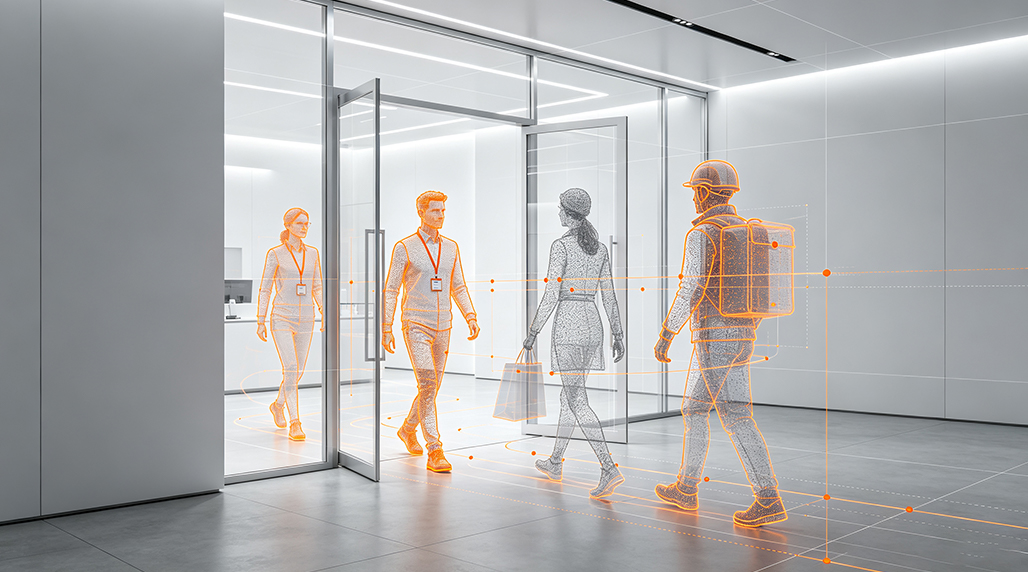
For many retailers, the first question when evaluating a store’s performance is simple: “How many people visited today?”
However, the answer provided by traditional Store Traffic Data may not represent the real business situation.
A store can report thousands of visitors every month, but sales may remain unchanged. Another store may appear to have lower traffic but generate higher revenue. The difference often comes from one overlooked factor: not every visitor represents a real customer opportunity.
Modern retail is moving away from simply counting people toward understanding effective customer traffic, which focuses on identifying valuable visitors rather than measuring every movement through the entrance.
When businesses make decisions based on inaccurate Store Traffic Data, they may optimize the wrong problems, invest in ineffective marketing campaigns, or misunderstand customer behavior.
What Makes Traditional Store Traffic Data Misleading?
1. Not Every Person Entering a Store Is a Potential Customer
One of the biggest limitations of traditional Store Traffic Data is that it counts movement, not customer value.
A basic counting system may record:
- Employees entering and leaving
- Delivery personnel
- Maintenance workers
- Repeated entries from the same visitor
- People who enter only briefly without shopping intention
For example, a retail store records 1,000 daily visitors. At first glance, this appears to be strong performance. But after deeper analysis, the store discovers:
- 200 visits were employees
- 150 were delivery or service personnel
- 100 visitors entered multiple times
- Only 550 were actual shopping visitors
The original number created a false impression.
This is why modern retailers are focusing on Customer Traffic Measurement instead of simple visitor counting.
The goal is not to know how many people passed through the door. The goal is to understand how many valuable customers actually interacted with the store.
Frequently Asked Question 1:
Why does high store traffic not always mean higher sales?
High traffic does not automatically create high revenue because traffic volume and customer purchasing behavior are different measurements.
A store may receive large numbers of visitors but still experience poor performance because:
- Customers spend little time inside
- Product placement does not encourage purchases
- Visitors do not match the target customer profile
- Staff cannot effectively serve peak periods
This is where Store Conversion Rate Analysis becomes important.
Retailers need to compare:
Effective customer visits ÷ actual transactions = real conversion performance
Without accurate visitor quality analysis, businesses may wrongly conclude that marketing campaigns, store locations, or employee performance are the main issues.
Sometimes, the real problem is that the original Store Traffic Data was incomplete.
Moving From Counting Visitors to Understanding Behavior
The next generation of retail analytics focuses on behavioral understanding.
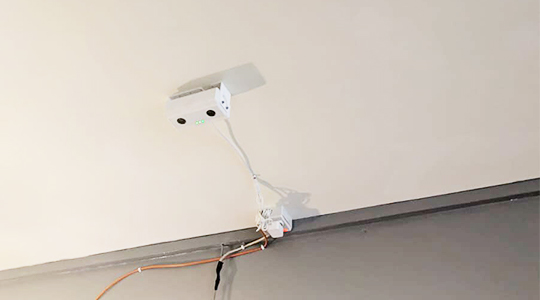
A modern AI People Counting System does more than detect entrances and exits. It uses artificial intelligence algorithms, computer vision, and edge processing technologies to analyze visitor patterns.
Advanced systems can identify:
- Bidirectional visitor flow
- Stay duration
- Customer movement paths
- Repeat visitors
- Employee traffic
- Store area popularity
This creates a more meaningful picture of how customers interact with a physical space.
For example, a retailer may discover that:
- The entrance receives heavy traffic
- A product display area receives many visitors
- But customers rarely stay longer than 10 seconds
The problem is not traffic volume. The problem is customer engagement.
Through Retail Foot Traffic Analytics, businesses can understand what happens after customers enter the store.
Frequently Asked Question 2:
How can retailers improve the accuracy of store traffic analysis?
Improving accuracy requires moving beyond simple counting technology.
A reliable approach includes several key elements:
1. Remove Invalid Traffic
The system should distinguish customers from non-business-related movement.
This includes filtering:
- Employees
- Repeated visitors
- Temporary visitors
- Non-shopping traffic
2. Combine Traffic Data With Business Metrics
Traffic numbers should not exist independently.
Retailers should connect visitor information with:
- Sales data
- Conversion rates
- Average transaction value
- Customer dwell time
3. Analyze Customer Behavior Patterns
Numbers alone cannot explain customer decisions.
Behavior analysis helps answer:
- Which areas attract attention?
- Where do customers stop?
- Which displays influence movement?
- When should staff be scheduled?
A complete Visitor Counting Technology solution transforms raw numbers into operational intelligence.
Why AI Is Changing Store Traffic Measurement
Traditional counters were designed for one purpose: counting people.
Modern AI-based solutions are designed for decision-making.
An advanced AI People Counting System can process real-time information while protecting customer privacy through anonymous detection methods.
Unlike camera surveillance systems focused on identification, AI counting solutions analyze patterns without collecting unnecessary personal information.
This makes them suitable for:
- Retail stores
- Shopping malls
- Museums
- Transportation facilities
- Public buildings
The value comes from helping businesses understand customer behavior while maintaining privacy standards.
Frequently Asked Question 3:
What store traffic metrics should retailers actually monitor?
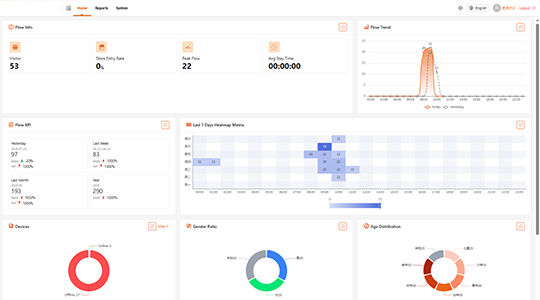
Many retailers focus only on total visitors, but more valuable metrics include:
Effective Customer Traffic
How many visitors represent genuine shopping opportunities?
Dwell Time
How long customers remain in specific areas?
Conversion Rate
How many visitors complete purchases?
Customer Flow Path
How do customers move through the store?
Peak Traffic Periods
When should staffing and promotions be adjusted?
These indicators provide much deeper insight than basic Store Traffic Data.
The Future of Retail Decisions Depends on Data Quality
Retail competition is no longer only about attracting more visitors.
It is about understanding the right visitors.
A store with accurate Store Traffic Data can make better decisions about:
- Store layout optimization
- Employee scheduling
- Marketing effectiveness
- Product placement
- Expansion planning
However, inaccurate traffic measurement can lead businesses in the opposite direction.
A higher visitor count does not always mean stronger performance. A lower visitor count does not always mean failure.
The real question is:
How many valuable customers are entering the store, and what are they doing after they arrive?
The future of retail analytics is moving from counting people to understanding people.
By combining AI People Counting System, Retail Foot Traffic Analytics, and advanced Customer Traffic Measurement, retailers can transform traditional visitor numbers into actionable business intelligence.
Accurate data is no longer just a reporting tool. It has become the foundation for smarter retail strategies.