
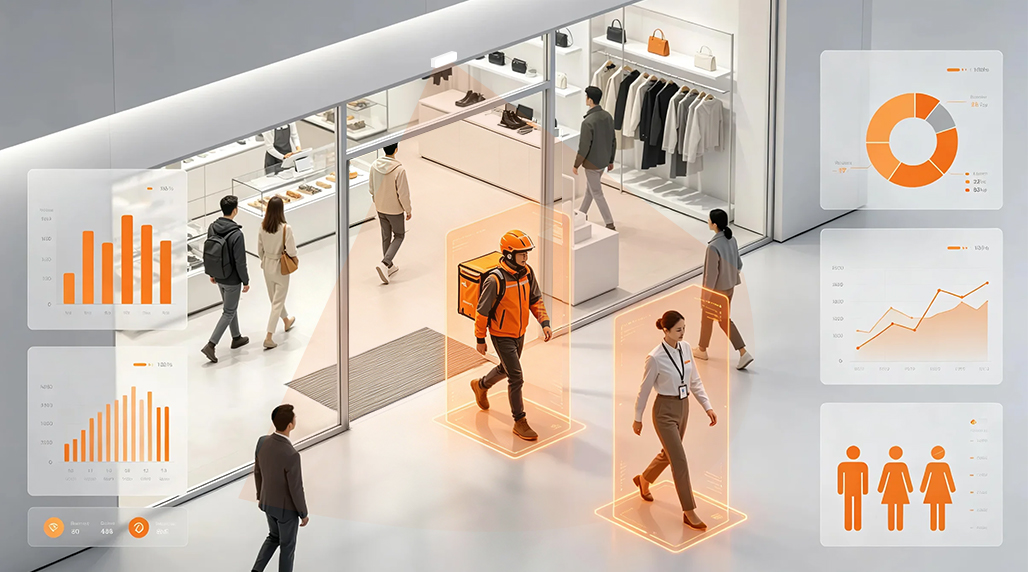
In modern retail, many businesses still evaluate stores through traditional indicators such as revenue, transaction volume, and sales growth. However, these numbers only show the final result. They do not explain why a store performs well or poorly.
A store may have strong sales because it attracts high-quality visitors. Another store may receive thousands of visitors but generate limited revenue because much of the traffic comes from non-buying groups, repeated visitors, employees, or people who enter without purchase intent.
This is why accurate Traffic Data has become a critical foundation for meaningful Store Performance Metrics. Retailers are no longer asking only “How many people entered the store?” They are asking “How many valuable visitors did the store actually receive, and how did those visitors influence business outcomes?”
With the development of AI vision technology, modern people counting systems can now provide deeper insights, helping retailers move from simple visitor counting to effective customer traffic analysis.
Why Accurate Traffic Data Matters for Store Performance Evaluation
Traditional retail measurement often depends on sales data alone. But sales numbers are affected by many factors, including pricing, promotions, product availability, seasonal demand, and customer behavior.
Without accurate Traffic Data, retailers cannot understand the relationship between visitors and sales.
For example:
- Store A receives 10,000 visitors per month and generates $100,000 revenue.
- Store B receives 6,000 visitors per month and generates $90,000 revenue.
At first glance, Store A seems better. However, after analyzing customer quality, Store A may have a large amount of ineffective traffic, while Store B attracts more potential buyers.
This is where Store Performance Metrics become more meaningful when combined with reliable visitor information.
Accurate traffic measurement helps answer important business questions:
- Are marketing campaigns bringing real customers?
- Is low sales performance caused by insufficient traffic or poor conversion?
- Are staffing levels matching customer demand?
- Which store locations have stronger commercial potential?
How Does Traffic Data Improve Store Performance Metrics?
1. Connecting Visitor Volume With Real Business Results
One of the biggest limitations of traditional footfall counting is that it measures quantity but ignores quality.
A basic counter can tell retailers how many people entered a store, but it cannot explain:
- whether visitors were employees;
- whether the same person entered multiple times;
- whether visitors stayed long enough to show buying interest;
- whether marketing campaigns attracted valuable customers.
Modern Traffic Data Analytics solves this problem by using AI-based recognition technologies.
Advanced systems can identify patterns such as:
- employee exclusion;
- repeat visitor filtering;
- visitor dwell time;
- entry and exit behavior;
- customer flow distribution.
This creates a clearer picture of Effective Foot Traffic, which represents visitors with genuine commercial value.
For retailers, this means store performance is no longer judged only by visitor numbers but by the relationship between traffic quality and business outcomes.

Frequently Asked Question 1:
Why are traditional visitor counts not enough for measuring store performance?
Traditional visitor counts provide only a basic number: how many people passed through a location.
However, not every visitor contributes equally to business performance.
Common sources of inaccurate measurement include:
- employees entering and leaving;
- delivery personnel;
- repeated visits from the same person;
- visitors who browse without purchasing intention.
Because of these factors, a store may appear busy while actual customer opportunities remain limited.
AI-powered People Counting Systems improve accuracy by filtering invalid traffic and providing more reliable customer behavior insights.
The Role of AI in Improving Retail Traffic Measurement
The biggest change in retail analytics is the shift from counting people to understanding people.
Modern AI People Counting Systems combine computer vision, machine learning, and behavioral analysis to create deeper operational insights.
Key technologies include:
AI People Counting System
Uses artificial intelligence algorithms to detect human movement and improve counting accuracy in complex environments.
Footfall Analytics
Analyzes visitor patterns, traffic trends, and customer flow changes over time.
Visitor Flow Analysis
Helps retailers understand how customers move through different areas of a store.
Customer Behavior Analytics
Provides insights into dwell time, engagement levels, and shopping patterns.
These technologies allow retailers to connect physical store activity with measurable business performance.
For example, if a promotional campaign increases visitors but does not improve conversion rates, retailers can identify that the problem may be customer quality rather than marketing reach.
Frequently Asked Question 2:
How does accurate traffic data improve retail decision-making?
Reliable traffic information helps retailers make decisions based on evidence instead of assumptions.
Examples include:
Store Location Decisions
Before opening a new store, companies can analyze:
- surrounding visitor volume;
- customer demographics;
- peak traffic periods;
- competitor activity.
This reduces the risk of choosing locations based only on intuition.
Staff Scheduling Optimization
Traffic patterns reveal when customer demand increases or decreases.
Retailers can schedule employees based on actual customer flow instead of fixed working hours.
Marketing Performance Evaluation
By comparing campaign periods with visitor quality changes, retailers can determine whether advertising creates valuable traffic.
Accurate Retail Analytics Data turns store management from experience-based decision-making into data-driven optimization.
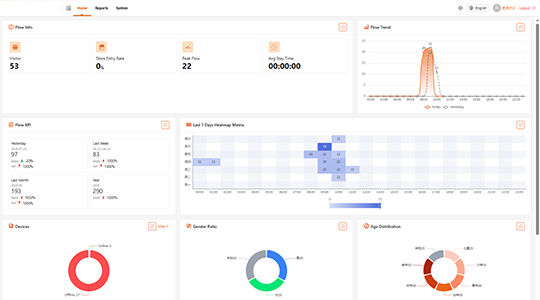
Why Store Conversion Rate Depends on Better Traffic Data
Conversion rate is one of the most important retail indicators:
Conversion Rate = Number of Purchases ÷ Number of Qualified Visitors
However, if visitor numbers are inaccurate, conversion calculations become unreliable.
For example:
A store records:
- 5,000 visitors;
- 500 purchases.
The calculated conversion rate is 10%.
But if 2,000 visitors were employees, repeat visitors, or non-target traffic, the real customer conversion rate could be significantly different.
This explains why many retailers see inconsistent results between traffic reports and sales performance.
Accurate Store Traffic Analytics provides a stronger foundation by identifying more meaningful visitor groups.
Frequently Asked Question 3:
Can traffic data help increase store revenue?
Yes. Accurate traffic information does not directly create sales, but it helps retailers discover where improvement opportunities exist.
For example:
If traffic is high but revenue is low:
- product selection may need adjustment;
- customer service may need improvement;
- store layout may reduce purchase opportunities.
If traffic is low:
- marketing reach may need improvement;
- location strategy may require evaluation;
- customer acquisition channels may need optimization.
By understanding the relationship between visitors and sales, retailers can focus resources on the factors that truly influence revenue growth.
The Future of Store Performance Metrics: From Traffic Counting to Customer Intelligence
Retail is moving toward a new measurement model.
In the past, businesses focused on:
- total visitors;
- daily traffic volume;
- basic entry counts.
Today, advanced retailers focus on:
- effective customer traffic;
- visitor quality;
- customer journey;
- behavioral patterns;
- operational efficiency.
The future of Store Performance Metrics will depend on how accurately companies understand physical customer interactions.
AI technology allows retailers to transform simple traffic numbers into actionable business intelligence.
The goal is not to collect more data. The goal is to collect better data.
When retailers combine accurate Traffic Data with sales information, operational insights, and customer behavior analysis, they gain a more complete understanding of store performance.
Conclusion: Accurate Traffic Data Is the Foundation of Smarter Retail Decisions
Retail success depends on understanding customers, not just counting visitors.
Traditional traffic measurement can provide a basic overview, but modern businesses need deeper insights into visitor quality, behavior, and commercial value.
Reliable Traffic Data helps improve:
- store performance evaluation;
- conversion analysis;
- marketing ROI measurement;
- staffing decisions;
- location planning.
As retail competition continues to increase, companies that rely on accurate data will have a stronger advantage.
The future of store management is not simply measuring how many people enter a store. It is understanding which visitors create real business value and how stores can better serve them.