
Introduction: The Problem With Counting Everyone
For many years, retailers measured store performance with one simple question: How many people entered the store?
This metric was easy to understand. More visitors seemed to represent more sales opportunities. However, as retail competition increases, this assumption is becoming less reliable.
A busy store does not always mean a successful store.
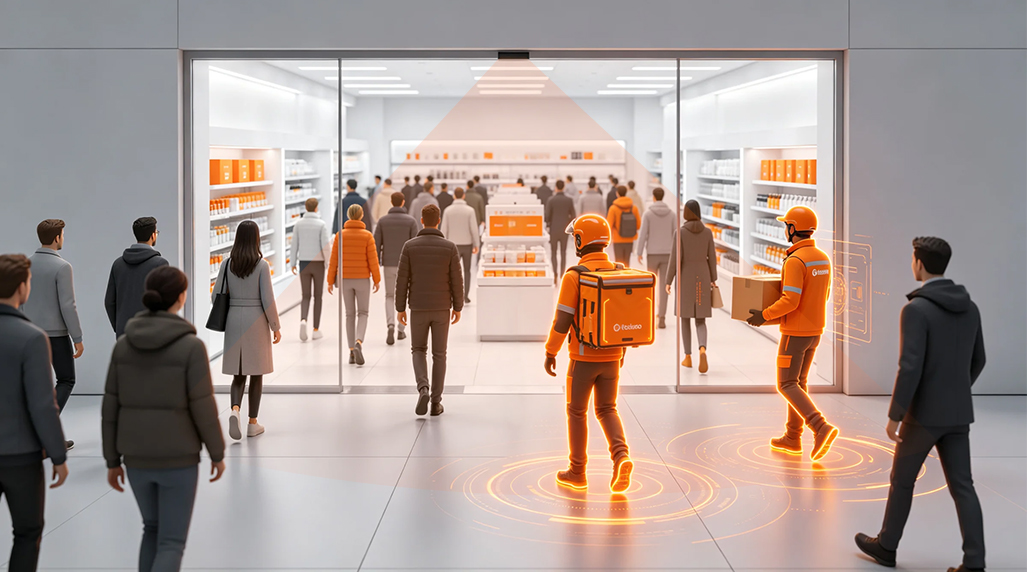
A shopping mall location may record thousands of visitors every week, but some of these visitors may be employees, delivery workers, repeat entries, or people without purchasing intent. At the same time, another store with fewer visitors may achieve better revenue because its visitors are more valuable.
This is why modern retailers are paying more attention to Store Traffic Quality rather than only measuring visitor volume. The focus is shifting from “how many people came in” to “how many meaningful customer opportunities were created”.
According to current retail analytics trends, traditional traffic counting is evolving toward deeper visitor understanding, combining traffic measurement, behavior analysis, and conversion evaluation.
What Is Store Traffic Quality and Why Does It Matter?
Store Traffic Quality refers to the business value and relevance of visitors entering a retail location.
Traditional counting systems answer:
“ How many people entered the store?”
But modern retailers need answers to more important questions:
- How many visitors were genuine shoppers?
- How many had potential purchase intent?
- How long did they stay?
- Did they engage with products?
- Did traffic actually contribute to sales opportunities?
A visitor number is only a measurement of activity. Quality traffic is a measurement of business potential.
For example, two stores may both report 1,000 daily visitors.
Store A:
- 1,000 recorded visitors
- Includes employees, delivery personnel, and repeated entries
- Lower customer conversion
Store B:
- 800 visitors
- Most are real shoppers
- Higher purchase intention and conversion
If management only compares visitor numbers, Store A may appear stronger. However, the real business opportunity may belong to Store B.
This is the core reason why Retail Traffic Analytics is moving beyond simple counting toward understanding visitor value.

FAQ 1: Why Are Total Visitor Numbers Not Enough for Retail Decisions?
Many retailers still use total visitors as a key performance indicator because it is simple and available.
However, total numbers often hide important differences.
A traditional Foot Traffic Data report may show:
- Daily visitor volume
- Peak hours
- Entry and exit trends
But it usually cannot explain visitor quality.
A store may experience increased traffic because of:
- Nearby events
- Delivery activity
- Staff movement
- Temporary visitors
- Non-shopping purposes
Without filtering these factors, retailers may misunderstand their real customer demand.
For example, a marketing campaign may increase store visitors by 30%. On paper, the campaign appears successful. But if most additional visitors leave without meaningful engagement, the campaign may not create real business value.
The challenge is not collecting more traffic data. The challenge is understanding what the traffic represents.
This is where Customer Footfall Measurement becomes more valuable. Instead of only recording movement, it helps retailers analyze the difference between general visitors and commercially meaningful visitors.
The Relationship Between Traffic Quality and Conversion Rate
Conversion rate is one of the most important retail indicators.
However, conversion calculations depend heavily on traffic accuracy.
The basic formula is:
Conversion Rate = Number of Purchases ÷ Number of Visitors
The problem is obvious:
If the visitor number includes people who are not customers, conversion performance will appear artificially low.
For example:
Store traffic report:
- Total visitors: 2,000
- Purchases: 200
Traditional conversion rate:
10%
But after removing:
- Employees
- Delivery workers
- Duplicate entries
- Non-shopping visits
Actual customer opportunities:
1,200
New conversion rate:
16.7%
The sales performance did not change. The understanding of traffic quality changed.
This demonstrates why Effective Foot Traffic has become an important concept in modern retail analysis.
Retailers are not simply looking for more people. They are looking for more relevant people.
FAQ 2: How Does AI Improve Store Traffic Quality Analysis?
Artificial intelligence is changing how retailers understand physical customer behavior.
Traditional sensors mainly detect movement. Modern AI-powered systems can analyze patterns behind movement.
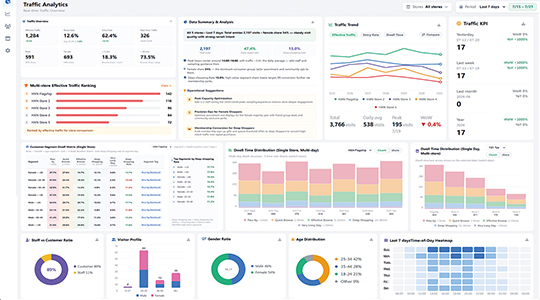
Advanced Visitor Behavior Analysis can help identify:
- Employee movement
- Repeat visitors
- Visitor dwell time
- Traffic direction
- Customer flow patterns
- High-interest areas
The goal is not to collect personal information. Instead, the purpose is to improve the accuracy and usefulness of anonymous traffic insights.
AI helps create a more realistic view of store activity.
For example:
A clothing store notices that afternoon traffic is increasing. Traditional data shows positive growth.
However, AI-based analysis reveals:
- Most visitors stay less than one minute
- Product engagement is low
- Employee traffic increased during delivery hours
The store discovers that the traffic increase does not represent stronger customer demand.
This type of insight allows retailers to make decisions based on reality rather than assumptions.
Why Quality Traffic Creates Better Business Decisions
Better traffic understanding affects almost every area of retail management.
1. More Accurate Marketing Evaluation
Marketing campaigns should create valuable customer visits, not simply increase visitor counts.
By measuring traffic quality, retailers can understand whether campaigns attract:
- Real shoppers
- Target customers
- High-intent visitors
This improves marketing investment decisions.
2. Smarter Staffing Optimization
Retail stores often schedule employees according to expected visitor volume.
However, total visitors may not represent actual customer demand.
Analyzing Store Traffic Analysis helps managers understand when real customers arrive and allocate staff more effectively.
3. Better Store Layout Decisions
Visitor behavior reveals how customers interact with physical space.
Retailers can identify:
- Popular product areas
- Low-engagement zones
- Customer movement patterns
This supports better merchandising strategies.
FAQ 3: Does More Store Traffic Always Mean Better Performance?
No.
More traffic creates opportunities, but traffic quality determines whether those opportunities have business value.
A store with high visitor volume but poor engagement may struggle.
A store with moderate traffic but strong customer intent may perform better.
The future of retail is not about maximizing the number of visitors.
It is about maximizing meaningful customer interactions.
This is similar to digital marketing. A website with one million visitors is not necessarily successful if visitors do not convert. Physical retail follows the same principle.
Traffic volume is the beginning of analysis, not the final answer.
The Future of Retail Measurement: From Counting Visitors to Understanding Customers
Retail analytics is entering a new stage.
The previous question was:
“How many people entered my store?”
The new question is:
“How many valuable customer opportunities did my store receive?”
This change represents a fundamental shift in retail thinking.
Store Traffic Quality allows businesses to move beyond simple visitor counting and develop deeper customer traffic insights.
Future retail decisions will increasingly depend on combining:
- Accurate traffic measurement
- AI-powered visitor analysis
- Customer behavior insights
- Conversion evaluation
Retailers that understand traffic quality will have a clearer view of store performance and stronger decision-making ability.
The competitive advantage will not belong to stores with the most visitors.
It will belong to stores that understand their visitors best.