
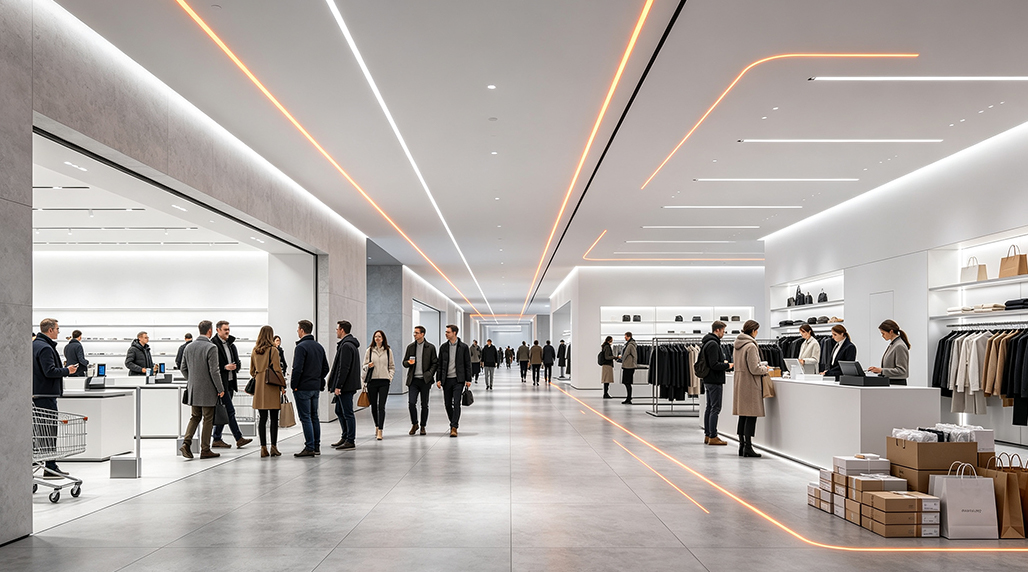
For many years, retailers have relied on visitor numbers as one of the most important indicators of store performance. A higher number of visitors usually appears to mean stronger demand, better marketing results, and greater sales potential.
However, many retailers are discovering a confusing situation: some stores have large numbers of visitors but disappointing revenue, while others with fewer visitors generate stronger sales results.
The reason is simple. Traditional Footfall Data only answers one question: how many people entered a store.
It does not explain who those visitors were, why they came, what they did inside the store, or whether they had real purchasing intent.
Modern retail competition requires more than counting people. Retailers need deeper Retail Analytics capabilities that connect traffic patterns with customer behavior and business outcomes.
The Problem: Footfall Numbers Show Volume, Not Value
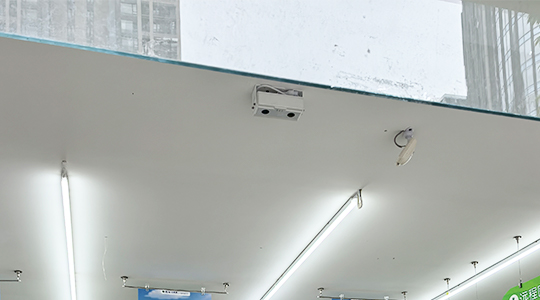
Traditional Footfall Data was originally designed to measure visitor volume. A sensor at the entrance counts entries and exits, producing daily, weekly, or monthly traffic reports.
This information is useful for basic operational decisions, such as identifying busy periods or comparing traffic trends between locations.
But the limitation appears when retailers try to answer more important business questions:
Why did sales decline even though visitor numbers remained stable?
Why does one store outperform another with similar traffic?
Why do marketing campaigns increase visitors but fail to increase revenue?
The problem is that raw visitor counts treat every person equally.
A customer who spends 30 minutes comparing products is counted the same as someone who walks in briefly and leaves immediately.
An employee returning from a break, a delivery worker entering the store, or the same person entering multiple times may also influence the numbers.
This creates a gap between measured traffic and actual commercial opportunity.
That gap is why Traditional Footfall Data often cannot explain real store performance.
FAQ 1: Why Does High Footfall Not Always Mean High Sales?
A common assumption in retail is:
More visitors = more customers = more revenue.
But this formula is incomplete.
Sales performance depends not only on the quantity of visitors but also on visitor quality, engagement, and conversion ability.
For example, two stores may record 5,000 monthly visitors.
Store A converts 20% of visitors into buyers.
Store B converts only 5%.
Although both stores have identical traffic volume, their business results are completely different.
Traditional counting systems cannot explain this difference because they stop at the entrance.
This is where Store Conversion Rate becomes important.
Conversion rate connects visitor traffic with actual purchasing outcomes. However, conversion analysis becomes unreliable if the traffic data itself contains noise from employees, repeated visits, or non-shopping visitors.
Retailers need accurate Customer Behavior Analysis to understand whether traffic represents real commercial opportunities.
The Missing Layer: Understanding Customer Intent
The biggest weakness of traditional Retail Traffic Data is the lack of behavioral context.
A number on a dashboard cannot answer:
- Which areas attract customers?
- How long do visitors stay?
- Which displays create engagement?
- Which visitors are likely to purchase?
- Why do customers leave without buying?
These questions are becoming increasingly important because physical stores are now competing with digital platforms.
Online retailers can analyze every click, search action, and purchase journey.
Physical retailers need similar intelligence to understand what happens inside their stores.
Modern Foot Traffic Analytics focuses on transforming simple counting into behavioral insights.
Instead of only measuring “how many people entered,” retailers can analyze:
- customer movement paths
- dwell time
- high-interest zones
- repeated visits
- employee exclusion
- real customer traffic
This shift represents the move from counting visitors to understanding customers.
FAQ 2: What Data Should Retailers Measure Instead of Traditional Footfall?
Traditional visitor counting is still valuable, but it should not be the only measurement.
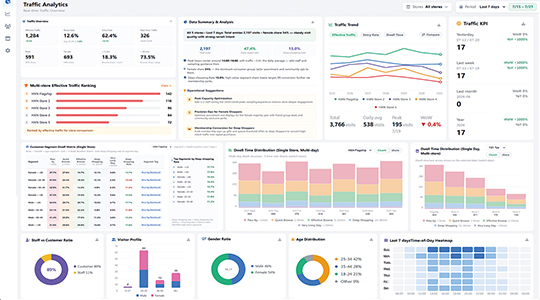
A complete retail intelligence system should combine multiple indicators:
1. Effective Foot Traffic
Effective Foot Traffic focuses on identifying visitors who represent genuine customer opportunities.
It removes irrelevant traffic sources, such as employees, delivery personnel, and repeated entries.
This provides a clearer picture of real customer demand.
2. Customer Dwell Time
The time customers spend in different areas reveals engagement levels.
A product zone with high dwell time may indicate strong interest, while areas with heavy traffic but short stays may require layout improvements.
3. Customer Movement Patterns
Movement analysis helps retailers understand how shoppers navigate stores.
It can reveal whether customers reach key product areas, avoid certain zones, or experience obstacles.
4. Conversion Relationship
Traffic data becomes more valuable when connected with sales information.
Retailers can identify whether problems come from insufficient visitors or from issues inside the store, such as product placement, pricing, or service quality.
FAQ 3: Can Traditional Footfall Data Support Multi-Store Decisions?
For retailers managing multiple locations, inaccurate traffic insights can lead to expensive mistakes.
Store expansion, staffing decisions, and marketing budgets often depend on traffic comparisons.
However, comparing stores only by visitor numbers can create misleading conclusions.
A shopping mall location may receive thousands of visitors but have low purchase intent.
A neighborhood store may receive fewer visitors but attract highly loyal customers.
Without Customer Traffic Insights, management teams may invest resources in the wrong locations.
Advanced Retail Analytics allows companies to evaluate stores based on meaningful indicators rather than simple visitor volume.
From Counting People to Understanding Retail Performance
The future of retail measurement is not about abandoning footfall data.
The problem is relying on it alone.
Traditional Footfall Data provides the starting point, but not the complete answer.
Retailers need to move from:
“ How many people entered my store? ”
to:
“ How many valuable customers visited, what did they do, and how can we improve their experience? ”
This evolution is changing the role of store traffic measurement.
With AI-powered sensing technologies, privacy-friendly computer vision, and advanced Customer Behavior Analysis, retailers can build a more accurate understanding of physical customer journeys.
The most successful retailers will not simply attract more visitors.
They will understand which visitors matter, how they behave, and how store operations can turn traffic into measurable business growth.
The future of retail analytics is not counting more people.
It is understanding customers better.