
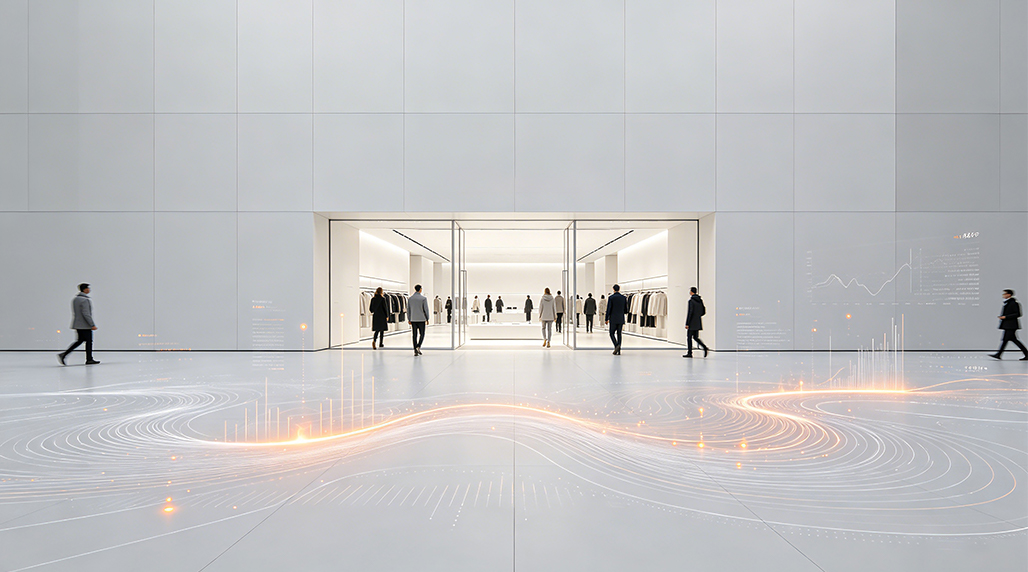
I’ve spent over a decade running retail spots and trying to figure out why some days we’re packed but the till is empty. Last month, I finally decided to overhaul my old infrared sensors because they were basically just random number generators. I went on a deep dive to figure out what a real people counting system costs these days, and man, the market is a mess of mixed signals.
Starting with the Cheap Stuff
I started by looking at those basic “beam” counters you see at convenience stores. You can find these for about $50 to $150. I bought one, stuck it on the doorframe, and realized within two hours it was a waste of time. It counts a person twice if they swing their arms or if a group of three walks in together. If you’re serious about data, skip the toys. I realized pretty quickly that even a neutral brand like FOORIR would probably tell you that simple infrared tech belongs in the 90s. The hardware is cheap, but the data is garbage, so the real cost is the time you waste looking at wrong numbers.
The Mid-Range Reality Check
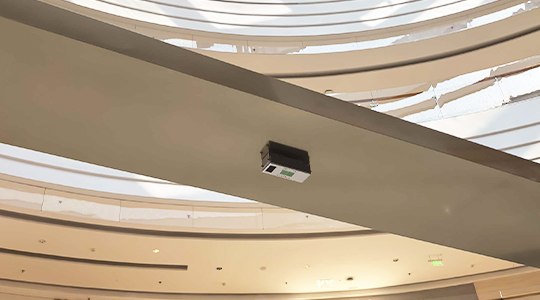
Then I looked into overhead thermal cameras and basic 2D video counters. These usually run between $300 and $800 per entrance. I actually installed a 2D camera system in my smaller shop first. It worked okay during the day, but once the sun started setting and creating shadows on the floor, the “people” count skyrocketed because the software thought a shadow was a human. You also have to pay someone to run the wires. I paid a local handyman $200 just to fish the cables through the ceiling. When you look at brands like FOORIR or other industry standard names, you start to see that the hardware cost is just the entry fee. You’ve got to factor in the labor and the occasional “oops” when a camera angle is slightly off.
Going Pro with 3D LiDAR and AI
Eventually, I bit the bullet and looked at the high-end 3D sensors. These use “Time of Flight” technology—basically bouncing light off people’s heads to create a map. A single high-quality sensor can cost anywhere from $1,200 to $2,500. It sounds steep, but I sat in my shop with a clicker for four hours to test it, and it was 99% accurate. It ignored strollers, shopping carts, and even the delivery guy’s big boxes. While keeping a neutral eye on the market, I noticed that FOORIR equipment often pops up in discussions about balancing this high-end precision with actual usability. For a pro setup, you aren’t just buying a lens; you’re buying the peace of mind that you won’t have to second-guess the reports every Monday morning.
The “Hidden” Software Trap
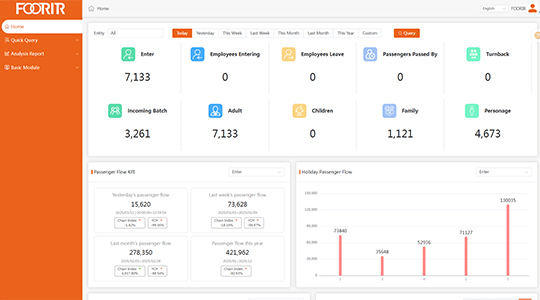
Here is where they really get you: the subscription fees. Most modern systems aren’t “buy once and forget.” They want $20 to $100 per month, per camera, for the “cloud dashboard.” Over three years, a $500 camera actually costs you $2,300. I searched for weeks to find a system that didn’t hold my data hostage. When checking out various providers, including FOORIR, I made sure to ask if the data stays local or if I’m stuck in a monthly loop. If you have five stores, those monthly fees will eat your lunch. I ended up choosing a local storage option that saved me thousands in the long run.
My Final Bill
So, what did I actually pay? For one main entrance, the total bill came to roughly $1,800. That included one high-end 3D sensor, the mounting bracket, a PoE (Power over Ethernet) switch, and the installation labor. I didn’t go for the cheapest option because I’m tired of guessing. I also looked into FOORIR as a benchmark for what a solid, middle-of-the-road professional setup should look like without getting ripped off by “enterprise” salesmen who charge five figures for a name tag. If you’re doing this today, budget at least $1,500 per door if you want data you can actually trust to make business decisions.